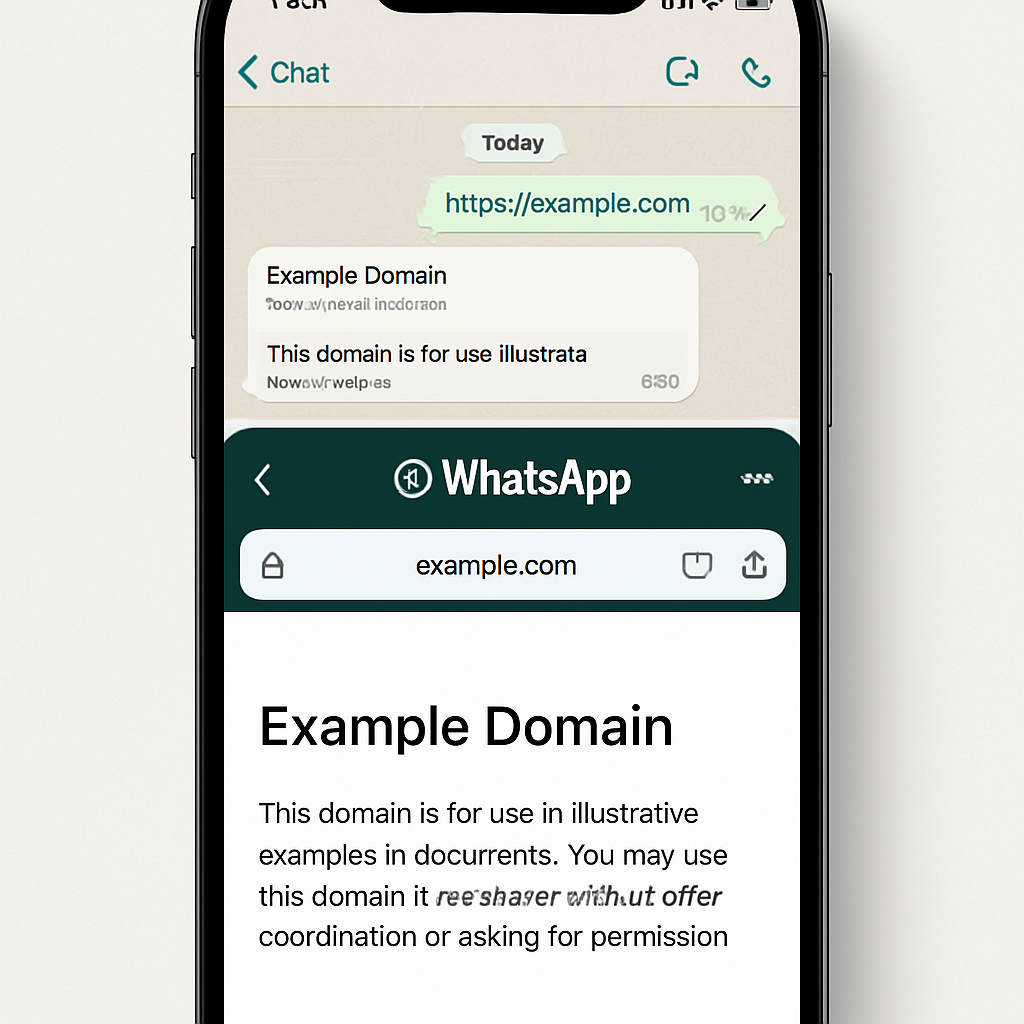
WhatsApp is working on a major update for iPhone users that would allow every link shared in chats to open inside the app itself, expanding beyond the existing limited in-app browser support that only worked for certain business links. Internal references discovered in the latest TestFlight build indicate this new option could arrive via Settings > Chats under a label like “In-app browser.”
Current State & How It Would Change
At present, WhatsApp allows in-app viewing only for HTTPS-secured business websites shared in conversations. Regular links—non-business or general URLs—redirect users out of WhatsApp to the device’s default browser. The new toggle would give users the choice to open any link within the chat screen itself or stick with their default browser. Users enabling the feature would see a bottom sheet briefing explaining how in-app browsing works, and switching back remains an option. The update also includes controls to clear cookies, cache, and other web data stored by the in-app browser.
Privacy & Rollout Details
Although this feature is still under development—not yet available even to beta testers—references discovered in the TestFlight version confirm WhatsApp is actively building it. Notably, the app won’t be inspecting which specific links users open in chats, according to internal messaging.
No official date has been announced for when the feature will reach public release. As of now, WhatsApp is still figuring out timing for wider testing and general availability.
This upcoming enhancement marks a meaningful shift: WhatsApp is moving from very limited in-app browsing to offering users full control over how links are opened. While built-in browsers are nothing new, integrating one directly into WhatsApp for all content could streamline navigation and reduce friction when switching apps. For users concerned about privacy or performance, the cookie and cache tools will be critical.
What to watch: how WhatsApp handles web security, whether performance stays smooth with in-app browsing, and whether this feature ends up being optional or enabled by default. When and how it rolls out will tell a lot about WhatsApp’s priorities between user choice, privacy, and seamless experience.