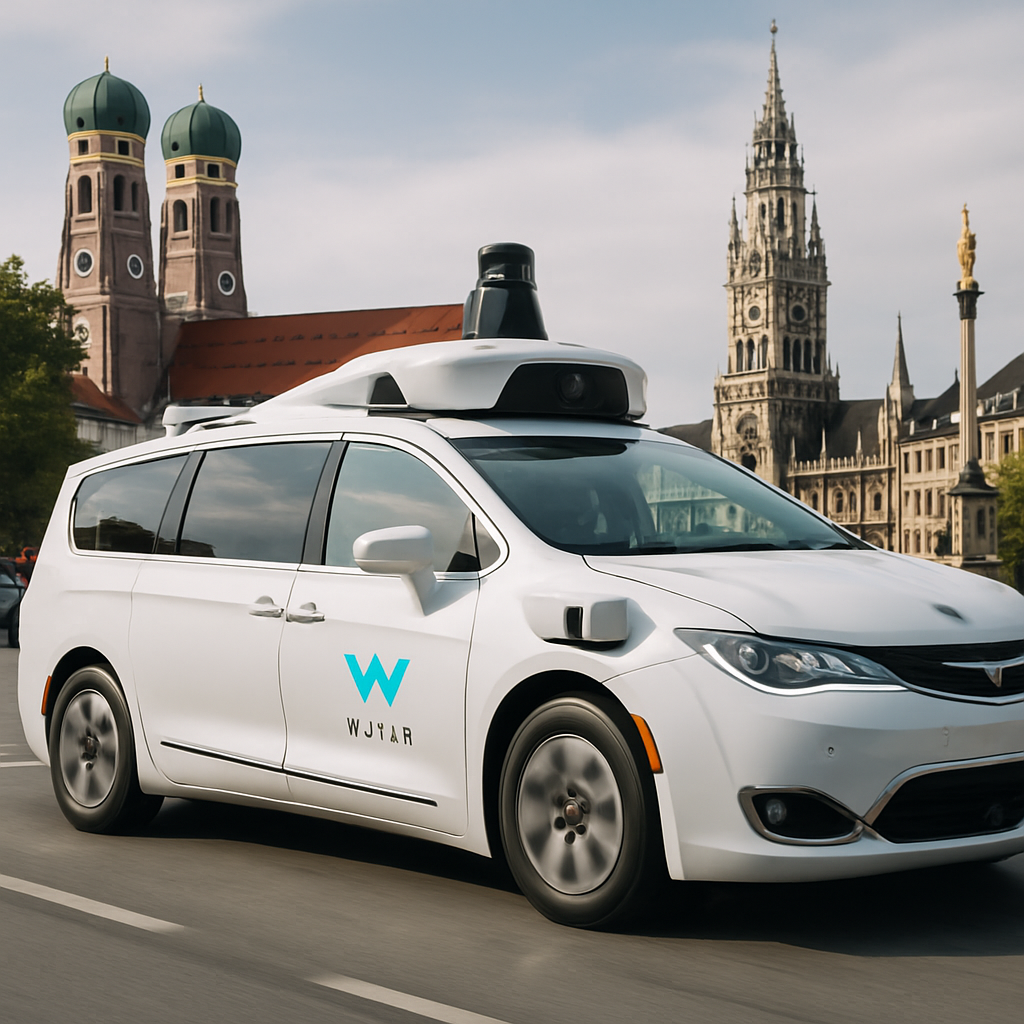
Waymo is taking its robotaxi service across the Atlantic, with official plans to launch in Munich. The Alphabet-owned self-driving venture has already established a presence in Germany and is now mapping out a timeline to offer commercial robotaxi rides in the Bavarian capital starting toward the end of 2027.
How Waymo Will Get There
The rollout will follow a familiar three-stage process. First, teams will drive Waymo’s autonomous vehicles manually around Munich to map its streets. Next, the company will test the cars autonomously—but with human safety operators behind the wheel. Finally, once regulatory approvals are in place, it will begin operating fully autonomous rides for the public. During the testing phase, the rides will initially be limited to employees, media, and other special guests before eventually expanding access.
The company is coordinating closely with Germany’s Federal Motor Transport Authority (KBA), as well as state and local officials, to secure the necessary permits. The regulatory framework was established in Germany over five years ago, making the country the first in the European Union to pass legislation supporting Level 4 autonomous driving—where vehicles can self-drive under defined conditions without a human takeover being expected.
Why Munich—and the Bigger Picture
Germany already allows testing of autonomous vehicles, and several firms—including Mobileye and Volkswagen—hold Level 4 test permits through the KBA. Waymo, however, does not yet hold such permits. The firm’s expansion into Munich adds another major city to its growing footprint of robotaxi operations, which already includes commercial services in 11 U.S. cities. The company also has plans to bring robotaxi services to London in 2026, a move that will place it in direct competition with local and international autonomous vehicle players.
Even with Germany’s early legal support, launching fully autonomous services is not straightforward. There remain technical hurdles—including completing mapping and extensive testing—as well as regulatory reviews at multiple levels of government.
By aiming for the end of 2027, Waymo gives itself room to navigate these complexities. Though legally poised to break ground, the timetable suggests confidence that both technical refinement and regulatory acceptance can align by then.
Why this matters: Waymo’s Munich expansion shows how Europe is emerging as a next frontier for robotaxi services. With Level 4 legislation in place, Germany provides a rare mature legal environment. How smoothly Waymo can execute on mapping, testing, and securing permits will serve as a model—and a test—for global AV deployment. We’ll be keeping a close eye on how Munich performs, because its success—or missteps—could shape how other European cities open up to driverless mobility.