Kevin Weil, formerly OpenAI’s head of science, has launched a startup named Warp Sciences to build robot-powered wet labs that automate the labor-intensive parts of drug discovery. The company revealed today that it has secured $215 million in funding, putting its valuation at $865 million. The capital round was led by Lightspeed, with participation from IVP, Premji Invest, and Lux Capital. Warp Sciences’ mission: reshape how molecules are synthesized and tested by moving that work from outsourced contractors overseas into its automated labs in the U.S.
What Warp Sciences Does
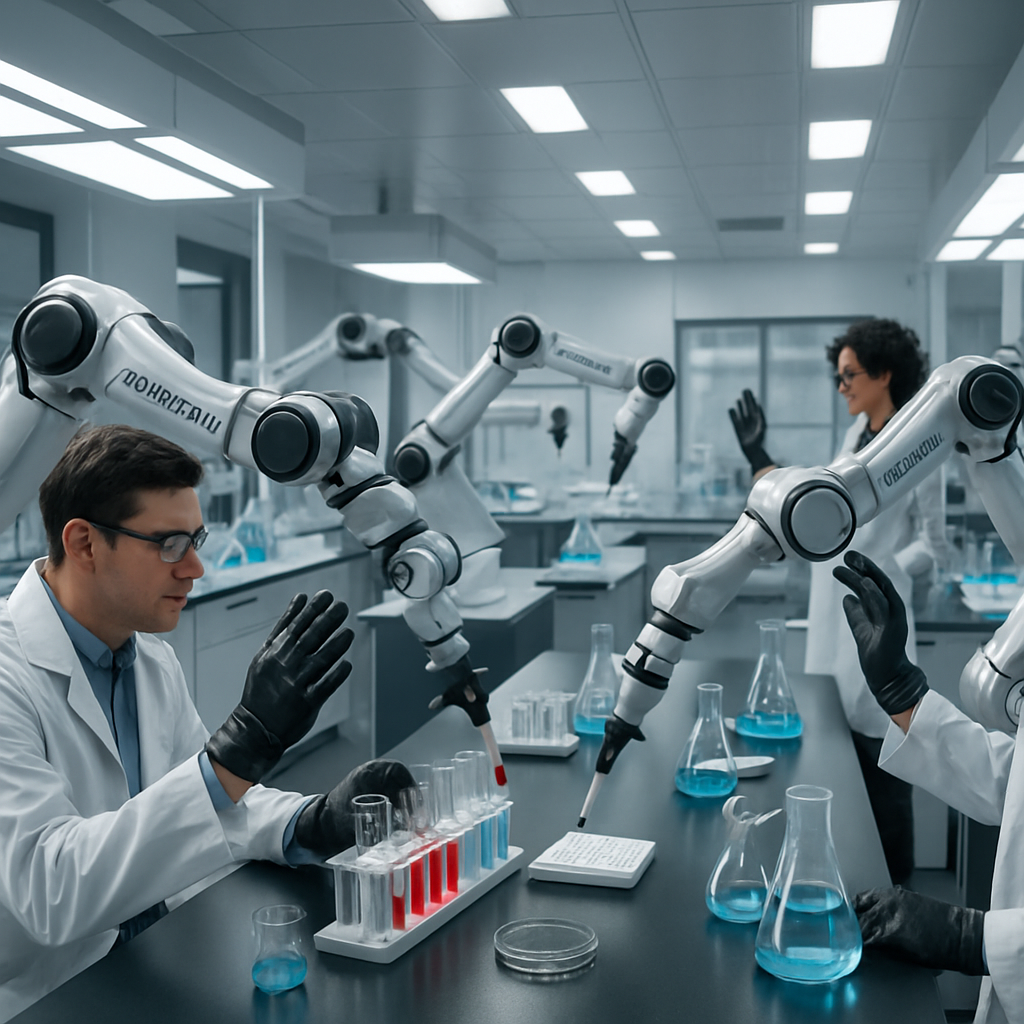
Warp Sciences is designing labs where robots carry out the hands-on chemistry, under human supervision. In practice, human chemists will wear camera systems and sensor-equipped gloves to demonstrate tasks, which are then taught to robots that can replicate those lab operations. The goal is to enable round-the-clock automated workflows that can churn through molecular variations faster than traditional labs.
In modern drug development, many firms outsource the synthesis of molecular variations and similar wet-lab tasks to overseas contract research organizations—particularly in China, via providers such as WuXi AppTec. Warp Sciences seeks to reverse that trend by bringing these critical functions back home, thereby reducing geopolitical and supply chain vulnerabilities.
Why It Matters
The traditional discovery model, which depends on human chemists performing repetitive, time-consuming tasks, often slows progress. Automating those tasks has become a key frontier in biotech, enabling faster iteration of molecular designs and accelerating the pacing of discovery. Warp Sciences positions itself squarely in that push—deploying robotics and AI to streamline synthesis and testing, potentially improving speed, reproducibility, and cost.
Geopolitical factors are increasing interest in reshoring biotech capabilities. With rising concerns over dependence on foreign supply chains, particularly in essential areas like drug R&D and manufacturing, companies are under pressure to internalize operations. Warp Sciences’ model aligns with this demand, promising to reduce reliance on overseas contractors without sacrificing throughput.
Challenges Ahead
Training robots to reliably mimic human chemists requires sophisticated sensing, vision, and machine learning systems. Demonstrating protocols via gloves, translating gestures and manipulations into reproducible robotic operations, ensuring safe and accurate handling of reagents—these are technically challenging problems. Further, running wet labs autonomously raises issues of regulatory compliance, safety, and quality control that typical automation setups may not fully address.
Finally, while $215 million is a large initial round, actually building fully autonomous labs and developing the workflows will require significant investment in infrastructure, hiring expert scientists and engineers, and developing robust systems for error detection, recovery, and oversight.
Warp Sciences say it’s founded by a former OpenAI science lead, with strong investor backing; the coming months will reveal whether they can move from prototype to production at scale.
What this Means and What to Watch For Warp Sciences is placing a big bet on robotic automation to tackle one of biotech’s most persistent bottlenecks: scaling lab work without outsourcing or geopolitical risk. If successful, it could shift how drug discovery is done in the U.S., boosting resilience, lowering dependency on contractors like WuXi, and reshaping investment in biotech infrastructure. Key indicators to watch: Warp’s ability to meet reproducibility benchmarks, regulatory approvals, speed of lab rollout, and whether the automation truly reduces cost and risk compared to current outsourcing models.