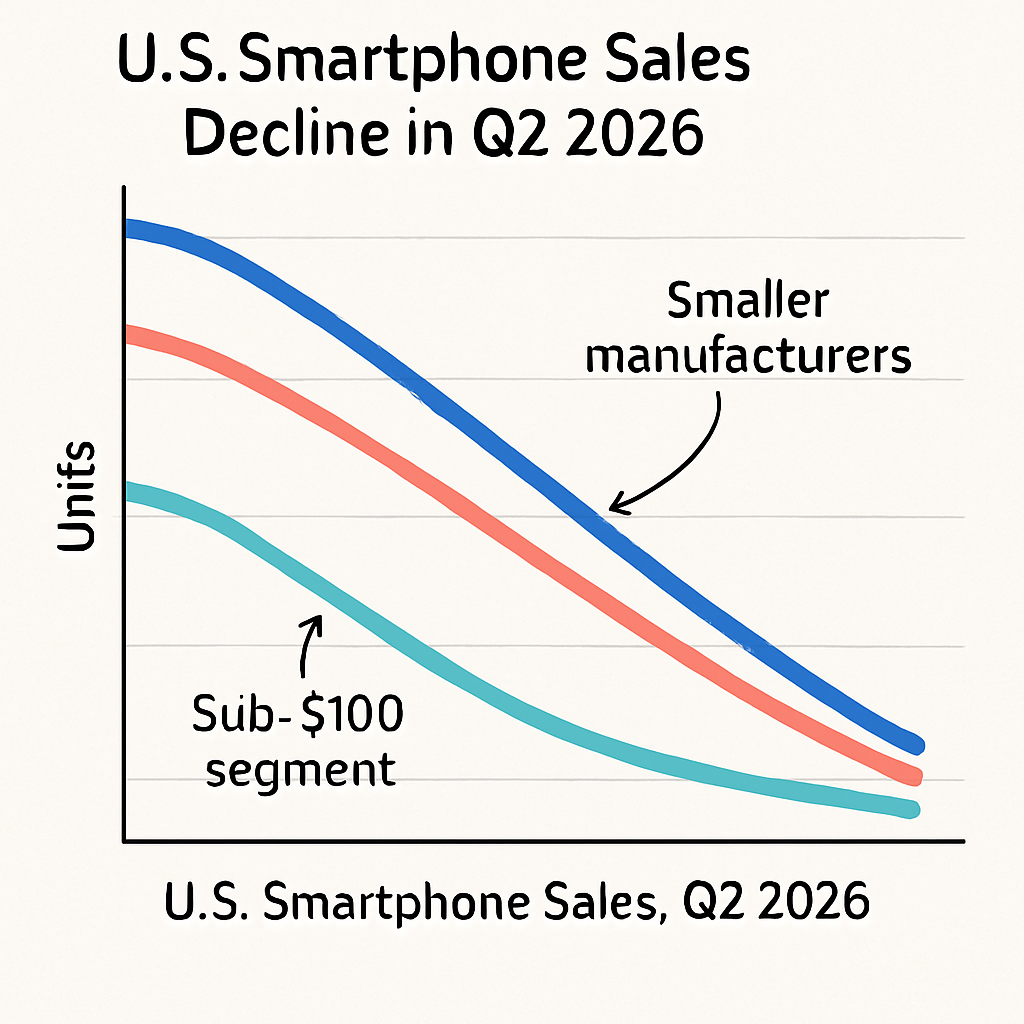
The U.S. smartphone market experienced a 5% year-over-year decline in sales during the second quarter of 2026, as rising component costs, particularly for memory, led to increased device prices. This trend disproportionately affected smaller manufacturers, who struggled to absorb the higher expenses, resulting in a significant 45% drop in their sales. In contrast, major brands like Apple, Samsung, Motorola, and Google saw a combined sales decrease of only 4%.
The sub-$100 smartphone segment was hit hardest, with sales plummeting nearly 65% compared to the same period last year. This sharp decline allowed Samsung and Motorola to expand their presence in the prepaid market, as the price gap between their entry-level devices and those of smaller competitors narrowed due to the rising costs.
Apple maintained stable iPhone pricing in the U.S. during this period, even as it adjusted prices for other products. However, industry analysts anticipate that the upcoming iPhone 18 series will see price increases. Given Apple’s significant market share—historically accounting for over 50% of smartphone sales in the third quarter—such price adjustments could have a substantial impact on average selling prices (ASPs) across the industry. The effect on sales will largely depend on carrier subsidies and consumer willingness to upgrade, especially from older models like the iPhone 15 series.
Recent analyst forecasts suggest that the iPhone 18 Pro could be priced between $1,349 and $1,399, while the iPhone 18 Pro Max may range from $1,449 to $1,499. Additionally, the anticipated iPhone Ultra is expected to start around $2,500. These potential price points reflect the broader trend of escalating smartphone costs driven by increased component prices.
In its latest earnings report, Apple announced a 22% increase in iPhone revenue, reaching $54.2 billion. However, the company also cautioned about worsening memory costs and supply constraints in the upcoming quarter, which could further influence pricing strategies and market dynamics.
As the smartphone industry navigates these challenges, the balance between rising production costs and consumer demand will be crucial. Manufacturers and carriers will need to carefully consider pricing strategies and promotional efforts to maintain sales momentum in a market increasingly sensitive to price fluctuations.