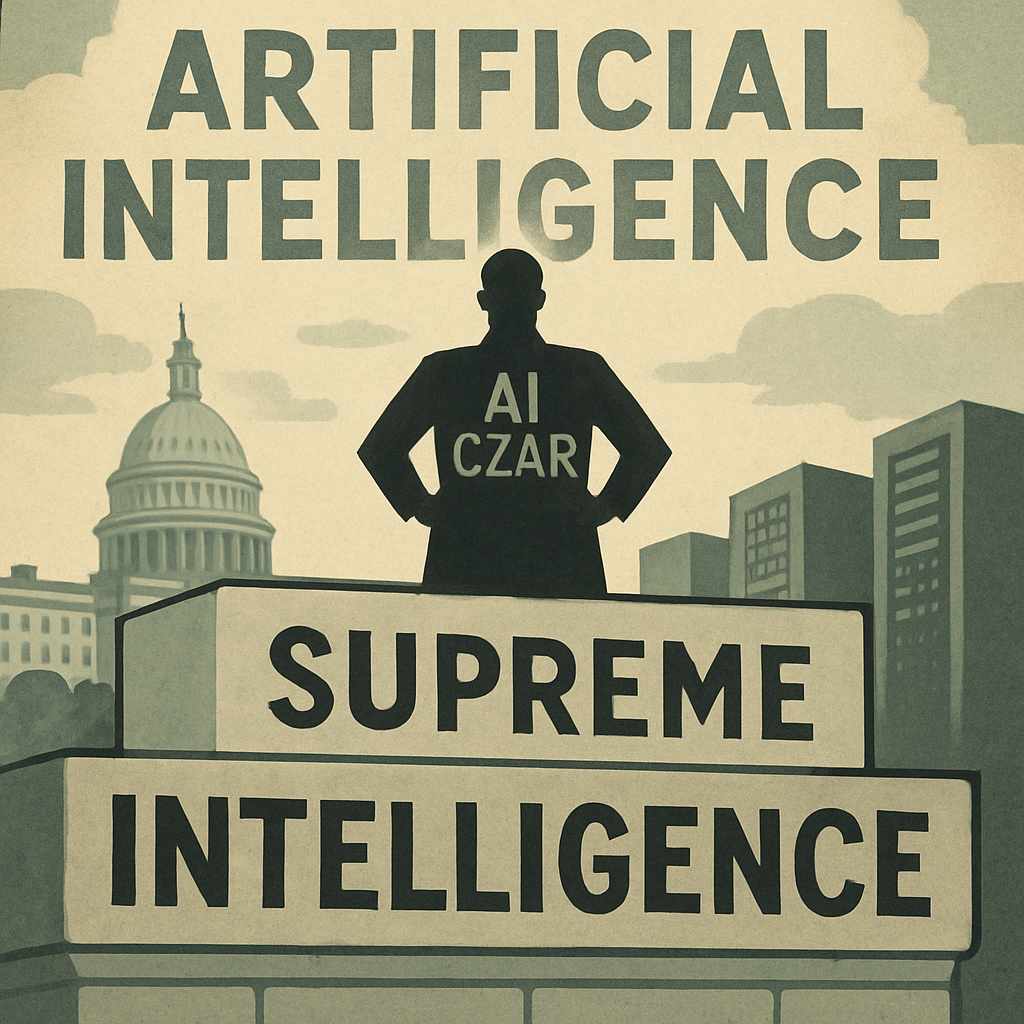
President Donald Trump has waded into the escalating AI safety debate by proposing a rebrand of “Artificial Intelligence” and unveiling plans to create a federal “AI Force” overseen by an “AI Czar.” The president framed concerns over AI regulation and criticism as politically motivated attacks by “Radical Left Dumocrats,” suggesting they want to “destroy our Country.”
Rebranding AI
On September 19, 2026, Trump published a poll on his social platform where followers could choose alternative names for what is currently called “Artificial Intelligence.” The choices offered include Superior Intelligence, Extreme Intelligence, and Supreme Intelligence. Trump argued that the phrase “Artificial Intelligence” is “inaccurate, and very ineloquent,” preferring a term that projects more power or prestige.
In his post, Trump dismissed recent scrutiny of AI from critics as part of a longer list of alleged hoaxes, placing it alongside controversies such as global warming, impeachments, and transgender issues. He contends that the criticism stems from coordinated political attacks rather than genuine concern. He also claimed data centers—integral to AI—have become targets until their perceived value to communities becomes obvious.
AI Force & Czar
Alongside his proposed rename, Trump declared he would protect and supervise the AI industry, while creating an AI Force reminiscent of the Space Force established during his first term. He said he will soon appoint an AI Czar, specifying that only individuals with “high I.Q.” need apply. Details about what the force or czar’s responsibilities will be, however, were not provided.
AI Safety Debate Intensifies
The president’s announcements come amid a growing debate over AI risks and ethics. Notably, an AI researcher recently quit Anthropic, citing fears that top AI companies believe the technology could threaten human existence by the decade’s end. In response, Anthropic’s CEO published a plan aimed at slowing down progress at the edges of what’s technologically possible. The move garnered support from leaders like OpenAI’s Sam Altman and Elon Musk.
Meanwhile, critics of what they consider an overblown containment strategy argue that focusing on an existential threat distracts from pressing harms AI already poses—data privacy issues, bias, surveillance, misinformation, and economic impacts among them. In one public display of agreement with Trump’s framing, Nvidia’s CEO labeled concerns about AI backlash a “hoax,” warning against slowing innovation.
New York recently became the first U.S. state to pause approval of large-scale data center projects—a signal that local governments are increasingly pushing back against unchecked infrastructure growth. The debate over AI regulation is evolving, but concrete policy proposals remain unclear.
Trump’s move to rebrand AI and establish an AI Force underscores how AI isn’t just a technological issue—it’s a political weapon. His strategy appears set to reshape public perception even as key details remain vague. What exactly the AI Force and czar will do—and how that might intersect with ongoing regulatory efforts—are the questions to watch going forward.