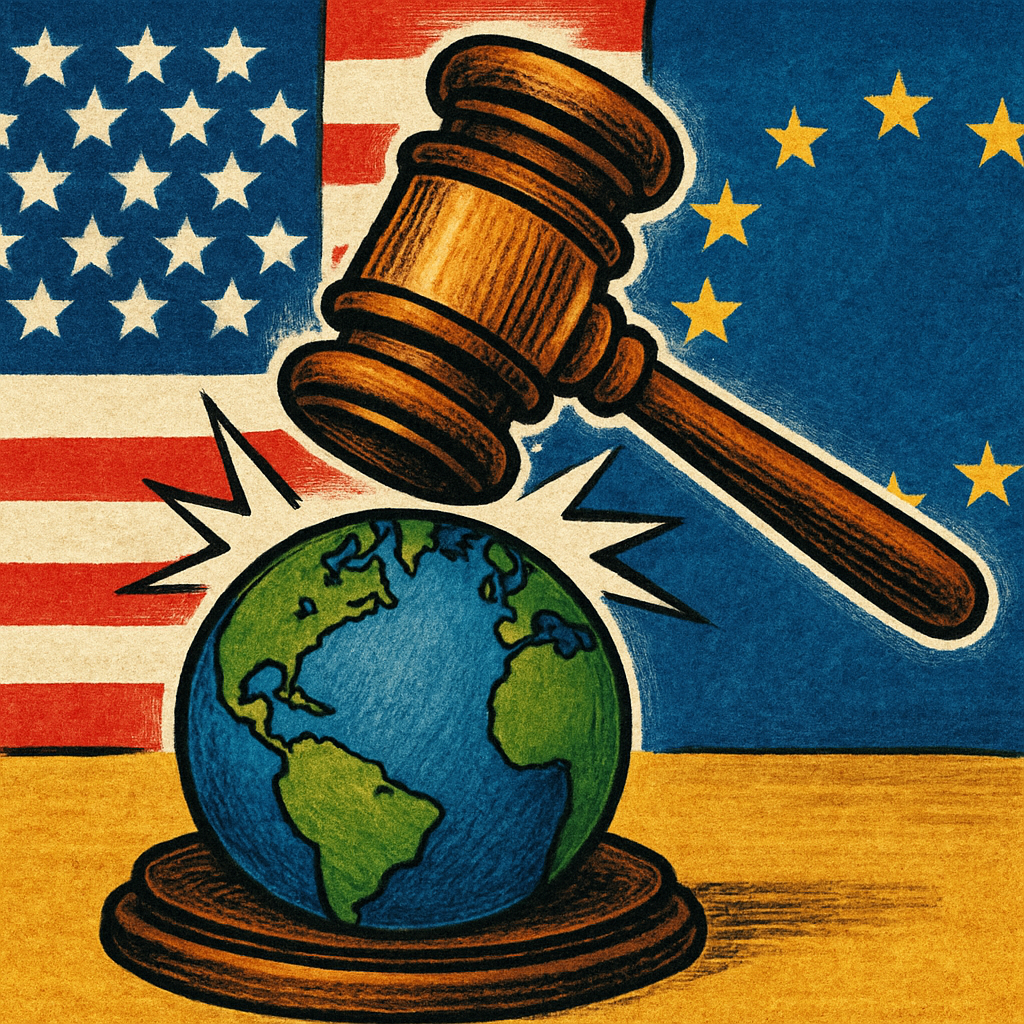
President Donald Trump has announced a formal investigation into the European Union’s trade practices, alleging that the bloc has unfairly imposed substantial fines on major U.S. technology companies, including Google, Apple, and Meta. This move follows the European Commission’s recent decision to levy a $1 billion fine on Google for alleged antitrust violations.
The European Commission’s fine against Google, amounting to €890 million (approximately $1 billion), was imposed for two primary reasons: favoring its own services in search results and restricting app developers from directing users to more affordable options outside the Google Play Store. This penalty is part of the EU’s broader enforcement of the Digital Markets Act (DMA), which aims to ensure fair competition within the digital marketplace.
In response to these actions, President Trump criticized the EU’s approach, describing the fines as unethical and illegal. He indicated that the U.S. would consider retaliatory measures, including the imposition of significant tariffs on European goods. Trump’s administration has previously expressed concerns that such EU regulations disproportionately target American companies, potentially harming U.S. economic interests.
U.S. Trade Representative Jamieson Greer echoed these sentiments, warning that the EU’s actions could jeopardize the current U.S.-EU trade agreement. Greer emphasized that the fines create uncertainty for U.S. exporters and could lead to escalating trade tensions between the two regions.
Google has contested the European Commission’s decision, arguing that the mandated changes would compromise product quality and negatively impact European users and businesses. The company has 60 days to comply with the EU’s directives or face additional daily fines.
This development is the latest in a series of clashes between the U.S. and the EU over digital regulation and trade practices. The outcome of the U.S. investigation and any subsequent actions could have significant implications for international trade relations and the operations of major technology firms.
As the U.S. initiates this investigation, stakeholders should monitor the evolving dynamics between the U.S. and the EU. The potential for retaliatory tariffs and further regulatory actions underscores the complex interplay between trade policies and digital market regulations. Businesses operating in these markets must stay informed and prepared for possible shifts in the regulatory landscape.