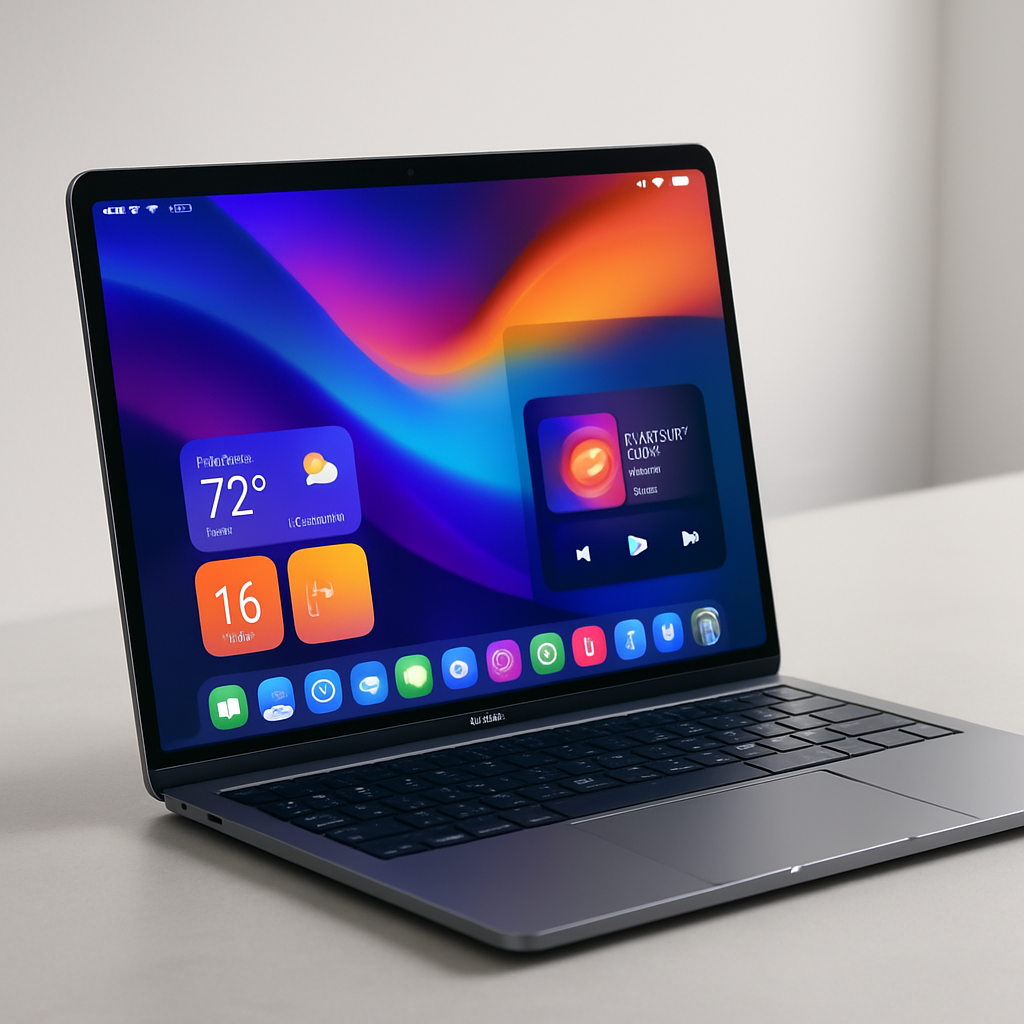
Apple’s inaugural touchscreen MacBook is now “100% confirmed,” according to the reputable Chinese leaker Instant Digital, who claims insider information from supply chain sources. This assertion was made in a recent Weibo post.
Instant Digital has a solid track record for Apple-related leaks, having provided accurate information in the past. This latest claim aligns with several recent reports.
Rumors about Apple’s development of a touchscreen MacBook have circulated for years. In January 2023, Bloomberg’s Mark Gurman reported that a MacBook Pro with an OLED display would be the first touchscreen Mac, initially slated for a 2025 release. However, that timeline did not materialize.
Subsequent reports have become more frequent and assertive. In September 2025, analyst Ming-Chi Kuo indicated that the first touchscreen OLED MacBook Pro would enter mass production in 2026. Gurman has also stated that the next 14-inch and 16-inch MacBook Pro models will feature touchscreens and are expected to launch between late 2026 and early 2027, with potential delays due to the global memory chip shortage.
Touchscreen support is anticipated to be one of several major upgrades in Apple’s next-generation high-end MacBook Pro models. Other rumored features include M6 Pro and M6 Max chips, an OLED display, a Dynamic Island replacing the notch, and a thinner design. The new laptops might also adopt the ‘MacBook Ultra’ branding.
Notably, macOS 27 Golden Gate introduces a more touch-friendly interface. The Sidecar feature now allows users to tap and interact with macOS interface elements using a finger on their iPad, suggesting a move towards touch integration.
Apple is not expected to market the new MacBook Pro/Ultra as a touch-first device like the iPad. Instead, it will be “touch-friendly, not touch-first,” allowing customers to use touch and mouse gestures interchangeably.
Historically, Apple has resisted the idea of a touchscreen Mac. In 2010, Steve Jobs argued that “touch surfaces don’t want to be vertical,” citing arm fatigue from reaching up to a screen. More than a decade later, in 2021, Apple’s hardware engineering chief John Ternus stated that the Mac was “totally optimized for indirect input” and that Apple did not see a reason to change that approach at the time.
However, with the increasing prevalence of touch interfaces in competing devices and evolving user expectations, Apple’s shift towards integrating touch capabilities into the MacBook lineup reflects a significant change in the company’s design philosophy. This move could attract users who prefer touch interactions, potentially expanding Apple’s market share in the laptop segment.
Source: MacRumors