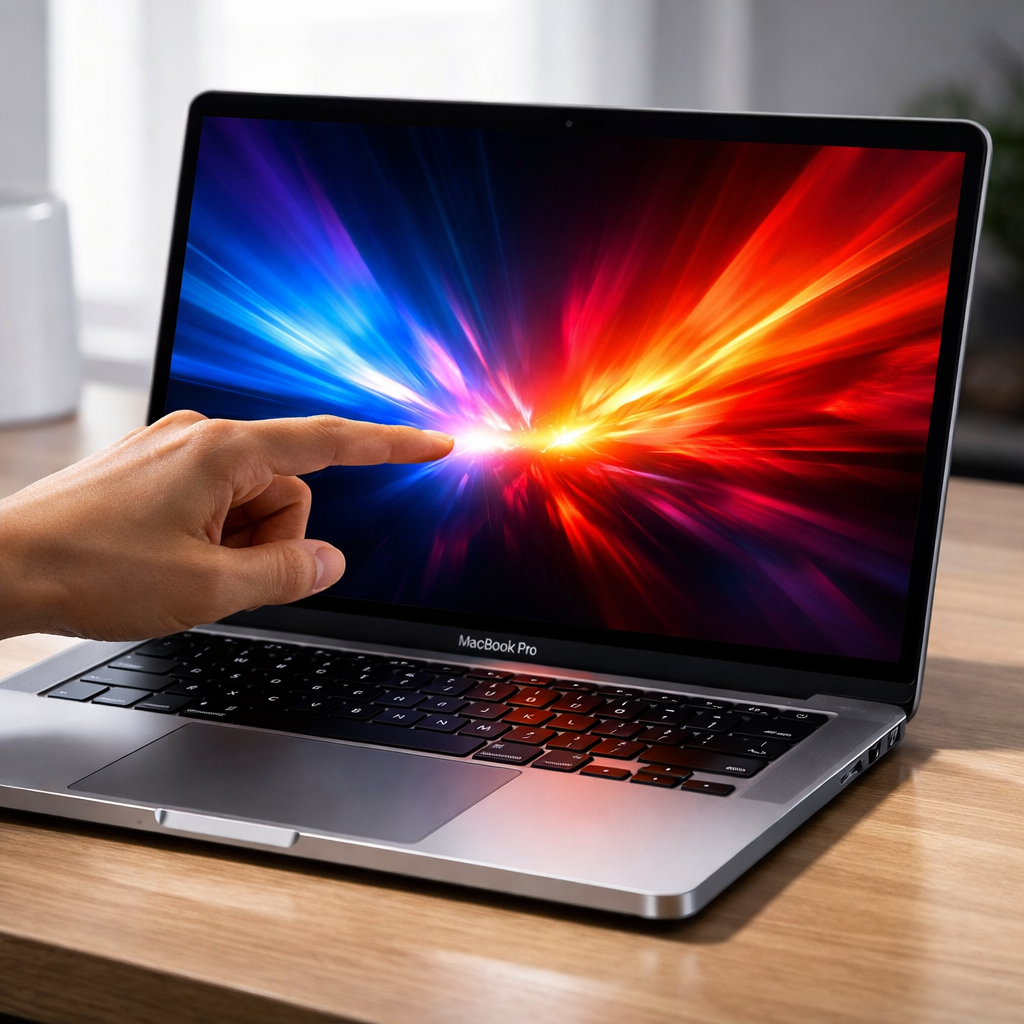
Apple’s fresh PROLED XDR MacBook Pro models prove that adding touch and adopting a new OLED-based display doesn’t compromise battery life. Despite the shift from mini-LED to the new tandem OLED design with integrated touch, the 14- and 16-inch MacBook Pros maintain the same top estimates for streaming video and wireless web use as their predecessors. This confirms that the display upgrade and touch support come without a hit to battery performance.
Battery Life Figures: No Drop Despite New Display & Touch
Here are the official battery life estimates for the new MacBook Pros with PROLED XDR display and Touch, using the same M5 Pro and M5 Max chips as the mini-LED models. The numbers are identical to past models, meaning Apple has held the line even with the added touch layers.
- 16-inch with M5 Pro: up to 24 hours video streaming, 17 hours of wireless web browsing.
- 16-inch with M5 Max: 22 hours video, 16 hours web.
- 14-inch with M5 Pro: 22 hours video, 14 hours web.
- 14-inch with M5 Max: 20 hours video, 13 hours web.
The Engineering Behind the Consistency
The PROLED XDR models pack the same internals (chips and batteries) as the best mini-LED Macs did. Battery capacity remains 72.4 Wh in the 14-inch versions and 100 Wh in the 16-inch machines. The OLED panel itself appears efficient enough that the power demands of touch integration are offset. Display specifications such as ultra-high contrast, peak brightness, and wide color support were upgraded, but without major sacrifices in either power draw or performance.
Importantly, fast-charge options also carry over: in just 30 minutes, users can expect to get up to about half the battery charge with the proper adapter, matching what’s been seen in earlier MacBook Pro models.
The new PROLED models begin at US$2,899 for the 14-inch with M5 Pro, and US$3,399 for the 16-inch. Preorders open immediately, with deliveries scheduled to start November 6.
Overall, the introduction of Touch to the MacBook Pro line, alongside a more demanding display technology, could have triggered shorter battery performance. That it does not is a significant engineering win. For professionals who’ve been nervous about the power cost of touch and OLED, this shows Apple released a machine with more interactive capability—without needing to trade away all-day battery. As this generation rolls out, it’ll be worth seeing how real-world battery tests stack up against Apple’s estimates, especially under demanding workloads and varied brightness settings.