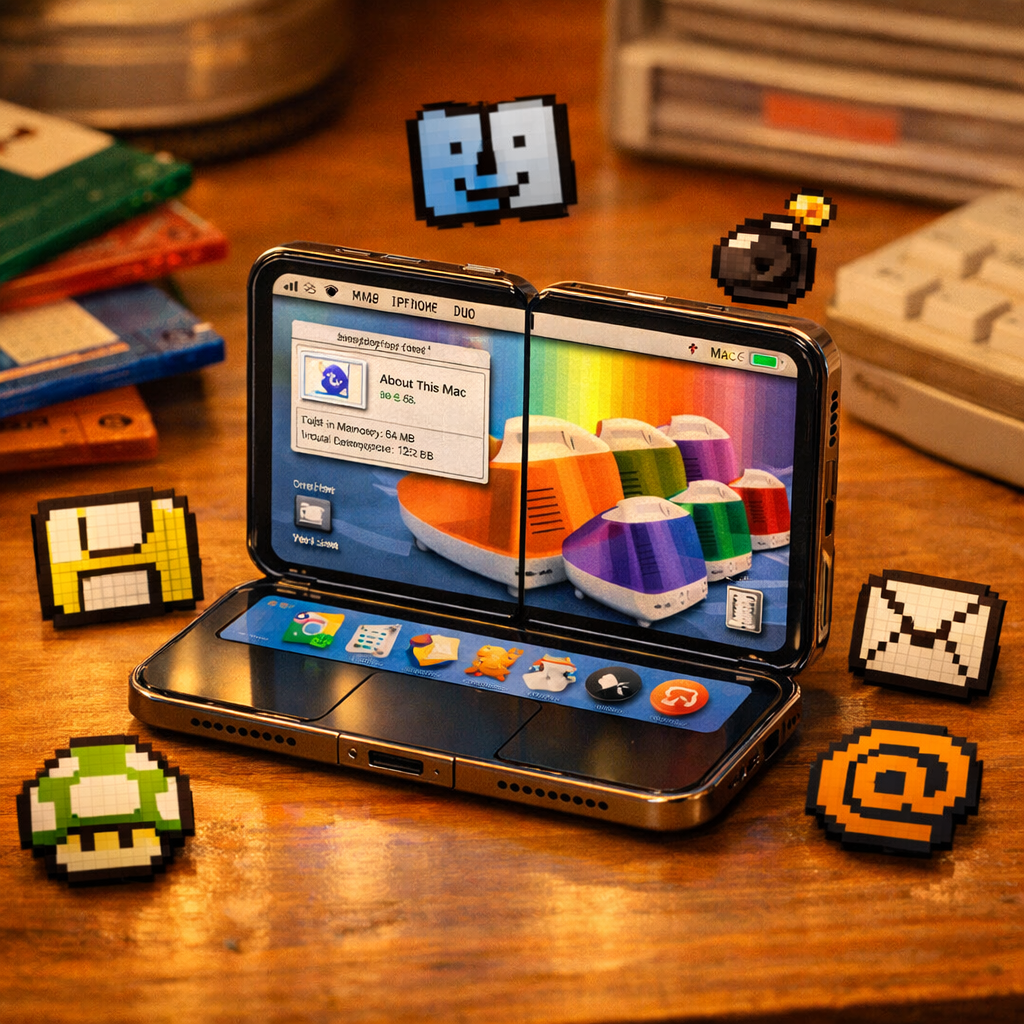
The iPhone Duo just got a sweet retro upgrade called Tiny Computers—a playful app that turns your dual-screen powerhouse into miniature versions of vintage Macs and even classic non-Apple PCs. The transformation isn’t just cosmetic: each simulation includes interactive quirks like floppy disks, command lines, paint apps, hidden files, and even some unexpected glitches.
Classic Macs & Nostalgic PCs Brought to Life
Within Tiny Computers, users can pick one of four classic Apple systems: the original 1984 Macintosh reimagined as a laptop, the colorful iMac G3, the iBook G3, and PowerBook G4. For non-Apple flavor, the app offers the Commodore 64, IBM PC, Amiga 500, ThinkPad models, and machines running Windows 95 or XP. Each device emulates its era—including pixelated graphics, retro fonts, and other hallmark details.
Not Just Looks—Features & Fun Hidden Gems
Tiny Computers offers genuine interactivity: you can open windows, type on simulated keyboards, draw with paint tools, explore command lines, and mess around with familiar desktop games. The app also hides secret commands, buried files, and rewards (medals) tied to games across different systems. And yes—some versions pad out the experience by occasionally crashing, staying true to their vintage roots.
Tiny Computers is now available on the App Store. It’s designed exclusively for iPhone Duo, which benefits from the dual-screen layout to display both retro desktops and functional overlays, enhancing immersion.
This trend of using modern devices to simulate relics of tech history builds on recent nostalgia-driven efforts, like emulators turning iPhones into old Walkmans or Game Boys. Such apps don’t just entertain—they also let longtime users re-experience the quirks (and frustrations) of vintage computing, while new users get a peek into where interfaces came from.
Why This Matters: Tiny Computers walks the line between novelty and meaningful interaction. It serves as a cultural bridge: a celebration of Mac history and broader PC culture while making those experiences portable. More so, it’s a signal of what developers are doing with the added screen real estate on devices like the Duo—crafting experiences that reimagine not just what we see, but how we revisit past digital worlds.