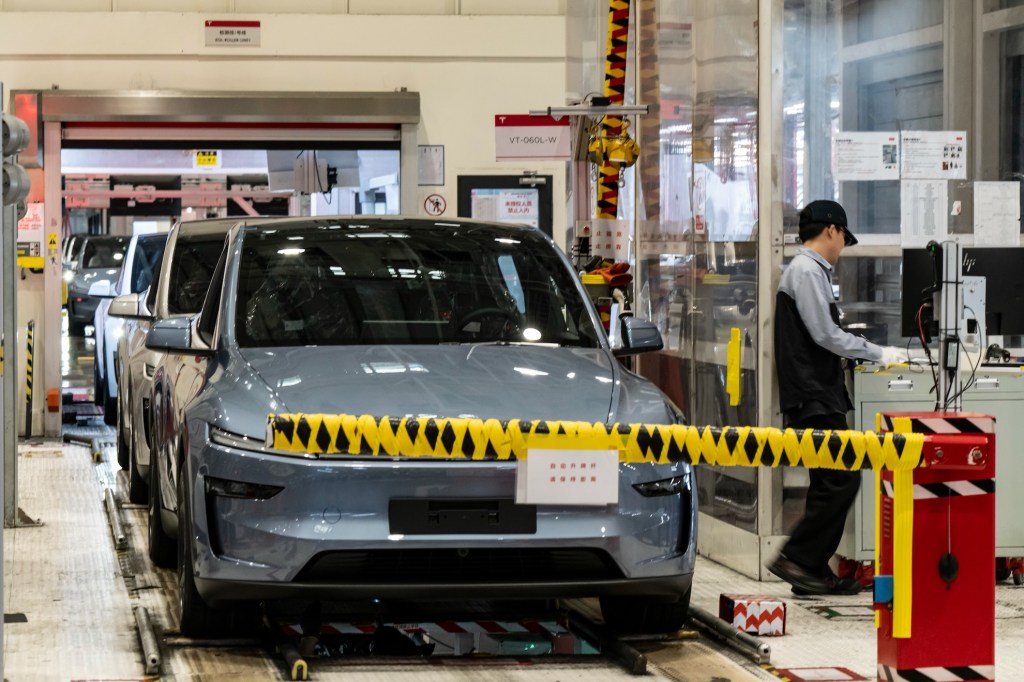
Tesla’s Q1 Revenue Surges Amidst EV Sales and FSD Subscription Growth
In the first quarter of 2026, Tesla reported a significant increase in revenue and profit compared to the same period in 2025. This growth was primarily driven by a rise in automotive sales and a substantial uptick in subscriptions to its Full Self-Driving (FSD) system, which now boasts 1.28 million active users.
Financial Performance
Tesla’s revenue for Q1 2026 reached $22.38 billion, marking a 16% increase from the $19.3 billion reported in Q1 2025. Automotive revenue climbed to $16.2 billion, up from $13.96 billion in the previous year. Notably, the company achieved a positive free cash flow of $1.44 billion, more than doubling the $700 million recorded in Q1 2025. This performance exceeded analysts’ expectations, who had anticipated higher cash burn during the quarter.
Vehicle Deliveries and Production
During the first three months of 2026, Tesla delivered 358,023 electric vehicles (EVs) globally, slightly below analysts’ projections of approximately 368,000. The company produced 408,386 vehicles in the same period, resulting in an inventory surplus. This discrepancy highlights the challenges Tesla faces in aligning production with delivery rates.
FSD Subscription Growth
A significant contributor to Tesla’s revenue boost was the 51% year-over-year increase in active FSD subscriptions, reaching 1.28 million users. This growth underscores the rising consumer interest in advanced driver assistance systems and Tesla’s strategic focus on software-based revenue streams.
Challenges and Market Dynamics
Despite the positive financial indicators, Tesla continues to navigate a complex market landscape. In 2025, the company experienced a 46% decline in profits, primarily due to reduced EV sales following the elimination of the $7,500 federal tax credit for electric vehicles by the Trump administration. This policy change affected not only Tesla but also other automakers in the industry.
Comparative Quarterly Performance
While the year-over-year growth is encouraging, Tesla’s Q1 2026 revenue of $22.38 billion is lower than the $24.9 billion reported in Q4 2025 and the $28 billion in Q3 2025. The previous quarters benefited from a surge in EV purchases ahead of the tax credit expiration, indicating that the current growth trajectory may face headwinds without similar incentives.
Strategic Investments and Future Outlook
Looking ahead, Tesla plans to significantly increase its capital expenditures to $25 billion in 2026, focusing on AI initiatives, manufacturing expansion, and research and development. This substantial investment reflects the company’s commitment to innovation and maintaining a competitive edge in the evolving automotive and technology sectors.
Conclusion
Tesla’s first-quarter results for 2026 demonstrate resilience and strategic adaptability in a fluctuating market. The company’s ability to leverage software subscriptions, alongside its core automotive business, positions it to navigate future challenges and capitalize on emerging opportunities in the EV and technology landscapes.