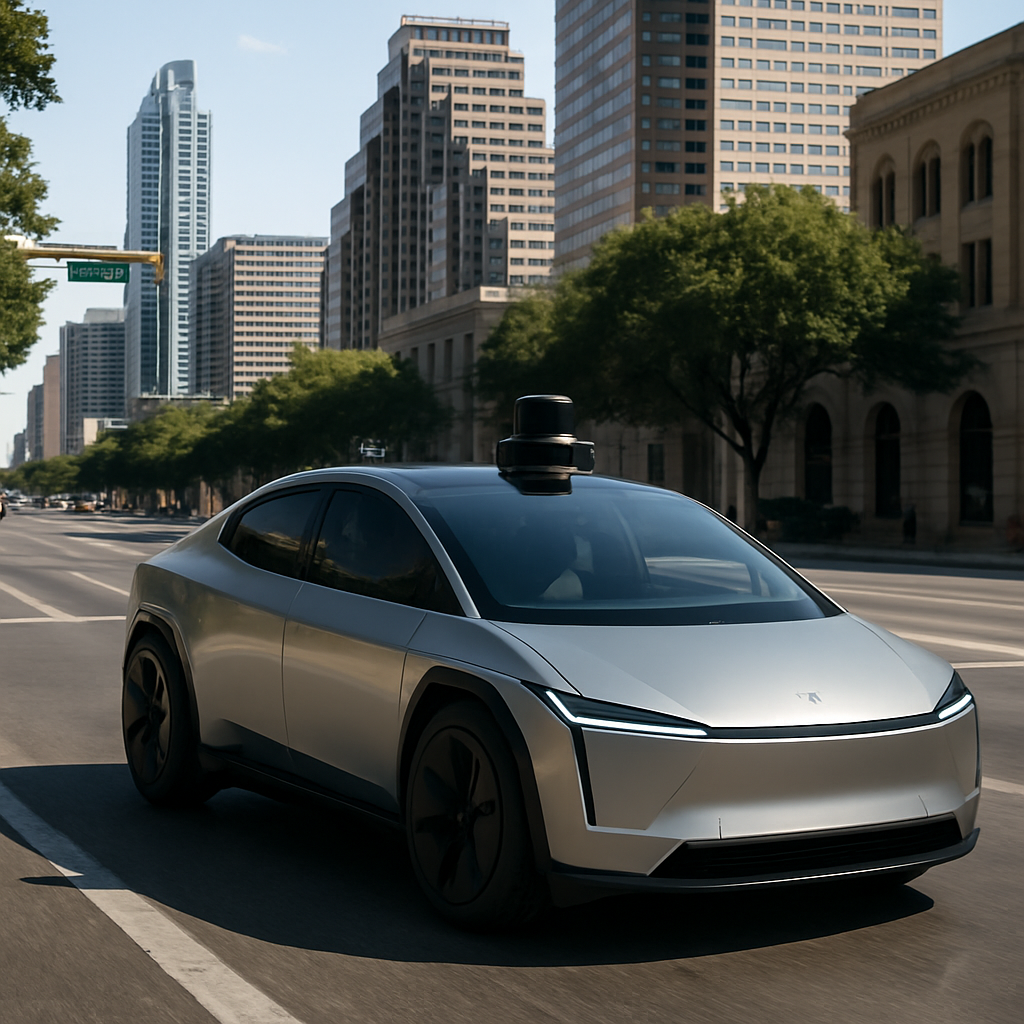
Tesla has initiated testing of its production-ready Cybercab, a two-seater autonomous vehicle devoid of a steering wheel and pedals, on the streets of Austin, Texas. This development was highlighted in a video shared on X, the social media platform owned by Tesla CEO Elon Musk, showcasing the vehicle navigating urban roads with a safety monitor seated in the right passenger seat.
This testing phase comes nearly two years after Tesla unveiled the Cybercab’s design, aiming to offer a fully autonomous robotaxi service accessible via Tesla’s app. Approximately a year prior, Tesla commenced a robotaxi service in Austin utilizing modified Model Y SUVs, which, at times, included safety monitors.
In recent weeks, Tesla has been testing prototype versions of the Cybercab equipped with steering wheels and pedals across various U.S. cities. Additionally, the company has been observed parking hundreds of these vehicles in different locations, fueling speculation about the imminent launch of a large-scale robotaxi network.
A significant regulatory development may facilitate this initiative. The National Highway Traffic Safety Administration (NHTSA) recently proposed a rule that would eliminate the requirement for brake pedals in vehicles designed exclusively for automated driving systems. This proposal is currently in the public comment phase and is anticipated to be enacted later this year.
Tesla’s strategy to outpace competitors like Waymo hinges on its integrated approach, manufacturing both the vehicles and the driving software. This vertical integration is expected to provide greater cost control compared to Waymo, which partners with brands like Jaguar and Zeekr for its vehicles. Furthermore, Tesla’s reliance solely on cameras for full autonomy contrasts with Waymo’s use of a more complex sensor suite, including lidar and radar.
Despite years of promises, Tesla has yet to deploy fully autonomous vehicles at scale. The Austin robotaxi service, utilizing modified Model Y SUVs, has experienced fluctuations in size over the past year, with some vehicles involved in minor incidents, at least two of which were attributed to remote operators.
Similarly, Waymo’s robotaxis have encountered minor accidents and operational challenges as they scale, including difficulties navigating construction zones, flooded areas, and interactions with school buses, leading to recalls and operational adjustments.
As Tesla advances its Cybercab testing, the company faces the dual challenge of refining its autonomous technology and navigating regulatory landscapes. The outcome of NHTSA’s proposed rule change could significantly impact Tesla’s ability to deploy a fully autonomous robotaxi network. Observers will be keenly watching how Tesla addresses these challenges and whether it can deliver on its ambitious vision for autonomous transportation.