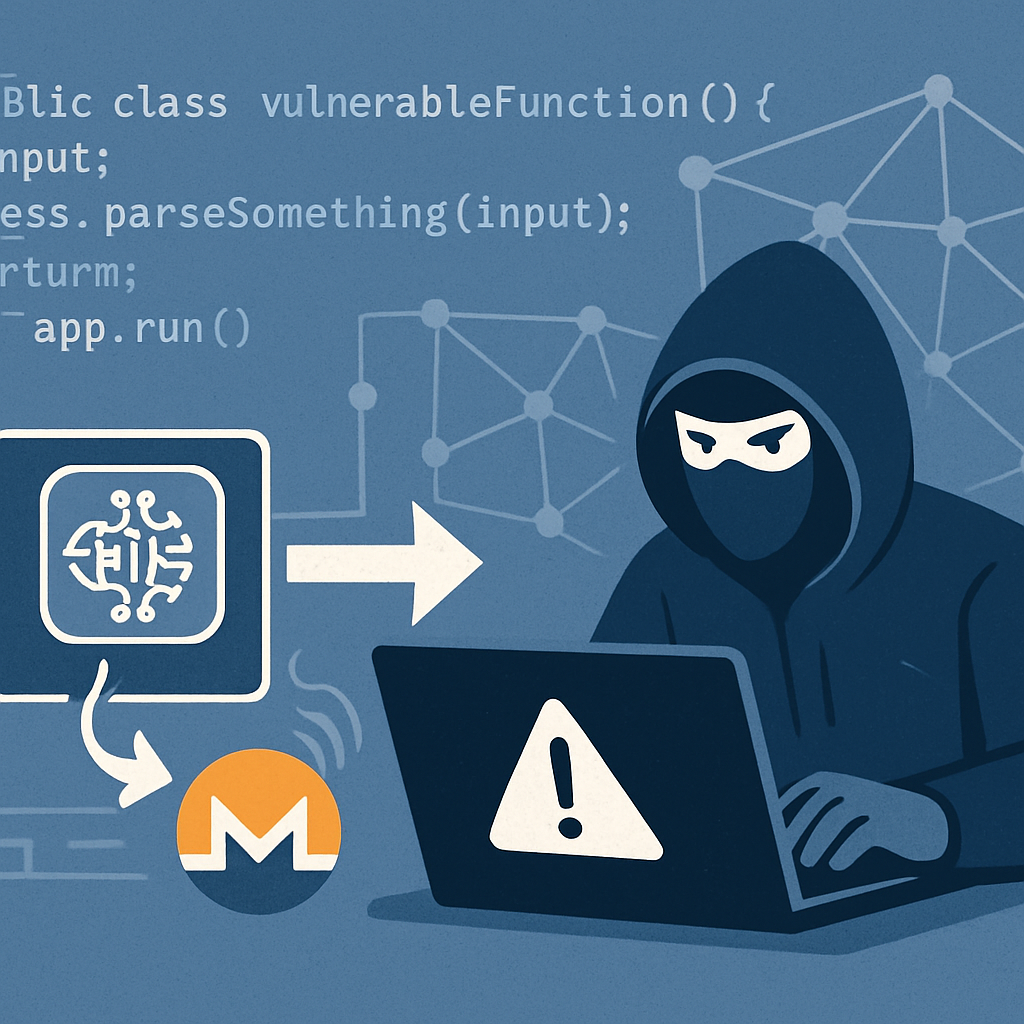
Cybercriminals are actively exploiting a critical vulnerability in Langflow, an open-source platform for building AI applications, to deploy Monero cryptocurrency miners on exposed systems. This vulnerability, identified as CVE-2026-33017 with a CVSS score of 9.3, allows unauthenticated remote code execution, providing attackers with a gateway to infiltrate enterprise networks.
The exploitation campaign was observed between March 27 and April 15, 2026. Attackers utilized a single line of Python code within an unauthenticated Langflow API endpoint to download and execute a shell script. This script fetched a miner binary and launched it as a detached process, effectively initiating the cryptojacking operation.
Once deployed, the malware exhibits several malicious behaviors:
- Termination of Competing Miners: It identifies and stops processes associated with other cryptocurrency mining malware, such as Kinsing, WatchDog, Rocke, and Outlaw, ensuring exclusive use of system resources.
- Disabling Security Measures: The malware disables various host-level security controls, including AppArmor, Ubuntu’s Uncomplicated Firewall, iptables, SELinux, the kernel NMI watchdog, and Alibaba Cloud’s Aliyun agent, to avoid detection and removal.
- Persistence Mechanisms: It establishes persistence through cron jobs, allowing it to survive system reboots and maintain control over the compromised host.
- Lateral Movement: By leveraging reused SSH keys, the malware propagates to other systems within the network, expanding its reach and impact.
The attack sequence involves exploiting the Langflow vulnerability to execute a Python script, which then launches a remotely hosted shell script acting as a dropper. This dropper checks for the presence of a binary named “lambsys” on the host. If absent, it downloads the binary using curl or wget, executes it as a detached process, and attempts to spread to other SSH-accessible hosts.
The “lambsys” binary, an ELF executable written in Go, is designed to disable various security features and remove system logs to conceal its activities. It also manipulates file attributes to prevent modification or deletion, a tactic commonly used by cryptojacking malware to maintain persistence.
In the final stage, the binary contacts an external server to download a TAR archive containing a customized XMRig miner. After extracting and executing the miner, the archive is deleted to erase traces of the installation. Additionally, the malware queries ipinfo.io to obtain the host’s public IP address and location, enabling the attackers to make informed operational decisions, such as selecting geographically appropriate mining pools to optimize performance and potentially excluding victims in certain regions.
This incident underscores the critical importance of promptly patching vulnerabilities in widely used platforms like Langflow. Organizations utilizing Langflow should immediately upgrade to version 1.9.0 or later to mitigate the risk of exploitation. Additionally, implementing robust security measures, such as network segmentation, regular monitoring for unusual activity, and strict access controls, can help prevent unauthorized access and limit the impact of potential breaches.
The rapid exploitation of CVE-2026-33017 highlights the increasing sophistication and agility of threat actors targeting AI infrastructure. As AI applications become more integral to business operations, ensuring their security must be a top priority. Organizations should adopt a proactive approach to vulnerability management, including regular security assessments and timely application of patches, to safeguard their systems against emerging threats.

