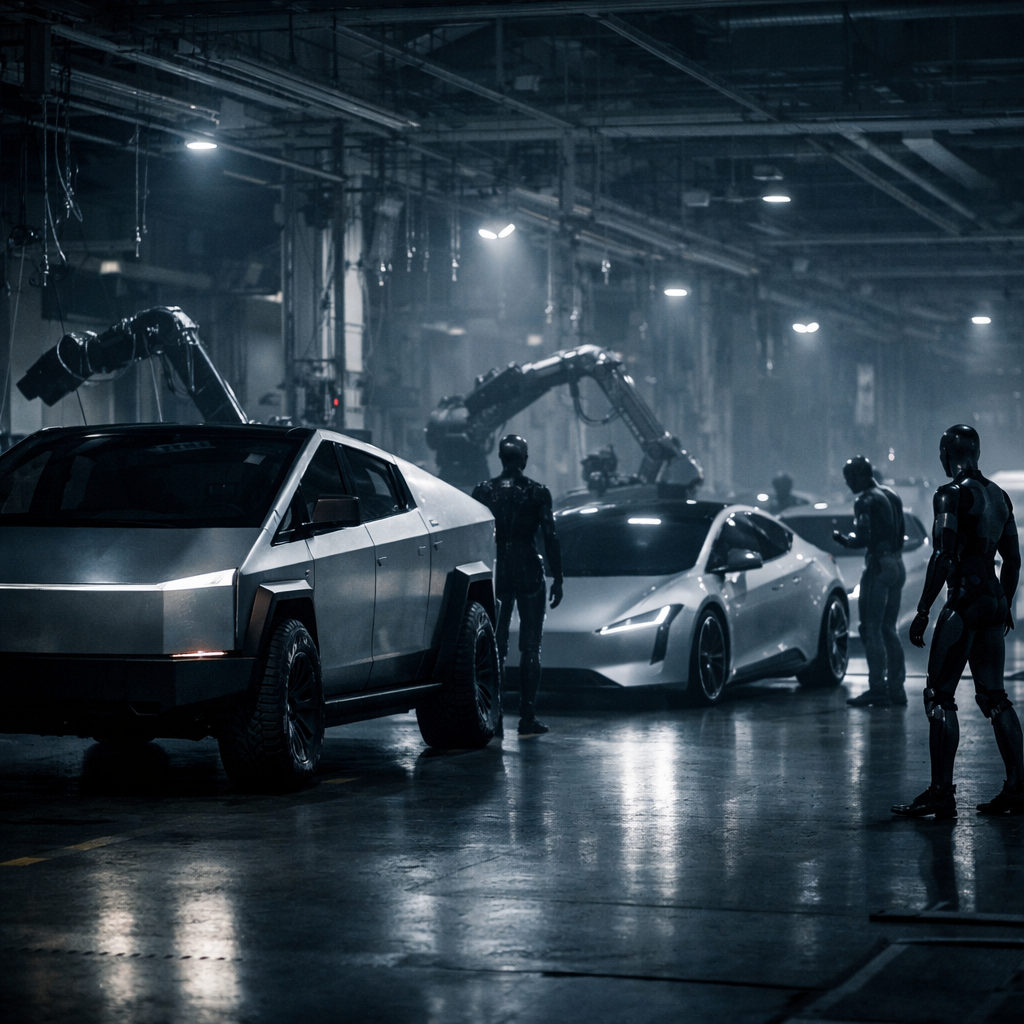
Tesla plans to end production of its Cybertruck in 2027, reallocating its factory space to focus on two-seater Cybercabs—its autonomous robotaxi project, CEO Elon Musk announced. The vehicle, launched in late 2023, never reached Tesla’s original sales goals, prompting the shift.
Why the Cybertruck Fell Short
Initially revealed in 2019, the Cybertruck was positioned as a radical, sci-fi?inspired electric pickup with bold design and promises of performance. Tesla claimed it would cost under $40,000 and deliver up to 500 miles of range. Neither goal was achieved by its release. Delays—including those tied to the COVID-19 pandemic—pushed back production. When deliveries finally began in late 2023, the base price had risen to about $60,000 and the top range had dropped by over 100 miles.
Sales figures never came close to expectations. Tesla had targeted roughly 250,000 Cybertrucks per year but only sold tens of thousands in total over three years. The unconventional exterior design and inflated pricing appear to have limited its appeal. Political factors also played a role: the vehicle became the subject of protest following Elon Musk’s public support of Donald Trump, among other controversies.
Shift to Robotaxi and Robotics Ambitions
The decision to sunset Cybertruck production aligns with Tesla’s evolving strategy under Musk, which increasingly emphasizes AI, robotics, and autonomous vehicles. The space used to make Cybertrucks will be repurposed for building Cybercabs, two-seater robotaxis. These have already begun operating on Austin’s streets, with plans to expand to Dallas shortly.
This isn’t the first time Tesla ditched a product in favor of robotics; earlier in 2026 it ceased making the Model S sedan and Model X SUV to make room for production of Optimus humanoid robots. The Cybercab robotaxi initiative forms a central pillar of Tesla’s long-term goal to transition from vehicle manufacturer to robotics-first company.
What this means: The Cybertruck’s discontinuation illustrates the challenges tied to grand promises when product delivery falls short. Tesla’s pivot toward robotaxis and humanoids suggests it believes its more futuristic visions represent its strongest path forward. But shifting gears will test Tesla’s abilities in engineering, regulatory compliance, and market adoption. The coming rollout of Cybercabs will be one of the most important signals of whether that strategy can succeed.