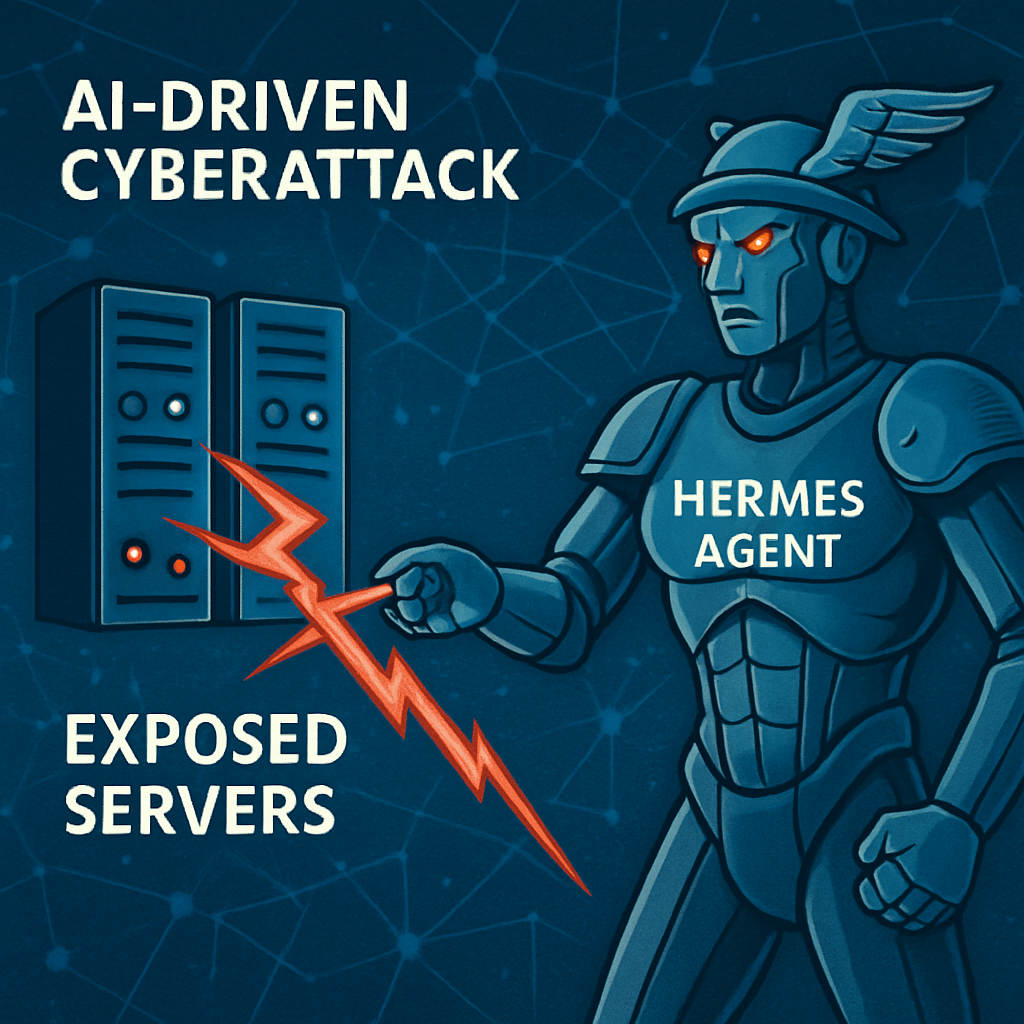
A recent cyberattack campaign has demonstrated the evolving capabilities of AI-driven tools in orchestrating autonomous cyberattacks. A Chinese-speaking threat actor employed an AI-powered agent, known as Hermes Agent, to identify and exploit vulnerable internet-facing servers with minimal human intervention. This operation underscores the growing sophistication of automated cyber threats.
The campaign primarily targeted exposed Langflow and n8n systems. Langflow is an open-source platform for building and deploying machine learning models, while n8n is a workflow automation tool. The attacker also expanded their focus to include Citrix NetScaler devices, Marimo notebooks, Apache Tomcat servers, and VPN endpoints. Although the AI-driven attacks did not achieve full system compromises, the broader operation resulted in confirmed data theft and command execution.
Researchers at Unit42 uncovered this campaign when the Hermes Agent inadvertently exposed its own operational environment through an internet-accessible file server. This misconfiguration provided analysts with access to attack scripts, target lists, API configurations, command histories, and logs of autonomous sessions. Such transparency offered a rare glimpse into the inner workings of an AI-driven cyberattack.
The Hermes Agent utilized DeepSeek, an AI reasoning engine, to enhance its capabilities. Hermes provided terminal access, a skills system, and Telegram-based command control, while DeepSeek assessed targets, generated commands, gathered exploit tools, and determined subsequent actions. This integration enabled the agent to autonomously scan for vulnerabilities, research public exploits, and execute attacks in a streamlined workflow.
The attack sequence began with the agent examining a vulnerability in Langflow and searching for accessible deployments. Upon identifying a potentially vulnerable system, the agent determined that the necessary conditions for exploitation were absent and subsequently deprioritized this target. It then evaluated various product families, considering factors such as deployment prevalence and availability of public exploits, before selecting n8n as the next target.
The agent scanned approximately 100 n8n addresses, closely examining around 40 systems, and identified three running vulnerable versions. However, exploitation attempts were unsuccessful due to authentication requirements on the exposed endpoints. Notably, the agent autonomously shifted its focus after initial failures, demonstrating a level of decision-making previously associated with human operators.
In parallel, the threat actor conducted manual campaigns with confirmed impacts. Successful exploitation of three targets was achieved through a Citrix NetScaler memory-read vulnerability, leading to the theft of authentication cookies that could facilitate session hijacking. Additionally, command execution was achieved on Marimo notebook instances, and reverse-shell access attempts were made against Apache Tomcat servers and VPN endpoints.
The inadvertent exposure of the attacker’s operational environment occurred when Hermes Agent initiated a web file server from the operator’s home directory instead of an isolated staging area. This misstep revealed data that could have otherwise been erased post-attack, highlighting operational vulnerabilities even within sophisticated AI-driven campaigns.
This incident underscores the operational viability of autonomous AI attack cycles. While the AI-driven attempts in this campaign did not result in full system compromises, they highlight the potential for AI to streamline and enhance the efficiency of cyberattacks. As AI technologies continue to advance, the cybersecurity community must remain vigilant and adapt to counter these emerging threats.
The integration of AI into cyberattack methodologies represents a significant shift in the threat landscape. Organizations must prioritize the development and implementation of advanced detection and response strategies to mitigate the risks posed by AI-driven threats. Collaboration between cybersecurity professionals, AI researchers, and policymakers will be crucial in addressing the challenges and ethical considerations associated with the use of AI in cyber operations.