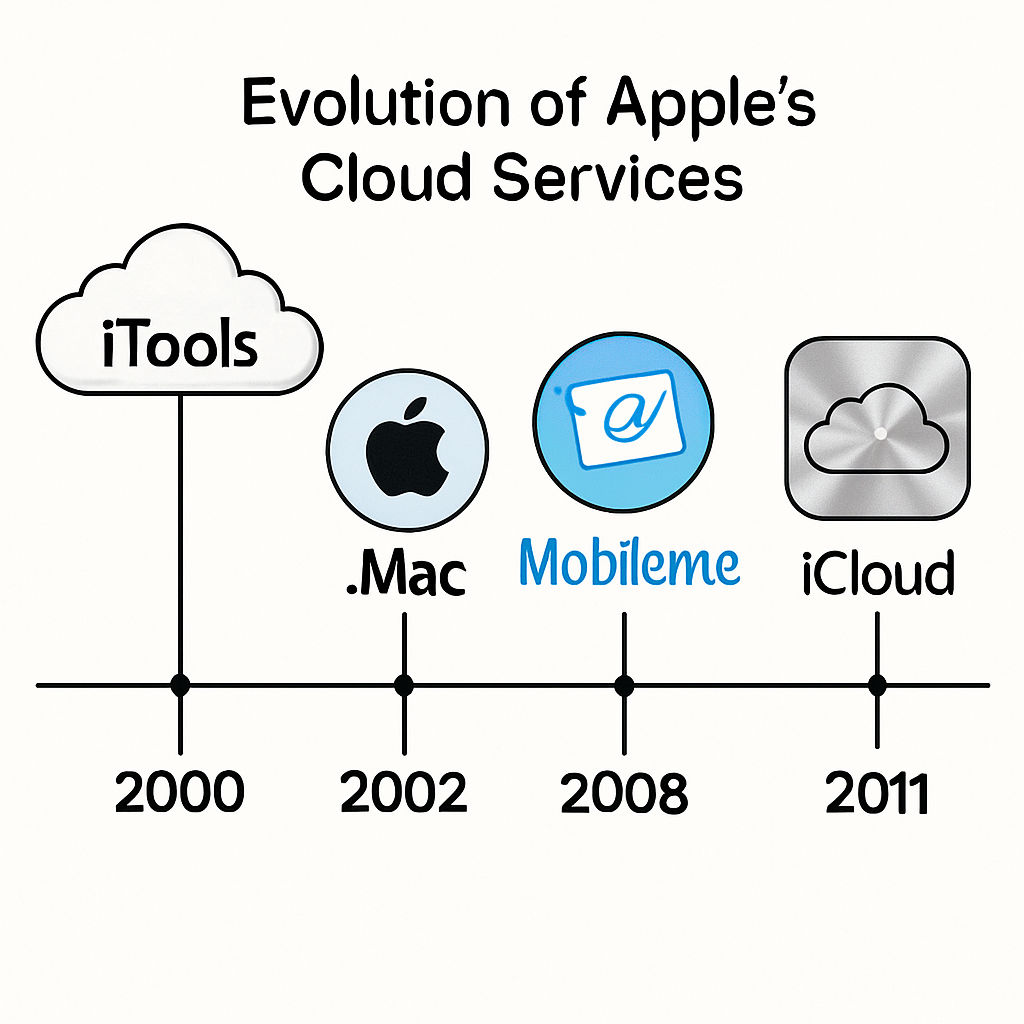
Apple’s journey into subscription-based services has been a transformative one, beginning with iTools in 2000 and culminating in the comprehensive iCloud platform we know today. This evolution reflects Apple’s strategic shift towards integrating cloud services into its ecosystem, enhancing user experience and fostering customer loyalty.
iTools: The Beginning
In 2000, Apple introduced iTools, a suite of free internet services designed exclusively for Mac users. This initial offering included features like email accounts, web hosting, and online storage, laying the groundwork for Apple’s future in cloud services.
.Mac and MobileMe: The Transition
Building upon iTools, Apple launched .Mac in 2002, transitioning to a paid subscription model. This service expanded on its predecessor by offering enhanced email capabilities, increased storage, and additional web services. In 2008, .Mac evolved into MobileMe, aiming to provide seamless synchronization of emails, contacts, and calendars across devices. However, MobileMe faced criticism for reliability issues, prompting Apple to rethink its approach to cloud services.
iCloud: A Unified Solution
In 2011, Apple unveiled iCloud, a free service that integrated deeply with iOS and macOS devices. iCloud offered users 5GB of free storage, with options to purchase additional space, and facilitated the automatic synchronization of photos, documents, and app data across devices. This marked a significant improvement in reliability and user experience compared to its predecessors.
Expansion into Subscription Services
Beyond iCloud, Apple expanded its subscription offerings to include services like Apple Music, Apple News+, Apple Arcade, and Apple TV+. These services not only diversified Apple’s revenue streams but also strengthened its ecosystem by providing users with a wide range of content and applications under a unified subscription model.
Apple’s foray into subscription services has been a strategic move to enhance user engagement and create a more integrated ecosystem. By offering a variety of services that cater to different user needs, Apple has positioned itself as a leader in the subscription-based service industry. As the company continues to innovate and expand its offerings, it will be interesting to see how it adapts to the evolving demands of its user base and the competitive landscape.