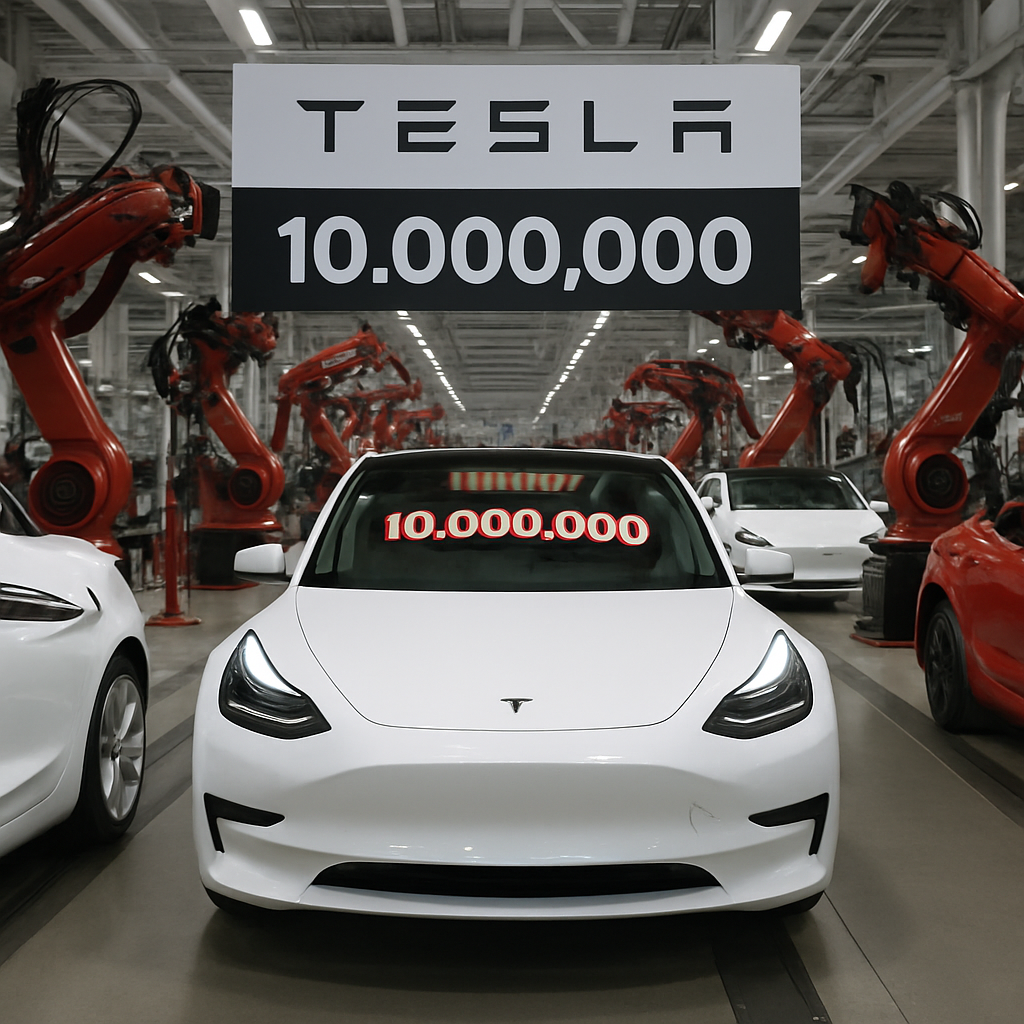
Tesla has achieved a significant milestone by manufacturing its 10 millionth electric vehicle (EV), as announced in a recent social media post. This accomplishment comes six years after the company produced its first million vehicles, highlighting Tesla’s rapid growth in the EV market.
Reaching the 10 million mark brings Tesla closer to one of the key objectives outlined in CEO Elon Musk’s $1 trillion compensation plan, which was approved by shareholders last year. The plan sets ambitious targets for 2035, including the production of 20 million vehicles, securing 10 million active subscriptions for its ‘Full Self-Driving’ (FSD) software, delivering one million robots, and deploying one million robotaxis.
Despite the impressive production figures, Tesla has yet to sell 2 million vehicles in a single year. Maintaining the current production pace suggests that achieving the 20 million vehicle target may extend into the early 2030s. The company faces challenges in its home market, with U.S. sales declining by 13% year-over-year in the second quarter. To counteract this, Tesla has been expanding into newer markets such as Japan, Australia, and Lithuania to attract additional buyers.
In terms of other objectives in Musk’s compensation plan, Tesla reports nearly 1.5 million FSD subscribers. However, it remains unclear if this figure includes free trials, which would not count towards the official goal set by the board of directors. The company is still in the early stages of developing its robots and robotaxis, indicating that these targets are further down the line.
Financially, Tesla aims to increase its adjusted EBITDA to $400 billion by 2035 to fully realize Musk’s compensation package. Currently, the adjusted EBITDA stands at approximately $3.27 billion and has been decreasing due to factors such as significant discounts, the loss of regulatory credits, and increased spending on new initiatives like artificial intelligence and robotics.
In the broader EV market, Tesla’s closest competitor is China’s BYD, which has recently surpassed 17 million ‘new energy vehicles’ produced and sold, with about half being hybrids. This underscores the competitive landscape Tesla operates within as it strives to meet its ambitious goals.
Achieving the production of 10 million EVs is a testament to Tesla’s influence in the automotive industry. However, the company faces substantial challenges ahead, including meeting ambitious production targets, expanding its FSD subscriber base, and developing new technologies like robots and robotaxis. The evolving competitive landscape, particularly with companies like BYD making significant strides, adds further complexity to Tesla’s path forward. Investors and industry observers will be closely monitoring how Tesla navigates these challenges in the coming years.