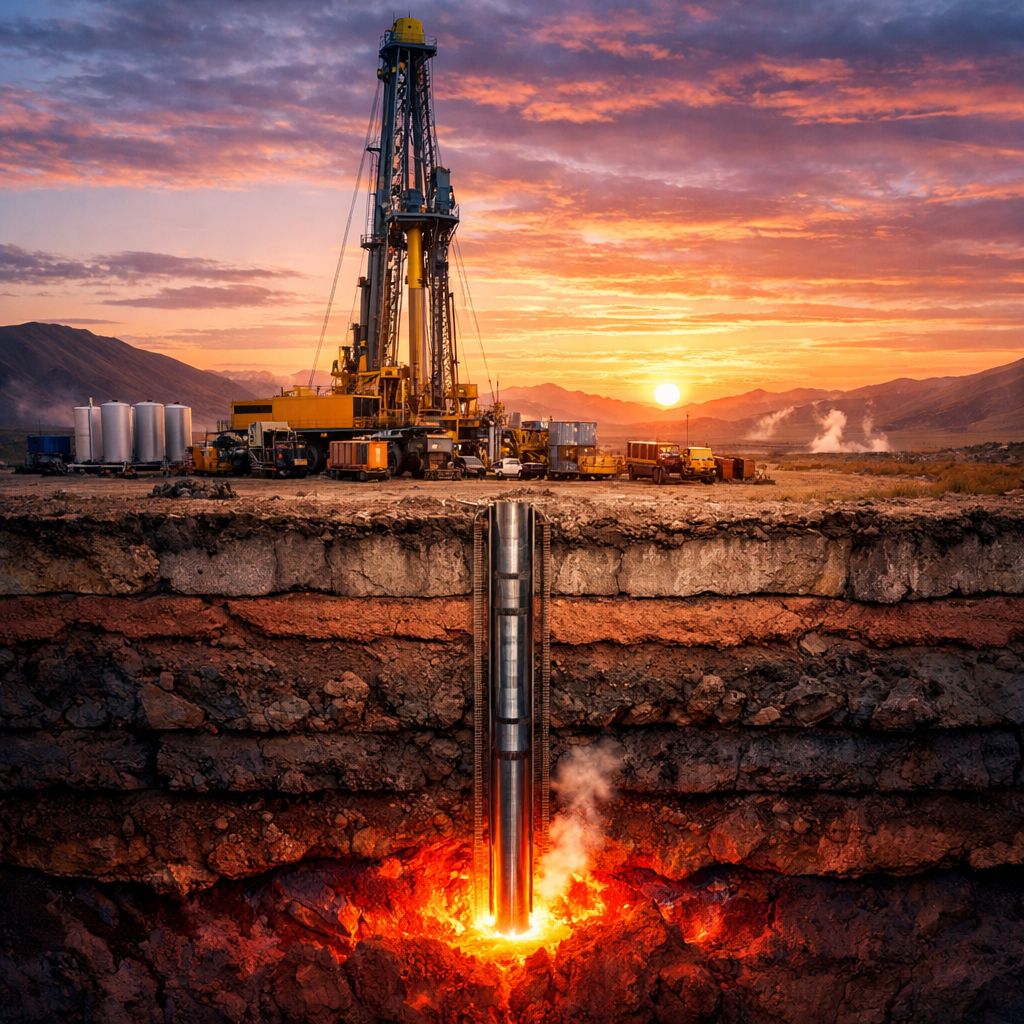
Engineers and investors are looking deeper into the Earth in the race to fuel data centers and tech infrastructure, as the next frontier comes in the heat—literally. Super-hot rock geothermal is positioned as a potential game changer in energy supply, especially for AI data centers craving massive, reliable power without soaring carbon footprints.
What Is Super-Hot Rock Geothermal?
Conventional enhanced geothermal systems (EGS) tap relatively shallow hot rock beneath the surface, circulate water or steam, and convert heat into electricity. Super-hot rock geothermal pushes that further by plunging drills several miles underground, reaching temperatures so high that water becomes a supercritical fluid—a hybrid state with both liquid and gas properties that carries far more energy than normal steam. Single wells could produce 15 megawatts or more, significantly raising the output per well versus traditional geothermal setups.
Who’s Pushing the Tech Forward?
Several startups are sprinting to make super-hot rock geothermal viable. Quaise Energy has secured a big deal with Google: the tech giant committed over $500 million to buy 50 megawatts from a central Oregon deep-heat project that targets rocks between 2.5 and 3.0 miles underground. Their drilling method swaps out standard bits for a gyrotron that bombards rock with millimeter-wave radiation, essentially turning the rock into ash to drill more efficiently under extreme heat.
Mazama Energy is taking a different approach. Instead of radical bits, they’re innovating on how to cool what’s already available. Their “Carbon Chill” system replaces traditional water-based drilling mud with carbon dioxide. Under extreme pressurized and hot conditions, CO₂ becomes supercritical itself. It’s funneled through a valve that expands the gas (similar in principle to a rocket nozzle), dropping the temperature rapidly, cooling the drill bit, and transporting rock fragments to the surface. The CO₂ is then filtered and reused.
There’s also XGS Energy in the mix, backed by a U.S. Department of Energy grant to refine materials, design, and modeling necessary for operations at the depths where super-hot rock resides. While XGS is still in early stage work, both Mazama and Quaise are making super-hot projects the center of their plans.
Why It Matters Now
The financials are aligning. The U.S. has been estimated to hold up to 57 terawatts of generating capacity in super-hot rock—more than enough to meet the energy demands of next-generation computing and AI infrastructure. Drilling costs currently account for 25–33% of geothermal plant expenses; if fewer, longer-lasting wells work, it could dramatically lower costs.
Investors are already betting heavily. Quaise has pulled in over $270 million in funding from several firms and prominent individuals. Mazama has raised around $171 million from its own roster. Early performance metrics are promising: Mazama’s second well was reportedly drilled 80% faster than its first, with its CO₂-cooling system further slashing drilling time.
There are risks: the extreme temperatures and pressures come with engineering, material, and safety challenges. Drilling gear must withstand extreme wear; maintaining system reliability at depth is non-trivial. But the backing from a tech giant like Google signals confidence that at least some of the approaches will prove viable at scale.
The deal with Google, Mazama’s tech wins, and the government grants all suggest super-hot rock geothermal is heating up as a contender in clean power. If it succeeds, this could upend how we power data centers, clouds, and emerging tech hubs.
Challenges Ahead
Even with breakthroughs in cooling and new drilling techniques, super-hot rock geothermal is not yet proven at large commercial scale. Material science, operational safety, subsurface unpredictability, and investment risk remain. The time and cost to demonstrate sustained output will decide whether this becomes part of the energy mix or remains a niche.
Scaling deployment hinges on regulatory frameworks, environmental permitting, and the ability to integrate with existing grids. It also needs to compete with solar, wind, and conventional geothermal—not just on clean impact, but on cost per megawatt, reliability, and location flexibility.
What this Means: The push toward super-hot rocks represents a shift from marginal improvements to transformational potential. If startups like Quaise, Mazama, and XGS can prove their tech at depth and at scale, we may be on the edge of a new era—where the crust’s deepest heat powers the digital ambitions of AI, cloud, and enterprise at lower cost and carbon. The big test ahead: can they deliver consistent power, safety, and cost-efficiency in real-world projects?