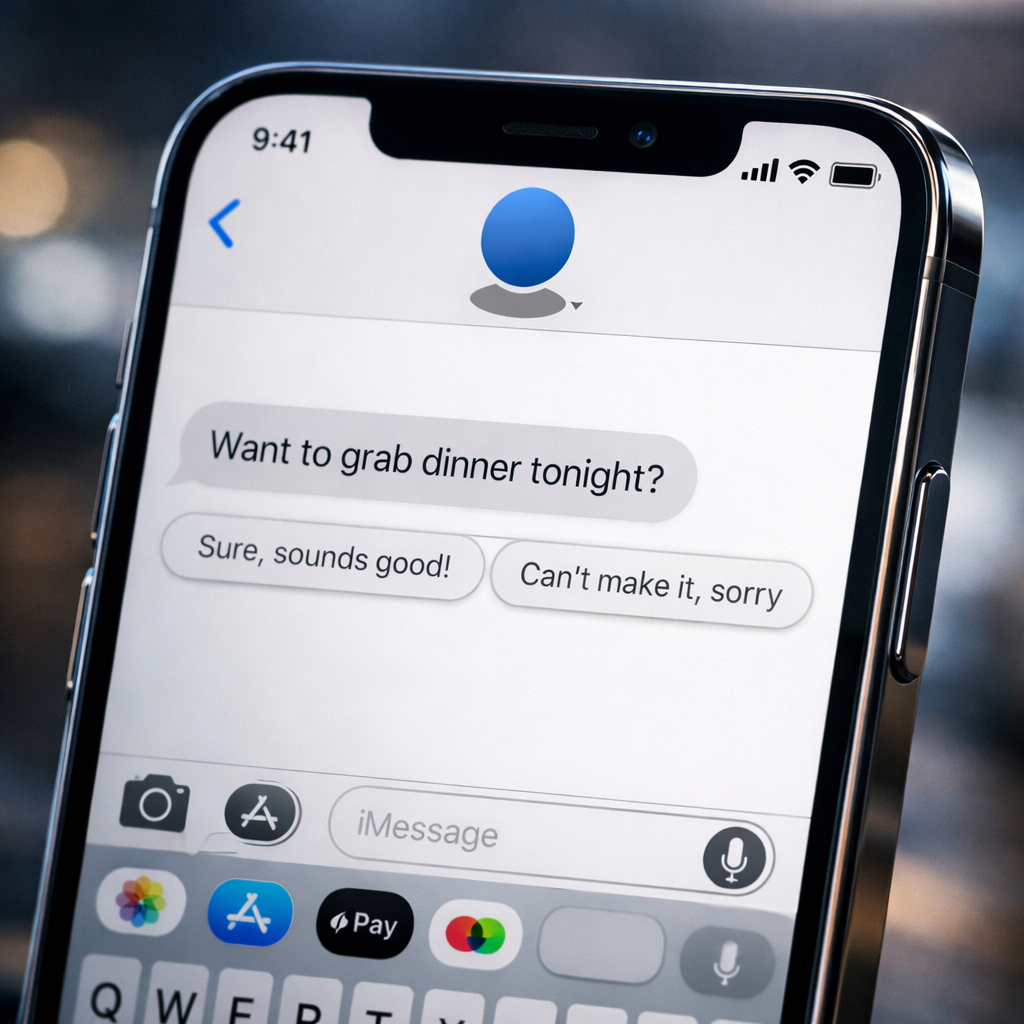
With iOS 27, Apple delivers a long-awaited upgrade to its Smart Reply feature in Messages and Mail: it now adapts to each user’s writing style. Instead of offering generic responses, it aims to match your tone, punctuation, and everyday voice.
Smart Reply was first introduced as part of Apple’s push for “Apple Intelligence” in 2024. The tool provides quick, suggested responses based on the conversation’s context. That worked well enough — but many found the suggestions felt robotic or impersonal. In iOS 18, it rarely felt natural enough to actually choose a Smart Reply over typing.
What’s new in iOS 27’s Smart Reply
Now, the feature builds on its conversation-aware foundation by incorporating your own writing patterns. It still analyzes what’s been said, but then filters suggestions through your typical tone, punctuation style, and habitual phrasing. The result is much more familiar—responses feel like something you’d write yourself.
One limitation remains: you still only get two Smart Reply options in Messages and Mail. Users wanting a wider spread of choices will have to wait for future improvements. But for many, the upgrade is already enough to make Smart Reply a much more usable tool.
Why this matters
On-device personalization like this moves Apple further along in making day-to-day interactions feel human rather than technically impressive. For quick replies — whether you’re on a hurry, or just don’t want to type — having suggestions that sound like you can make the difference between tapping and typing.
As users tug more value from AI and automation, personalization will be a key differentiator. This update also hints at what should come next: broader Smart Reply options, deeper customization, and perhaps cross-app learning to further refine tone and style.
Smart Reply in iOS 27 still isn’t perfect, but it finally delivers on the “smart” part — turning a gimmick into something genuinely helpful. Keep an eye out for how this evolves in upcoming updates.