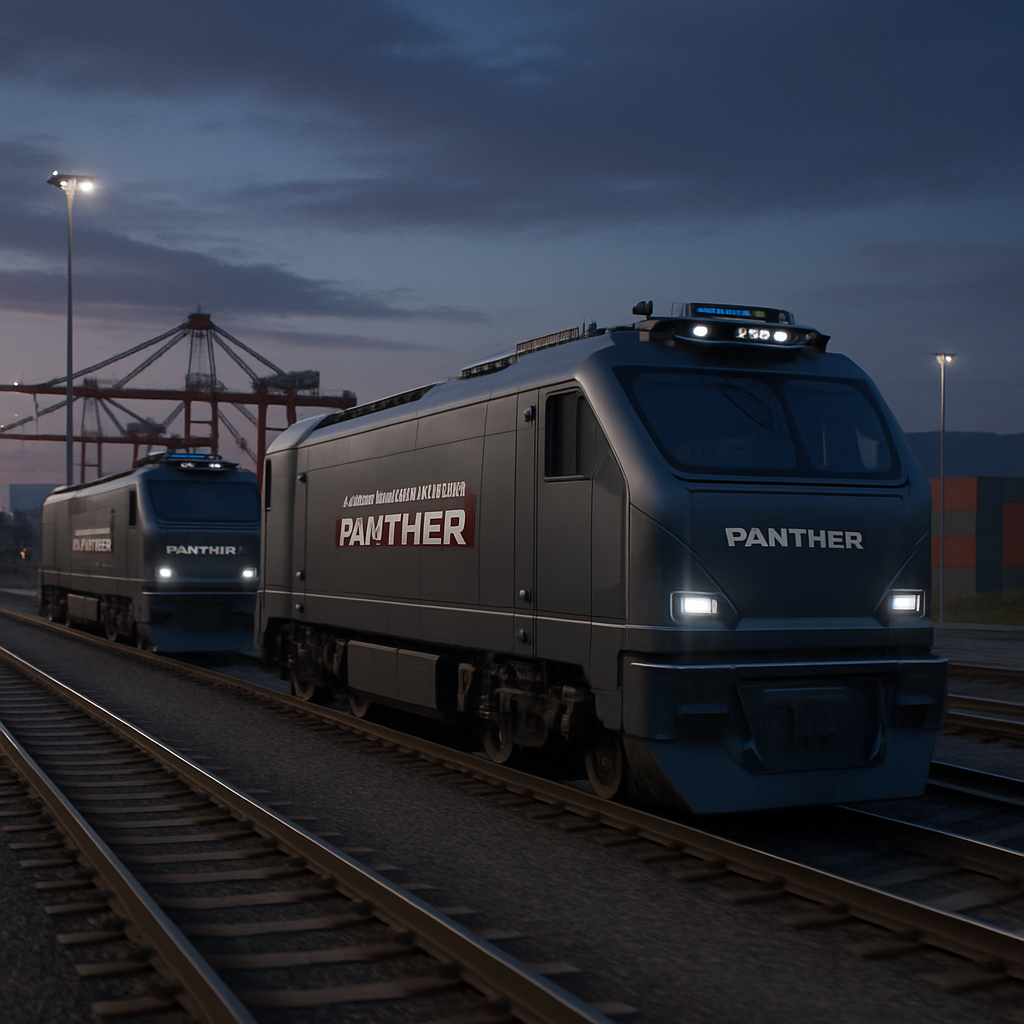
Parallel Systems, founded in 2020 by former SpaceX engineers, has secured $100 million in a Series C to scale up its autonomous freight train technology. Unlike traditional diesel-powered rail cars or semi-trucks, the company’s battery-powered Panther vehicles are designed for trips under 500 miles and run without an onboard human operator—a bid to disrupt surface freight hauling between trucking and rail networks.
The U.S. surface freight market is worth approximately $1 trillion annually, yet much of the shorter-haul business—trips under 500 miles—has drifted toward trucking, driven by the inability of railroads to compete on very short routes. Meanwhile, rising fuel costs are squeezing trucking firms, with over a dozen going bankrupt in recent weeks. Parallel Systems believes its autonomous rail vehicles can both cut environmental impacts and reclaim parts of that short-haul freight segment. Their Panther units can run solo or in platoons, moving tons of freight while relying on sensors to monitor rail ahead for safety. The vehicles lack traditional couplers; platoons split at yards without human intervention.
How it works and where it’s heading
The Panther is designed to improve profitability for railroads on short-distance routes, where fixed costs like labor make traditional rail less competitive. By operating shorter platoons up to 500 miles, Parallel aims to serve the demand that trucking currently dominates—especially between ports and regional distribution points. In ports like Savannah, congestion from trucking is notorious. Remote, automated rail vehicles could run unhindered along existing track, pushing through delays and emissions that plague truck-dependent routes.
Parallel Systems has already achieved regulatory approval from the Federal Railroad Administration to test its system on 160 miles of track near Savannah, Georgia. These tests are focused on verifying real-world safety controls and operating practices, laying the groundwork for its first commercial payload—expected soon. Up to this point, Parallel’s approach diverges sharply from precision railroading, which emphasizes long, fixed-schedule trains. In contrast, Panther platoons are uncoupled and can split at yards without manual input, reducing friction and delays.
The Series C round was led by AVP, alongside Hillspire, Agility Global, Cobalt Capital, Anthos Capital, Congruent Ventures, Riot Capital, and Collaborative Fund. The funding will support manufacturing scale for Parallel’s third-generation vehicle and hasten commercial deployment of autonomous freight rail.
This all builds on the founding team’s pedigree. The engineers behind Parallel cut their teeth at SpaceX developing rocket avionics systems. Their experience appears to inform both hardware robustness and systems automation in the Panther design. Battery power, sensor suites, and vehicle-level autonomy are critical differentiators.
The shift may also provide a lifeline for railroads to win back business lost to trucks—at least for distances where rail has traditionally struggled. Shorter routes, fewer emissions, less congestion: it’s a convergence of economic and environmental demand. If Parallel Systems can deliver commercial operations safely and reliably, the freight rail sector could see its next major leap.
Why this matters: This development arrives at a time when trucking costs are rising, supply chains are strained, and pressures to lower carbon emissions are mounting. Autonomous rail could offer a high-capacity, lower-emission alternative for medium-haul freight—something that benefits logistics economics and climate goals. What to watch: regulatory clearance in additional corridors, cost comparisons with trucking on real-world routes, infrastructure compatibility, and whether railroad operators choose to adopt unmanned platoon vehicles at scale.