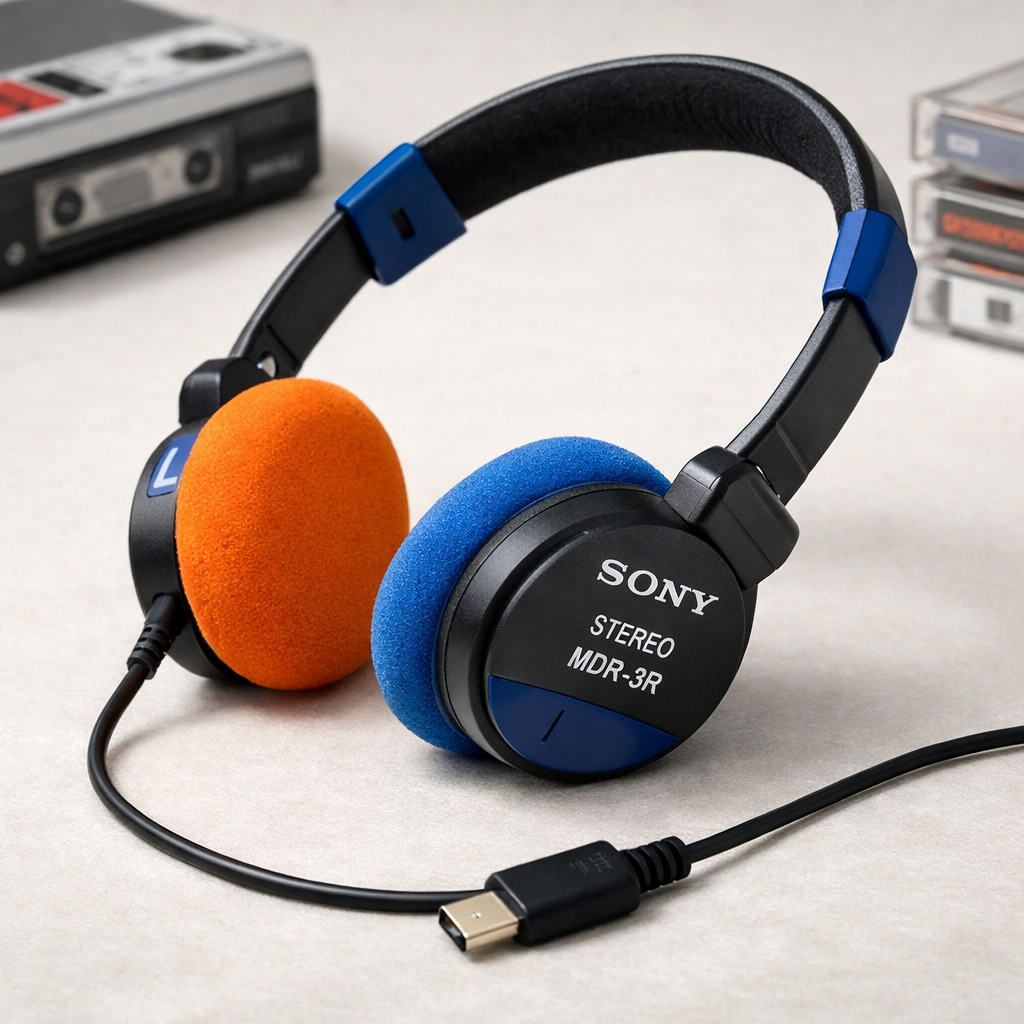
Sony has relaunched its iconic Walkman MDR-3 headphones, modernizing the beloved retro design with a USB-C connection. Priced at $59.99, the new MDR-3R keeps much of the original’s vintage flair—right down to the packaging and manual—but updates its internals to meet today’s tech expectations.
The MDR-3 first emerged in 1979, serving as a signature accessory for Sony’s Walkman cassette player. This revival—known as the MDR-3R—aims to preserve historical form while embracing modern convenience. Alongside two color-tone ear pad options (blue or orange), the aesthetics closely mimic the original model throughout its body styling. Sony confirms that even the accompanying packaging and instruction manual draw heavily from the 1979 design.
Sound & Features Tailored for Today
The sound foundation remains largely faithful: Sony retains the same 23 mm driver spec, stating that the audio profile has been “re-engineered” to remain close to the original while being refined for modern listening preferences. Despite the retro look, the MDR-3R includes contemporary updates such as a USB-C input replacing older plugs, an in-line remote and microphone, and the use of recycled plastic in its build—an environmental nod in line with current industry standards.
For fans wanting something vibrant, Sony is offering a variant modeled after the red and black headphones worn by Max in a popular TV show. That version stands out for its color scheme and carries a higher price tag of $79.99. The standard color options go for $59.99 and are available immediately through Sony and major retailers.
This revival reflects a growing trend of brands mining their legacy archives to appeal to nostalgia while updating for today’s tech: vintage aesthetics paired with modern utility. The MDR-3R joins other retro revivals, blending design with usability—something many consumers want.
Why this matters: Sony’s move isn’t just about bringing back a classic. It’s about bridging generational divides—showing that designs from the past can remain relevant when re-engineered with modern input, sustainability touches, and updated usability. The MDR-3R could set a template for other legacy products reentering the market. Keep an eye out for how consumers respond: will fans of vintage Walkmans embrace the MDR-3R, and will it inspire other heritage revivals in audio tech?