After using Sonos’ original Ace over-ear headphones for nearly two years, many of its weaknesses—especially in bass response, active noise cancellation (ANC), and app functionality—became hard to ignore. Now, Sonos has released the Ace Ultra, and it seems they’ve checked off almost every item on the wish list for what the original should’ve been. I’ve spent a month with them across flights, workouts, editing work, and everyday use. Here’s how the Ace Ultra performs.
What’s Changed From the First-Generation Ace
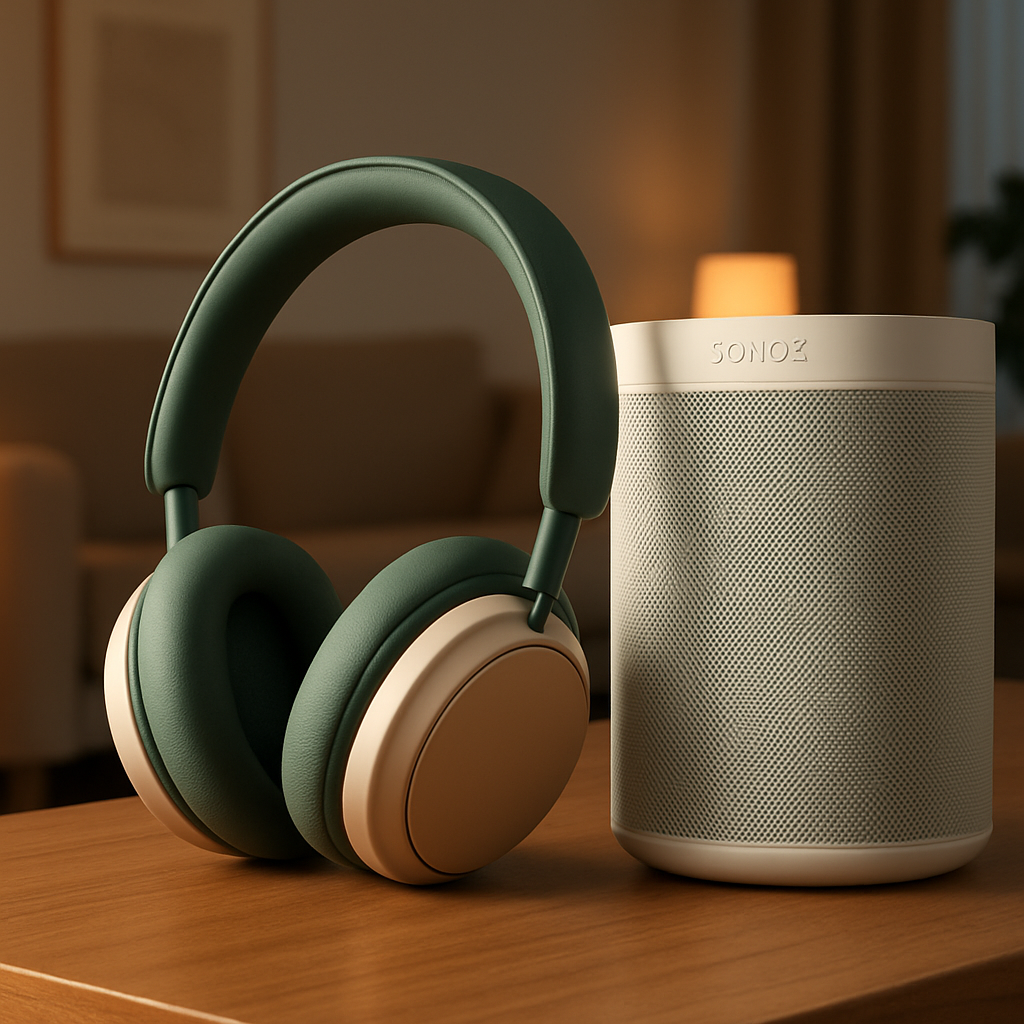
On the surface, the Ace Ultra and the original Ace share a similar outward design—same sleek look, understated profile, now with new accents and two extra color choices: Agave and Sand. The real differences lie inside: new 40 mm drivers replace the original ones, a 10-microphone array boosts the mic count from eight, and the adaptive ANC is significantly retuned—claiming up to twice the effectiveness—and better tuned to variations like hair, glasses, or seal around the ears. Battery life now peaks at 35 hours with ANC turned on, up from the prior model, while connectivity improves with Bluetooth 6.0 replacing 5.4. The app gains extended EQ controls—three presets as standard and an advanced eight-band mode. Other upgrades: updated cushioning, more rotation on ear cups so they rest flat around your neck, and the ability to replace the battery. Also, users still get spatial audio with Dolby Atmos, lossless audio (when supported), USB-C and 3.5 mm wired options, and fast charging—three minutes of charge gives up to three hours of playback.
Real-World Improvements: Sound, ANC & Comfort
When listening, the difference in bass is immediately noticeable. Where the original Ace often felt underpowered in the low end—especially for genres like R&B, hip-hop, and pop—the Ace Ultra delivers deeper impact without muddying mids or highs. Vocals, instruments, and brightness are preserved, even while the bass kicks in heavier. This isn’t just about music; podcasts, movies, and video feel richer with clearer texture and weight across the board.
The upgraded ANC really shines. The expanded mic array lets the headphones silence inconsistent environmental noises more effectively—intermittent sounds like traffic, sirens, or construction are subdued much better than before. Even in flight or windy outdoor situations, the sense of isolation is strong, and background distractions are significantly reduced. I also no longer noticed the faint hissing that sometimes showed up in the original model when ANC was active.
Comfort is just as polished: light materials, updated ear and headband cushions, and the movable ear cups make the Ace Ultra wearable for long stretches—think 8–10 hour travel days—with little discomfort. One of the cooler perks: seamless move-between-devices in the Sonos ecosystem. A button press can transfer audio from a speaker in the system straight to the headphones, which is genuinely useful if your home already lives on Sonos gear. The only misstep: the carrying case’s zipper—or its mechanism—snags too easily.
Price, Colors, Should You Upgrade?
The Sonos Ace Ultra goes on sale immediately for $449, keeping the original Ace’s launch price. It’s offered in four finishes: Black, White, Agave, and Sand. Meanwhile, the original Ace is still available while supplies last, now discounted to around $239. So the Ace Ultra enters the premium headphones market, competing with high-end offerings from Apple, Bose, and Sony.
For those who already own the OG Ace: there’s enough here to make upgrading worth considering—especially if you care about stronger bass, better ANC, or app control. For fresh buyers shopping in the premium range, the Ace Ultra deserves strong consideration; the improvements feel substantive, not just incremental.
What this means going forward is that Sonos has moved from a promising first attempt to a mature offering. These upgrades show that they’re paying attention to real user feedback—not just chasing features. If Sonos keeps refining like this, we might finally have a pair of headphones that challenge the best in the category on sound, tech, and ecosystem—all at once. The case snag-issue is small, but any future version could smooth that out. What to watch: how the Ace Ultra holds up over years of use, and whether Sonos continues this trend in battery longevity and app polish.