Storage utility SoftRAID 9 has introduced two new fault-tolerant modes—RAID-6 and RAID-6+—designed to protect against the failure of up to two drives. However, these modes come with strict prerequisites: they require macOS 27 and a SoftRAID Premium subscription to use. Existing users can upgrade without reformatting their volumes.
RAID-6 and RAID-6+ explained
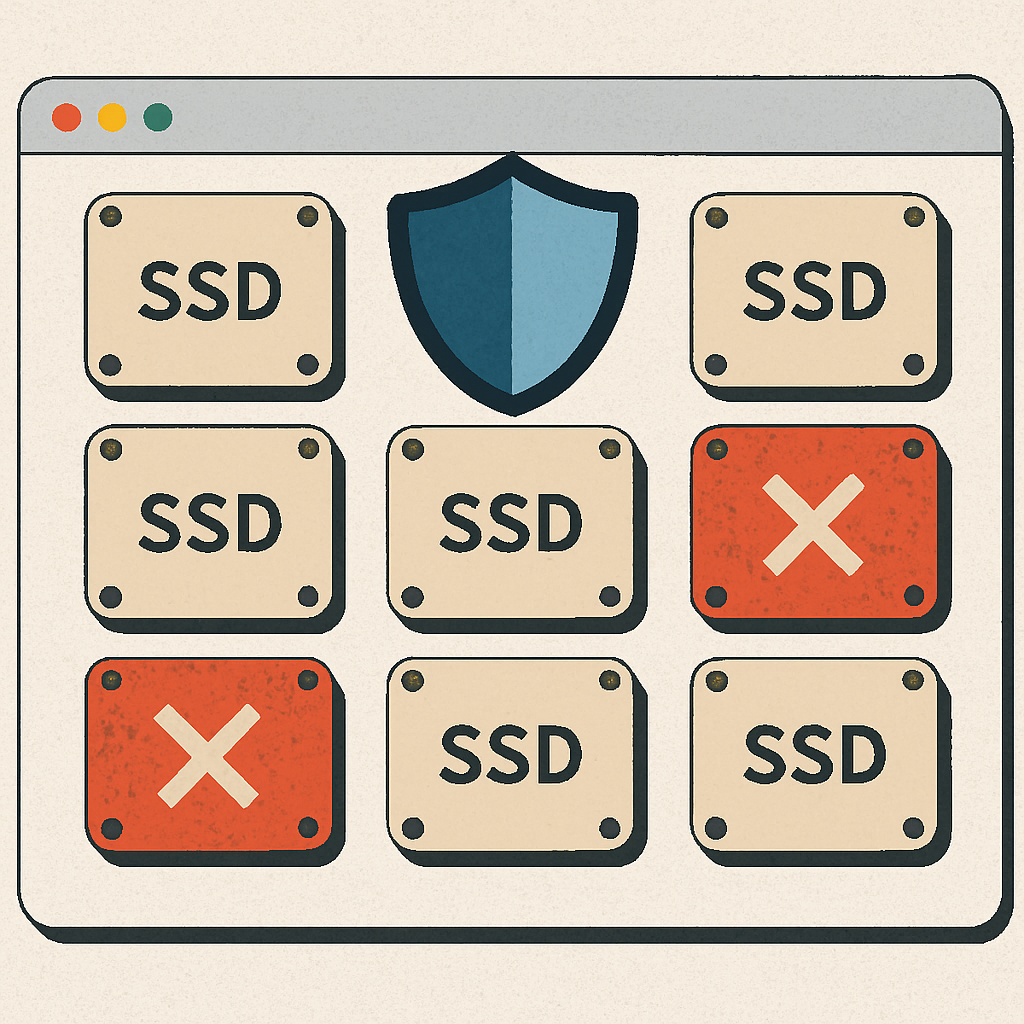
RAID-6 stores two independent parity sets across all drives in the array, enabling recovery if two drives fail at once. To build volumes in either RAID-6 or RAID-6+ you’ll need at least four drives. While RAID-6 spreads parity writes across every drive, RAID-6+ uses dedicated parity drives—a setup aimed at maximizing throughput on SSD-heavy arrays. OWC markets RAID-6+ as being better suited to high-data-rate workloads, though no benchmarks have been published to confirm its performance advantages over standard RAID-6. The company also hasn’t shared data on how RAID-6+ impacts SSD wear over time, even though monitoring tools can report on drive wear and temperature.
What’s new in cross-platform access & licensing
SoftRAID 9 updates Windows support to include access to encrypted APFS RAID volumes via its built-in MacDrive technology. That means Windows machines can now tap into password-protected APFS RAID storage directly, without first removing encryption. Unencrypted APFS and HFS+ volumes continue to work across Mac and PC. However, creation and management of RAID-6/6+ volumes is still locked to macOS 27; Windows users cannot build or modify those volume types.
The software maintains a tiered license model: the free Standard version allows reading/writing existing volumes, rebuilding after drive failures, and updates for compatibility. The Premium tier—required for creating volumes, using RAID-6/6+, getting predictive alerts, and accessing support—runs US$149.99 in the first year, then drops to US$79.99/year. Some storage hardware from OWC comes bundled with Premium access for a set time, while most users will need to purchase the tier separately. An expired Premium plan reverts down to the Standard level without locking users out of their existing data—volume creation and modification just becomes unavailable.
One technical mystery remains: while macOS 27 is explicitly required, OWC hasn’t clarified what feature or API in macOS 27 enables RAID-6/6+ support, or whether older versions might gain compatibility in the future.
Why this upgrade matters: Data resiliency has become a higher priority for creators and professionals relying on large storage arrays. RAID-5, though efficient, leaves just one drive failure margin and can be crippled during rebuilds. RAID-6 offers an additional safety net. SoftRAID’s implementation, however gated by macOS 27 and a pay-wall, raises questions on access and cross-platform interoperability. For high-capacity users, the real test will be in performance—especially with RAID-6+ on SSDs—and whether the thresholds justify the subscription cost.