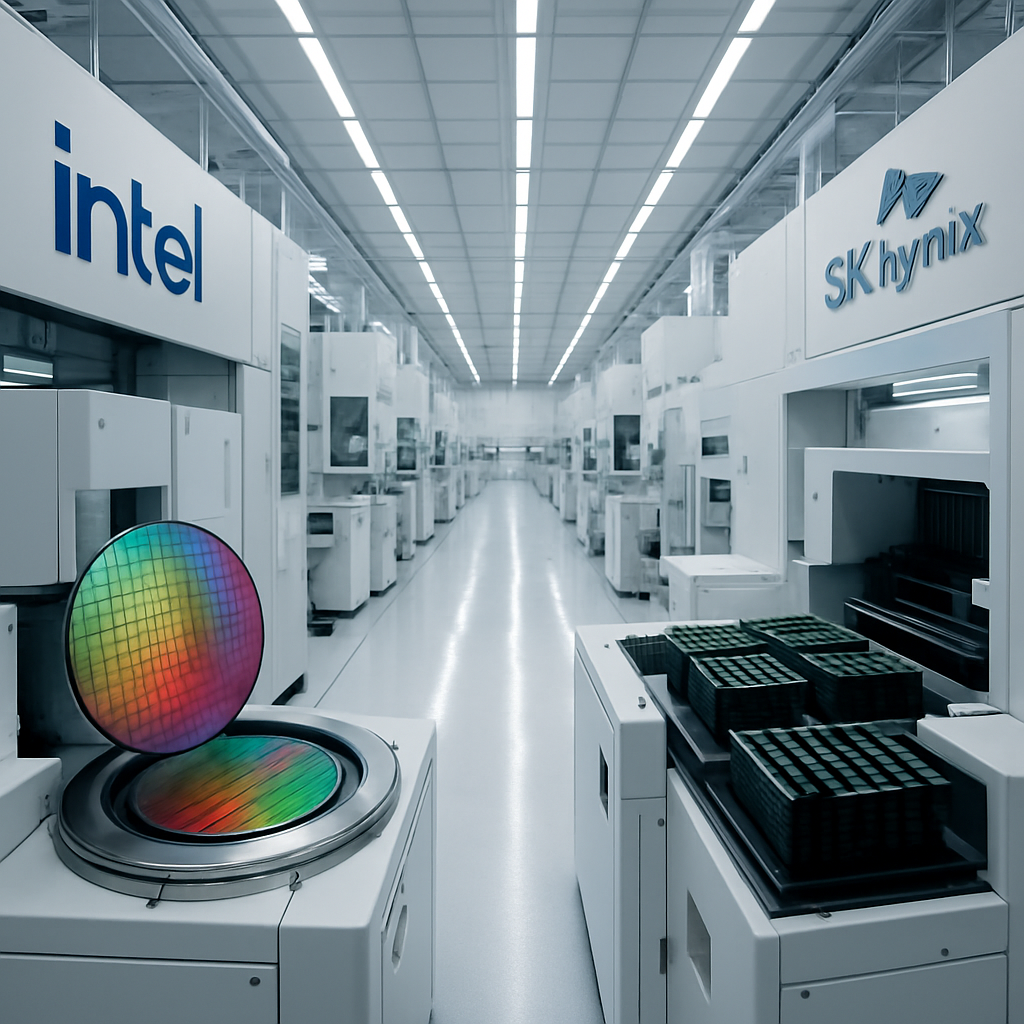
SK Hynix, a key supplier of memory chips to Apple, is in early-stage discussions with Intel about setting up memory manufacturing operations in the United States. The talks could lead to using part of Intel’s planned Ohio chipmaking campus or establishing a joint venture involving SK Hynix, Intel, and major cloud service providers. No final decisions have been made, and other partnership models remain under consideration.
This potential move comes amid tightening supply for memory components like DRAM and NAND flash storage, driven by growing demand for AI infrastructure. Memory makers are shifting more capacity toward high-bandwidth memory (HBM) to service AI processors, squeezing the supply available for smartphones and PCs. Apple, Samsung, and Micron are among those feeling the pressure.
What Could U.S. Manufacturing Look Like
If the plan materializes, SK Hynix could either lease space in Intel’s Ohio facility or form a joint venture. The latter might include major cloud providers aiming to ensure reliable memory supply. The types of memory under consideration haven’t been specified. SK Hynix produces several memory classes—DRAM for devices, NAND flash, and HBM for AI workloads—but it’s unclear which would be manufactured stateside.
SK Hynix already has an advanced packaging facility under construction in Indiana. That facility is designed to package DRAM wafers fabricated overseas into high-bandwidth memory chips rather than producing the DRAM wafers domestically.
Implications for Apple and the Industry
Apple depends on SK Hynix, Samsung, and Micron for memory supply. Increased allocation to AI-oriented memory is straining supply for consumer electronics. Earlier in 2026, Apple reportedly paid nearly double to Samsung to secure memory for the iPhone 17, and supply shortages have forced Apple to scale back hardware shipment projections for the year. Products like the Mac Studio, Mac mini, and MacBook Air have all been impacted.
If SK Hynix does launch U.S. manufacturing, it could help stabilize supply chains, ease cost pressures, and potentially increase control over critical components for Apple devices. A local facility would reduce dependency on overseas fabrication for certain memory types—assuming some fraction of DRAM, NAND, or HBM gets produced domestically.
However, building memory fabrication is capital-intensive, and integrating with existing supply chains and workforce in the U.S. poses challenges in terms of cost, regulatory approvals, and technology transfer.
This developing story reflects broader industry shifts: AI demand is reshaping priorities across chipmaking, pushing suppliers to rethink manufacturing footprints. For Apple, securing memory supply isn’t just about meeting device demand—it’s about navigating a global supply crunch in real time. We’ll be watching how this negotiation evolves, what memory types are made on U.S. soil, and how Apple and its suppliers adapt to tighter global supply lines.