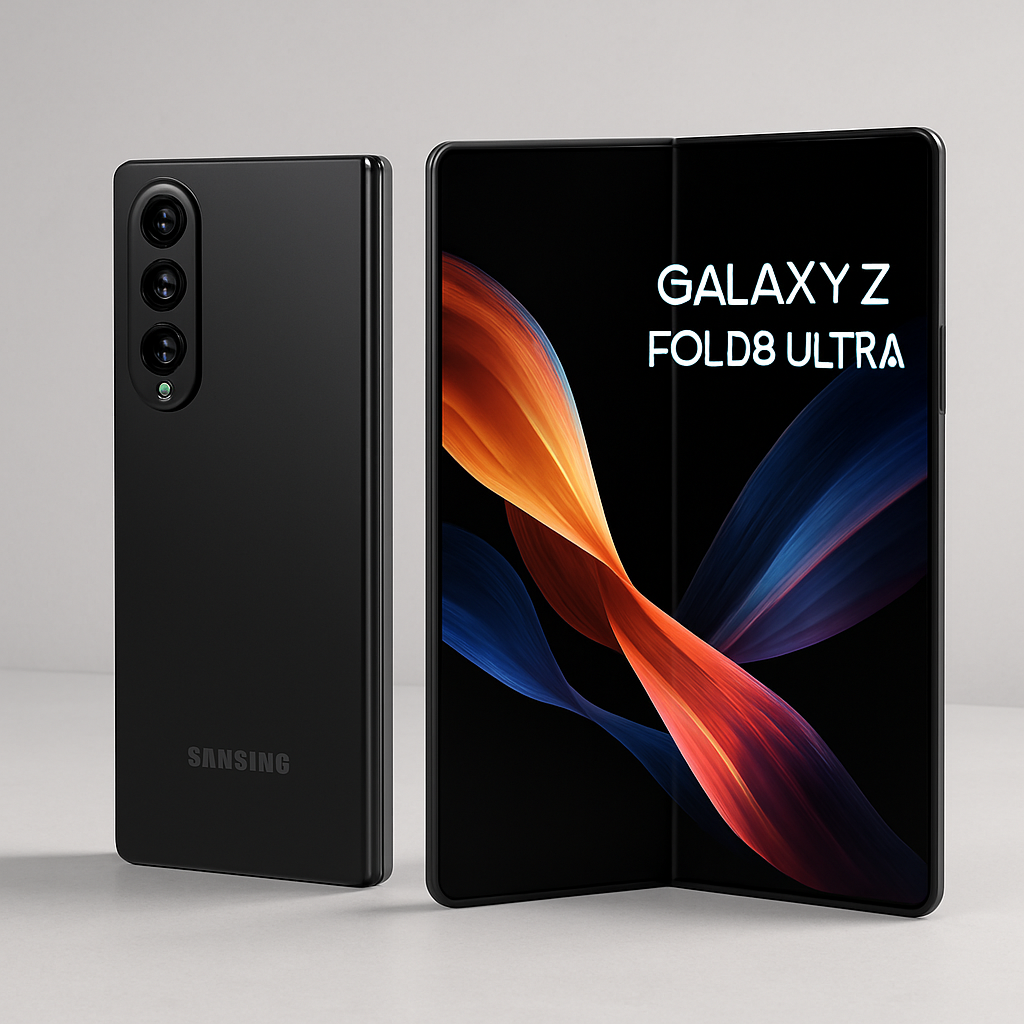
Recent leaks have all but confirmed that Samsung’s upcoming foldable smartphone lineup will include a model named the Galaxy Z Fold 8 Ultra. This development follows earlier reports suggesting a shift in Samsung’s naming strategy for its foldable devices.
Traditionally, Samsung’s Galaxy Z Fold series has featured a single flagship model. However, the 2026 lineup appears to introduce two distinct devices: the Galaxy Z Fold 8 and the Galaxy Z Fold 8 Ultra. Notably, the standard Galaxy Z Fold 8 is expected to adopt a wider form factor, aligning with design trends seen in competitors’ foldable devices. In contrast, the Galaxy Z Fold 8 Ultra is anticipated to retain the taller, narrower design characteristic of previous Galaxy Z Fold models.
Supporting this information, case listings on the Wireless Power Consortium (WPC) database from manufacturer Yuchuan have surfaced, showcasing cases for the Galaxy Z Flip 8, Galaxy Z Fold 8, and Galaxy Z Fold 8 Ultra. These listings, which include images of the cases, provide further evidence of the forthcoming devices and their respective names.
The decision to label the traditional form factor as ‘Ultra’ while assigning the ‘standard’ moniker to the new wider design has raised questions among industry observers. This naming convention deviates from typical branding strategies, where ‘Ultra’ versions denote more advanced or premium features. The rationale behind this choice remains unclear, but it may reflect Samsung’s efforts to differentiate the two models based on form factor rather than feature set.
Both devices are expected to be unveiled at Samsung’s Unpacked event scheduled for July 22, 2026. As the launch date approaches, consumers and industry analysts alike are keen to see how Samsung’s naming strategy and design choices will influence the market reception of these new foldable smartphones.
Samsung’s decision to introduce a wider foldable design with the Galaxy Z Fold 8 suggests a response to evolving consumer preferences and competitive pressures. By offering both traditional and new form factors, Samsung aims to cater to a broader audience. However, the unconventional naming strategy may lead to initial confusion among consumers. Clear communication and marketing will be essential to ensure that potential buyers understand the distinctions between the two models and can make informed purchasing decisions.