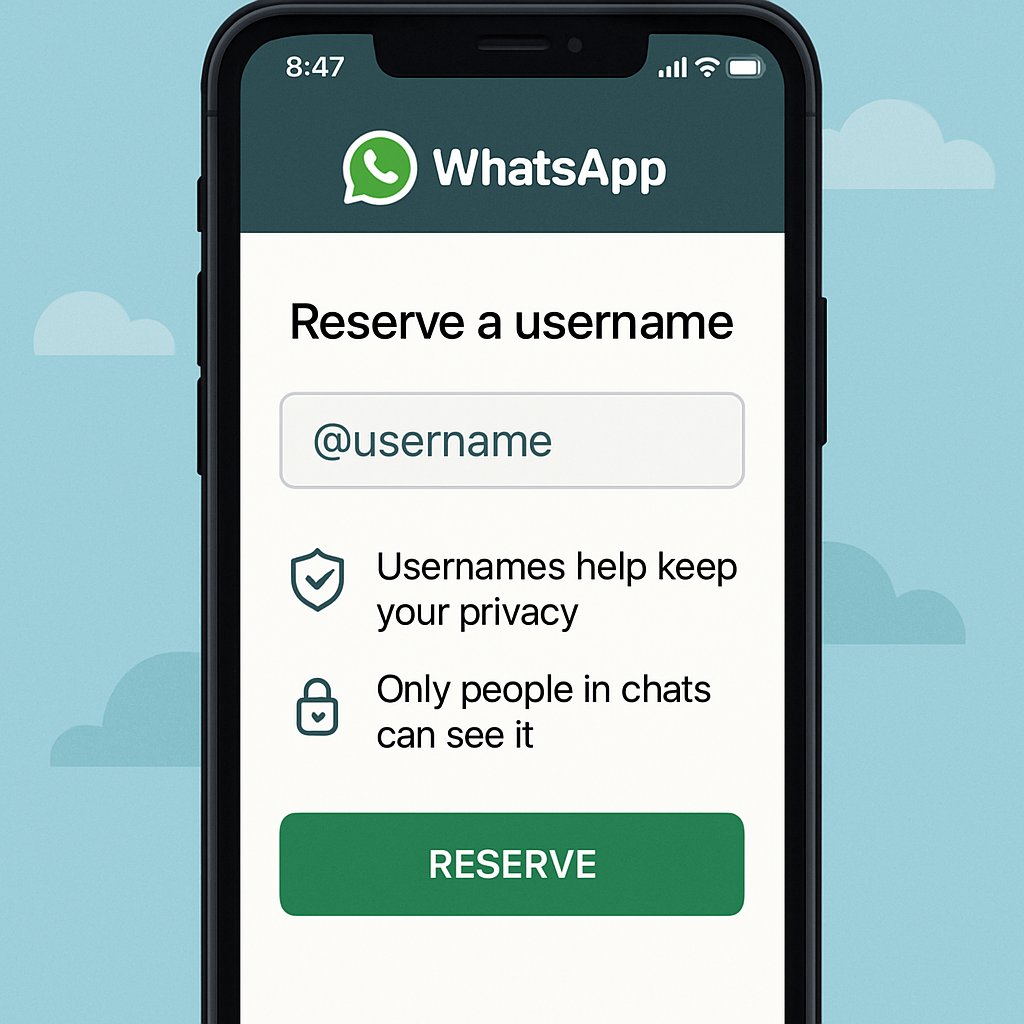
WhatsApp has announced a significant update that allows users to reserve unique usernames, marking a shift from the traditional reliance on phone numbers for identification. This feature aims to enhance user privacy by enabling communication without disclosing personal phone numbers.
Users can now select a username ranging from 3 to 35 characters. To prevent impersonation, WhatsApp is reserving usernames for high-profile individuals, celebrities, and organizations. Additionally, businesses and creators can align their WhatsApp usernames with their existing Facebook or Instagram handles, ensuring consistency across Meta’s platforms.
Once the username reservation feature becomes available in a user’s region, they will receive an in-app notification. To reserve a username, users can navigate to Settings > Account > Username within the app. It’s important to note that usernames will not be publicly searchable; only individuals who know the exact username can initiate contact. Users have the flexibility to change or disable their username at any time.
Despite this new feature, creating a WhatsApp account still requires a valid phone number. However, the introduction of usernames provides an additional layer of privacy, allowing users to share their profiles without revealing their phone numbers. This update addresses a longstanding privacy concern, as previously, anyone with access to a user’s phone number could contact them directly.
Competing messaging platforms like Telegram, Signal, and Wire have offered username functionalities for several years, enabling users to maintain their privacy by not sharing phone numbers. WhatsApp’s adoption of this feature aligns it with industry standards and responds to user demands for enhanced privacy controls.
In summary, WhatsApp’s introduction of username reservations represents a significant step toward bolstering user privacy. By allowing communication through usernames, users gain greater control over their personal information, reducing the risk of unsolicited contacts. This move not only aligns WhatsApp with its competitors but also reflects a broader industry trend toward prioritizing user privacy in digital communications.