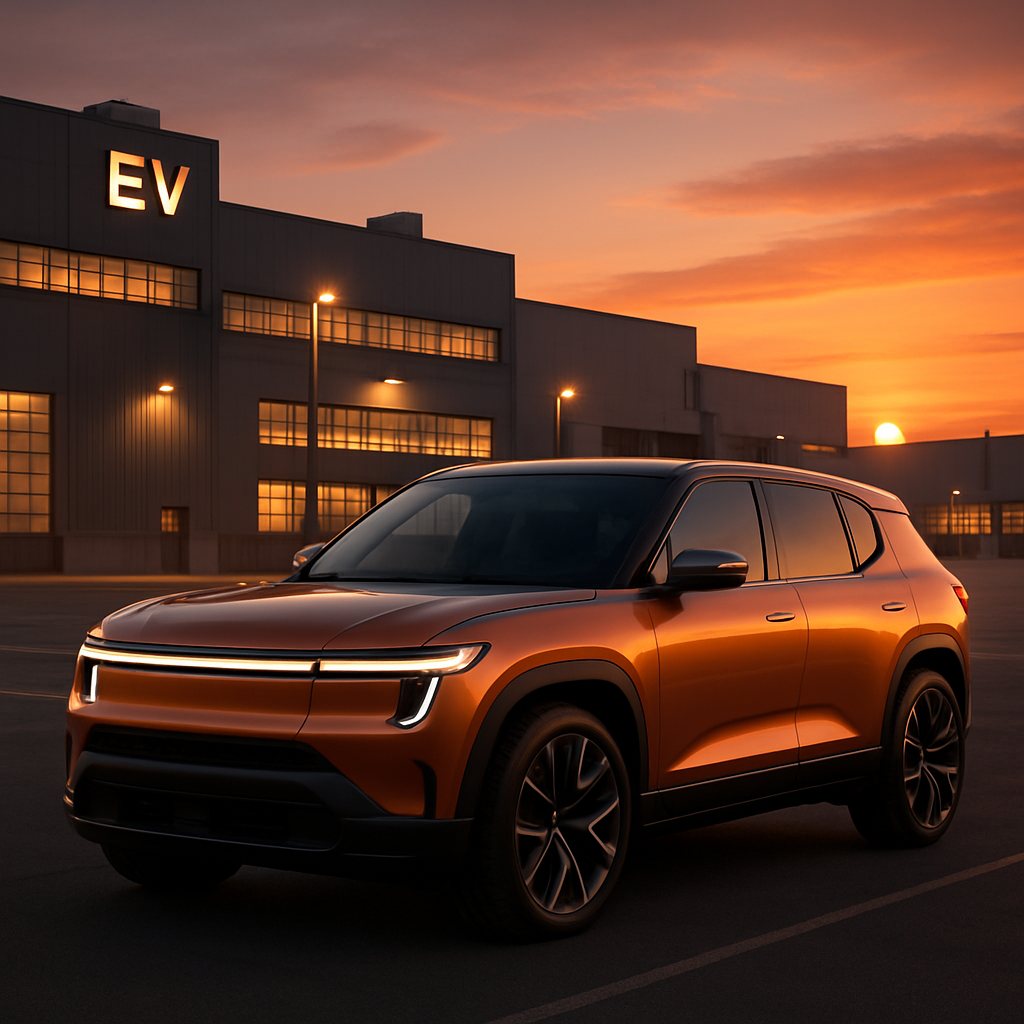
In the third quarter of 2026, Rivian hit a new high. The electric vehicle maker built 19,751 vehicles and delivered 19,248, roughly 45% more than the same period last year. This marks the strongest quarter yet for Rivian, largely driven by its newly launched R2 SUV. The R2 hit the market in June, and this was its first full sales quarter.
R2: Rivian’s More Affordable Entry Into the EV Market
The R2 starts just under $60,000, positioning it as a more accessible option compared to Rivian’s earlier, premium models. The company is aiming for sales of 20,000 to 25,000 R2 units by the end of the year. If achieved, that volume would make the R2 one of the fastest-selling electric vehicles in U.S. history—only Tesla’s Model Y has moved faster in initial sales pacing.
To expand affordability, Rivian also plans to offer versions of the R2 priced as low as around $45,000. Alongside R2, sales this year also include its R1 models and its commercial electric van. Collectively, Rivian believes its full-year deliveries could reach between 65,000–70,000 vehicles, a major jump from recent years when annual sales have hovered around 50,000.
Scaling Production and Charting Profitability
Rivian is producing the R2 at its Normal, Illinois plant, which has been recently expanded to handle the SUV’s output. The company also has a new factory near Atlanta, Georgia, expected to ultimately reach an annual capacity of about 300,000 vehicles, with room to scale further.
Still, Rivian faces pressure to turn around its finances. The company has incurred substantial expenses building infrastructure needed to support a more mass-market vehicle like the R2. A partnership with Uber to build robotaxi versions of the R2 adds another layer of investment. Earlier this year Rivian pushed out its target for profitability, now cast into 2027, in order to sink more resources into autonomy and robotaxi development.
Rivian said it will publish full Q3 financial results on October 29.
The rising traction of the R2 SUV could reshape Rivian’s place in the EV market. For one, hitting its R2 sales goal would establish Rivian as a serious contender in the high-volume segment, historically dominated by Tesla’s Model Y. On the infrastructure side, expanding production capacity in Illinois and Georgia signals the company is betting big on scaling operations. All eyes will now be on whether Rivian can deliver financially—turning the volume and ambition into sustainable profits. The Q3 earnings report at the end of October will be its next major benchmark.