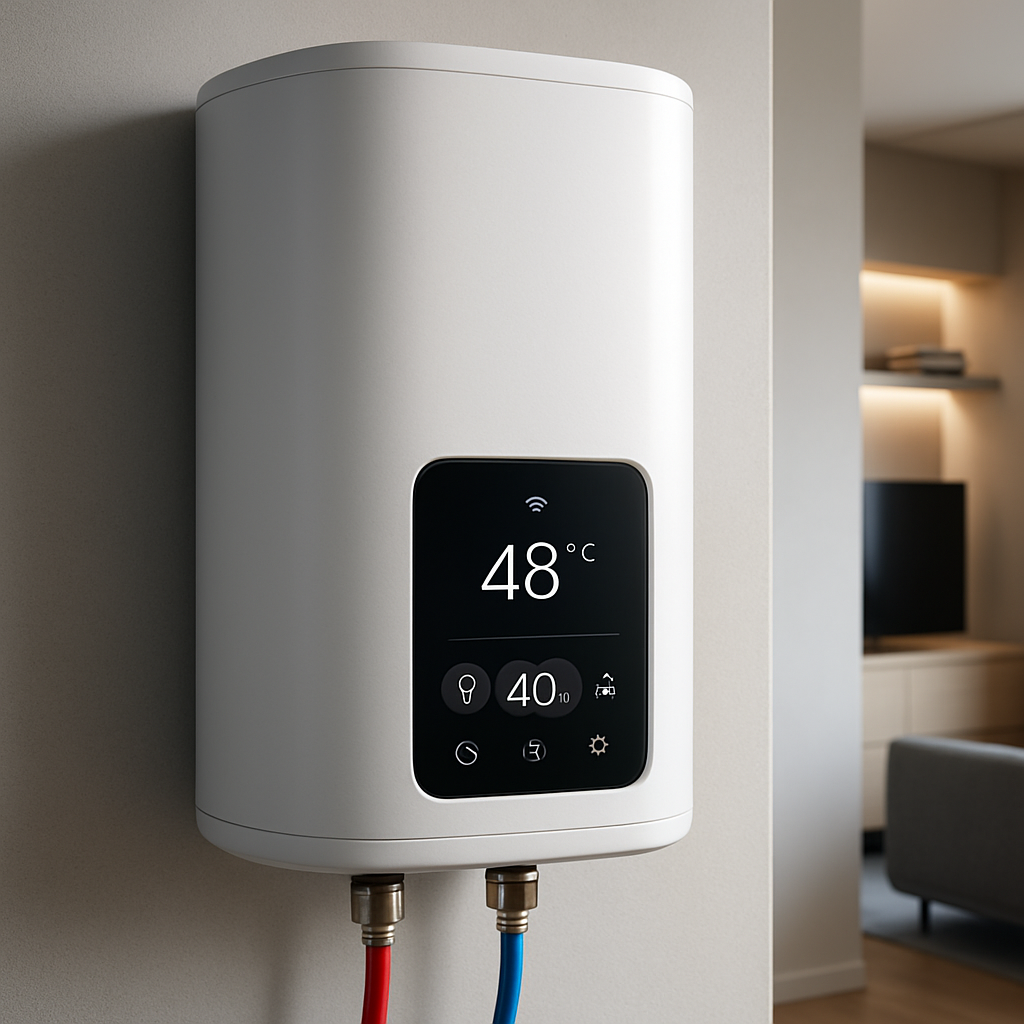
Water heaters are often overlooked household appliances, yet they account for approximately 18% of a home’s energy consumption and are a leading cause of residential water damage. Recognizing the need for innovation in this space, Reservoir, a Boston-based startup, has developed a smart water heater designed to enhance energy efficiency and integrate seamlessly with the electrical grid.
Co-founded by Luke Winston-Almanzar, formerly the chief business officer at Formlabs, along with Gabriel Parisi-Amon and Jake Felser, Reservoir aims to modernize the traditional water heater. Winston-Almanzar highlighted the inefficiencies of current models, noting that they consume significant energy without intelligent features, making them less efficient than modern kitchen appliances.
Reservoir recently announced an $8 million seed funding round led by Asymmetric Capital Partners, with participation from Founder Collective and MCJ. This investment will support the company’s efforts to install more units in homes throughout the Boston area, building upon the approximately 100 devices already in place. The goal is to reach around 1,000 installations by the end of next year, achieving a megawatt-scale capacity.
The company’s water heater stands out due to its predictive heating capabilities. By analyzing household water usage patterns over the first month of installation, the system optimizes heating schedules to operate during periods of low electricity demand and cost. Additionally, the integrated heat pump is nearly four times more efficient than standard electric water heaters and five times more efficient than natural gas models.
Beyond energy efficiency, Reservoir’s water heater offers features aimed at enhancing user experience and safety. An ultrasonic flow sensor detects plumbing leaks throughout the home, alerting homeowners via a dedicated app. The premium Max version includes a recirculation valve for instant hot water and a mixing valve to prevent pipe freezing during cold weather. In “party mode,” a 50-gallon tank can deliver up to 150 gallons of hot water, manageable through the device’s touchscreen or the app.
Reservoir’s approach not only addresses individual household needs but also contributes to grid stability. By storing energy as hot water and participating in utility demand response programs, the company can help alleviate strain on the electrical grid. This dual benefit underscores the potential of integrating smart appliances into broader energy management strategies.
As the company continues to expand its installations and refine its technology, Reservoir exemplifies how traditional household appliances can be reimagined to meet modern energy demands and consumer expectations. Their innovative approach could set a new standard for water heaters, blending efficiency, intelligence, and user-centric design.