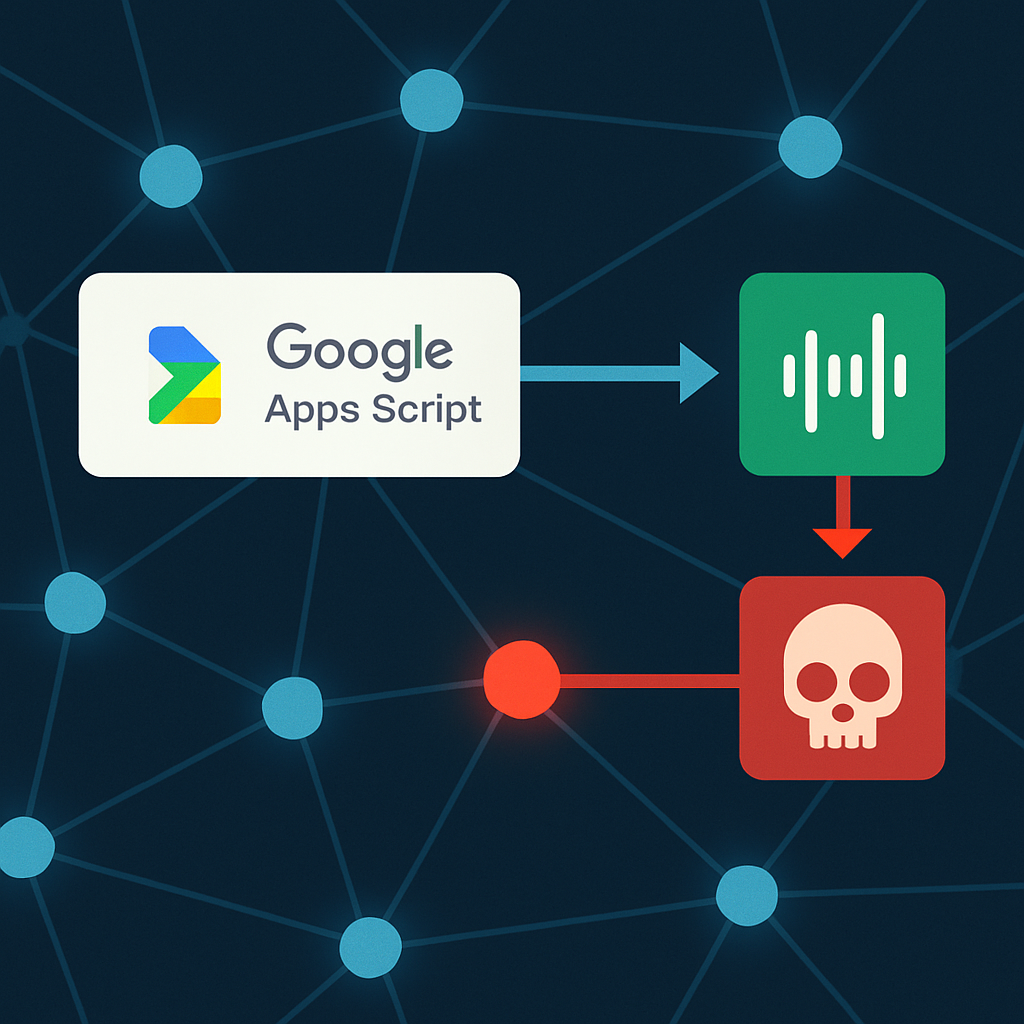
The CAV3RN espionage framework has adopted a new tactic to conceal its command-and-control (C2) communications by leveraging Google Apps Script, a legitimate cloud-based development platform. This approach enables the malware to blend its traffic with normal network activity, complicating detection efforts.
CAV3RN is a modular framework designed for espionage, capable of executing various tasks such as data collection and system manipulation. Its recent enhancement involves a 64-bit Windows DLL component that determines its communication method based on DNS responses. Depending on these responses, the malware can choose to communicate directly over HTTPS or route its traffic through Google Apps Script. This dual-channel strategy ensures operational resilience; if one method is blocked or fails, the malware seamlessly switches to the alternative.
When opting for the Google Apps Script route, CAV3RN sends POST requests to a specific Apps Script deployment acting as a relay. This relay fetches content from an upstream server and returns it to the infected system. To maintain stealth, a standard browser request to the same deployment would display a benign page indicating normal operation. Additionally, the malware can verify the freshness of its Google deployment ID by comparing cryptographic digests against DNS responses. If discrepancies are found, it retrieves an updated ID in small DNS response segments, allowing operators to rotate the Google relay without modifying the malware itself.
The modular architecture of CAV3RN enhances its adaptability. A local broker component scans the host directory every second, identifying and loading the latest versions of compatible DLL modules. This design permits operators to upgrade components dynamically without restarting the malware, ensuring continuous operation. The broker also facilitates communication between modules, enabling tasks to be passed and executed efficiently.
Security researchers have observed CAV3RN targeting entities in Israel, with its operators continually refining the framework by adding new components and communication methods. The use of Google Apps Script as a C2 relay exemplifies a broader trend where attackers exploit trusted cloud services to mask malicious activities. This tactic not only evades traditional security measures but also leverages the inherent trust users place in reputable platforms.
To mitigate such threats, organizations should implement comprehensive monitoring of DNS activities, scrutinize unexpected connections to known web endpoints, and avoid assuming that traffic from trusted services is inherently safe. Regularly updating security protocols and educating employees about emerging threats are crucial steps in defending against sophisticated malware like CAV3RN.
The exploitation of legitimate platforms like Google Apps Script by malware frameworks such as CAV3RN underscores the evolving nature of cyber threats. As attackers continue to find innovative ways to bypass security measures, it is imperative for organizations to stay vigilant, adapt their defense strategies, and foster a culture of cybersecurity awareness to effectively counteract these sophisticated tactics.