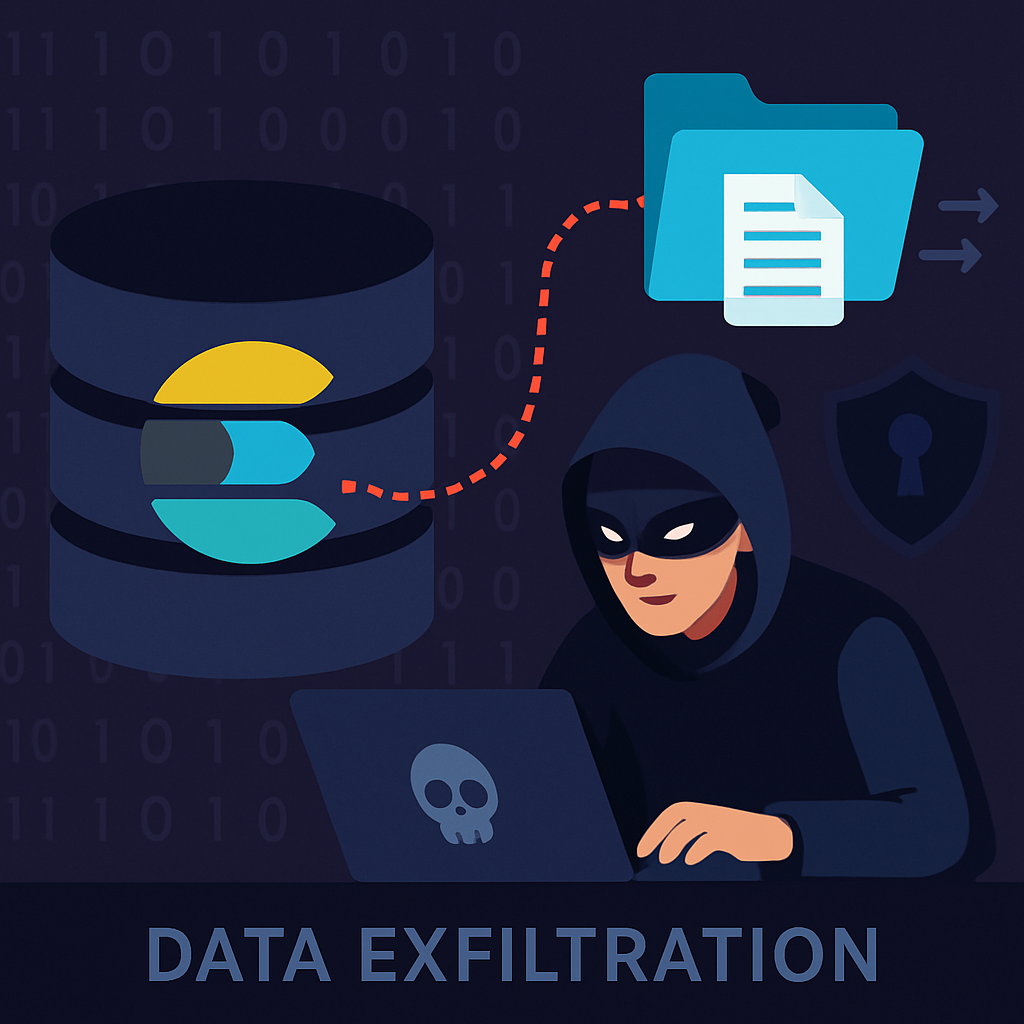
A newly developed offensive security tool named RAVEN has been introduced, demonstrating how attackers can fully exfiltrate data from compromised Elasticsearch environments and maintain persistent access, even after password changes. This tool highlights the potential risks associated with exposed Elasticsearch clusters and the importance of robust security measures.
Comprehensive Data Exfiltration Capabilities
RAVEN allows operators to query Elasticsearch databases, extract stored records, and create alternative credentials. It can exfiltrate specific indices or export all non-system indices to local newline-delimited JSON files. For Elasticsearch versions 7.10 and later, RAVEN utilizes the Point-in-Time (PIT) API to paginate through records; for earlier versions, it employs the Scroll API. This functionality enables attackers to collect extensive datasets, including sensitive customer and application information.
The tool is designed to resume interrupted data collection processes and offers adjustable batch settings, allowing operators to balance speed and stealth. Additionally, RAVEN can transfer copied data to an attacker-controlled Elasticsearch server, preserving index mappings and settings, thereby facilitating seamless data migration for malicious purposes.
Persistent Access Through API Keys
Beyond data exfiltration, RAVEN provides mechanisms for maintaining persistent access to compromised systems. It can list existing API keys associated with the compromised user and generate new keys with equivalent permissions. These API keys function independently of user passwords, meaning that even if passwords are changed, the API keys remain valid, allowing continued unauthorized access.
Furthermore, RAVEN can create rogue high-privilege users and schedule Elasticsearch Watcher tasks. These Watcher tasks can monitor the presence of unauthorized users and API keys, recreating them if they are deleted by defenders. This persistence strategy complicates remediation efforts, as simply changing passwords or deleting unauthorized users may not be sufficient to eliminate the threat.
Implications and Recommendations
The introduction of RAVEN underscores the critical need for organizations to secure their Elasticsearch environments. Exposed clusters and management interfaces can serve as entry points for attackers, leading to significant data breaches and persistent threats. Organizations should prioritize the following actions:
- Implement robust access controls and restrict exposure of Elasticsearch management ports to untrusted networks.
- Regularly audit and monitor API keys, user accounts, and scheduled tasks to detect unauthorized activities.
- Apply timely security patches to address known vulnerabilities in Elasticsearch and related components.
- Develop comprehensive incident response plans that include thorough investigations of unauthorized access and data exfiltration incidents.
By proactively addressing these security concerns, organizations can mitigate the risks associated with tools like RAVEN and protect their critical data assets from unauthorized access and exfiltration.