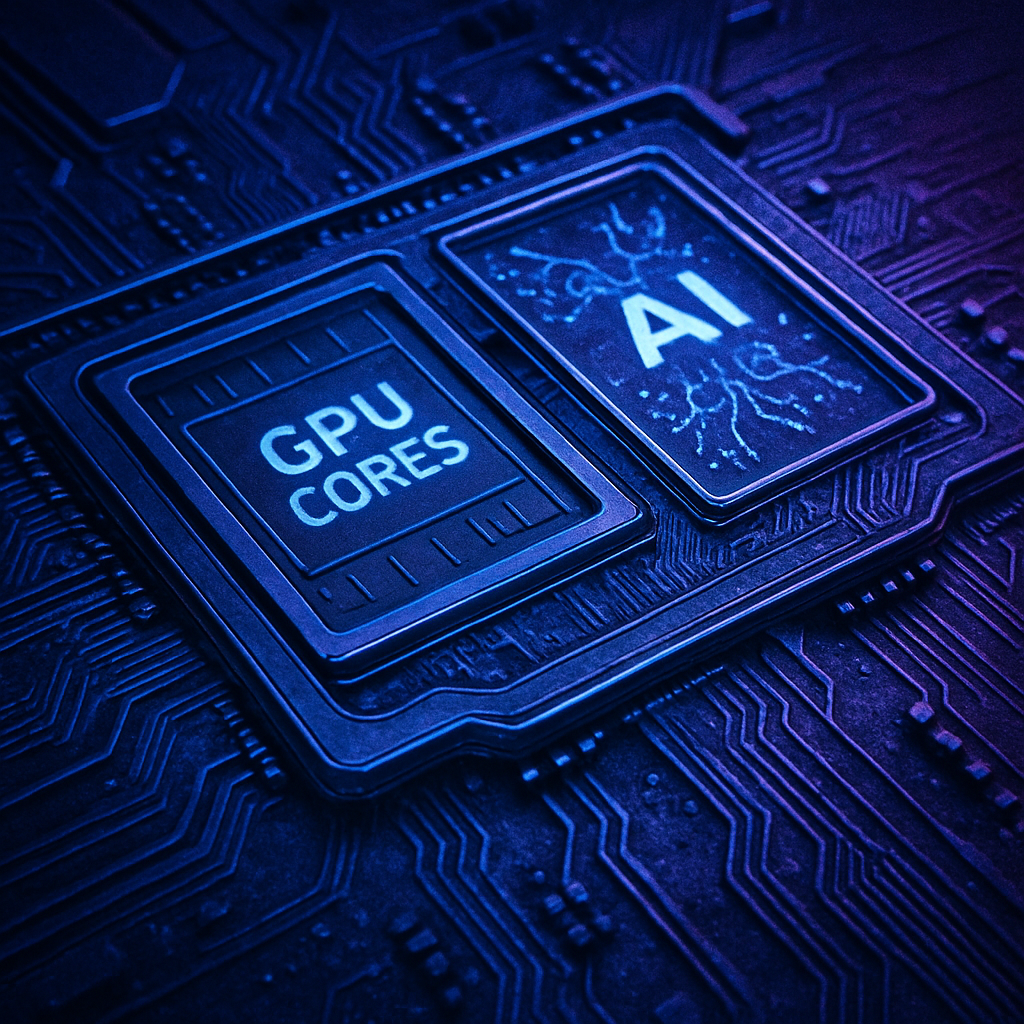
Qualcomm has lifted the veil on a major upgrade in its upcoming flagship Snapdragon chip: the new Adreno Neural Fusion GPU. Built to interweave graphics and AI seamlessly, this GPU introduces dedicated “Matrix Cores” embedded within its graphics pipeline — a first for Snapdragon.
Matrix Cores & High-Performance Memory
The Adreno Neural Fusion GPU packs Matrix Cores in each of its three 1.45GHz GPU slices. These cores are tailored to process AI models directly alongside traditional graphics tasks. To complement this, Qualcomm is also integrating an 18MB HPM (High Performance Memory) cache — a component designed to hold sizable data like tile data, framebuffers, and compute workloads locally within the GPU. The goal: reduce constant back-and-forth transfers with system RAM, cutting latency and raising efficiency.
Efficiency Gains & Developer Support
With AI computation now occurring closer to the silicon, Qualcomm promises around a 40% power efficiency boost when this Neural Fusion tech is enabled. Game developers and graphics-heavy apps should particularly benefit — resulting in smoother, more stable visuals, and longer sessions before draining battery.
Graphics engines are already getting on board. Unity and Unreal Engine have added support for Qualcomm’s Neural Fusion stack, paving the way for AI-enhanced rendering directly in the graphics pipeline. Upscaling, frame rate stability, and other graphics quality boosts are key outcomes.
Further details around the chip’s NPU (Neural Processing Unit) are expected during Qualcomm’s Snapdragon Summit, slated for September 22–24.
Why it matters: Snapdragon has long focused on pushing performance and efficiency, but adding GPU-based AI acceleration shifts the paradigm. As AI workloads become more central — especially for things like real-time image enhancement, gaming, and AR — running AI closer to the GPU can significantly reduce power draw and latency. The Neural Fusion GPU could mark a turning point in how smartphones handle visuals and AI together. What to watch: actual battery and thermals under load, how well games adopt this stack, and how the NPU ties into the overall experience during Snapdragon Summit.