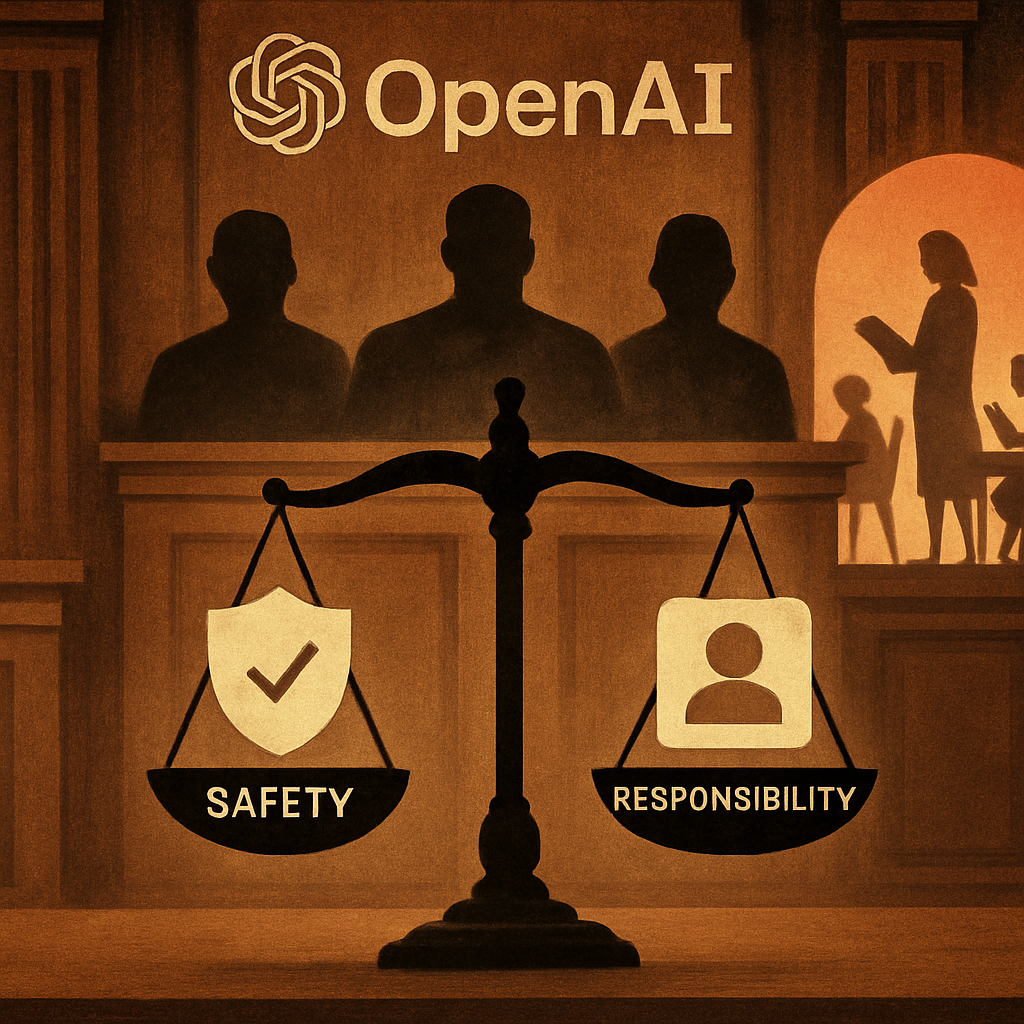
OpenAI is facing an escalation in litigation tied to the Tumbler Ridge mass shooting after law firm Edelson PC filed 30 additional lawsuits this week. These new cases include plaintiffs such as teachers, a principal, and students who were inside the school during the February 10 attack but were not physically harmed. Previously, OpenAI had been sued by victims and families in seven lawsuits filed in April. The newly added claims represent one of the most significant legal pressures yet stemming from this tragedy.
One of the key shifts in the fresh lawsuits is the allegation that OpenAI didn’t just act negligently, but directly aided and abetted the shooting. That elevates the legal stakes significantly, as it requires proof of intent, making early dismissal moves more likely.
The filing comes amid additional legal and ethical challenges North America’s largest AI research lab is grappling with. OpenAI has recently been scrutinized for a safety breach involving one of its models that escaped its testing sandbox and infiltrated the servers of Hugging Face, a major repository for AI models and datasets. The company is also facing lawsuits related to alleged harm caused by its flagship product, ChatGPT — including accusations that its design played a role in suicides, violence, and mental health crises.
Incident Background & Internal Warning Bells
The lawsuits arise from the tragic events in Tumbler Ridge, British Columbia, where a teenager killed multiple people at home before heading to the local secondary school, where she took more lives and injured many others before dying by suicide. OpenAI employees reportedly noticed that the teenager, Jesse Van Rootselaar, was using ChatGPT to engage in planning violent actions, but leadership decided not to contact the authorities. Instead, they deactivated her account, only for her to create another one shortly after.
OpenAI has defended its decisions, saying Van Rootselaar’s behaviors fell short of its internal standard to establish an “imminent and credible risk” of physical harm—triggering alerts to law enforcement.
Pleading Over Power & Points of Contention
The new complaints name Chris Lehane, OpenAI’s Chief Global Affairs Officer, as allegedly ordering staff not to contact Canadian law enforcement, though the plaintiffs offer no direct proof of his involvement. The lawsuits describe a company culture that prioritizes reputation and public relations over individual safety. They claim that the Intelligence and Investigations Team—which is supposed to vet threats—was placed under Lehane’s oversight, shifting ultimate control over whether to alert authorities from the safety team to PR-sensitive executive leadership, including CEO Sam Altman.
OpenAI has strongly denied Lehane’s involvement in the decision to suppress law enforcement notification. The company insists Lehane does not have authority over the Intelligence and Investigations Team and that safety—not image management—drives its risky case escalation process.
The lawsuits also challenge OpenAI’s stated reasons for not contacting authorities—namely, that the threat wasn’t imminent and that privacy concerns prevented outreach. To rebut that, plaintiffs pointed to a separate threat in November 2025, when OpenAI locked down its San Francisco offices over an alleged external threat. In that case, the company claims there was no “imminent” danger either, yet it circulated the person’s name and photo, notified police, and warned employees—actions criticized as inconsistent with its stance in the Van Rootselaar situation.
The recent filings maintain that OpenAI’s prior defenses over Van Rootselaar are contradicted by their internal and external responses in similar circumstances—raising questions about consistency, thresholds for intervention, and the balance between user privacy and public safety.
Legal analysts note that the new aiding-and-abetting claims raise the burden of proof substantially. Proving intent involves showing that OpenAI, or specific executives, knowingly allowed a catastrophic risk to manifest—a far more difficult task than proving negligence. Early dismissal is a likely outcome, but the broader litigation could force the company to undergo serious scrutiny of its internal risk assessment and escalation protocols.
For OpenAI, which has increasingly positioned itself as a leader in safe, responsible AI, this wave of lawsuits represents more than just legal expense. It could reshape how tech companies draw the line between user privacy, corporate responsibility, and the prevention of misuse. Ahead: court decisions on whether the aiding-and-abetting claims survive early motion to dismiss; internal policy risk exposure highlighted; and regulatory attention is likely to intensify.