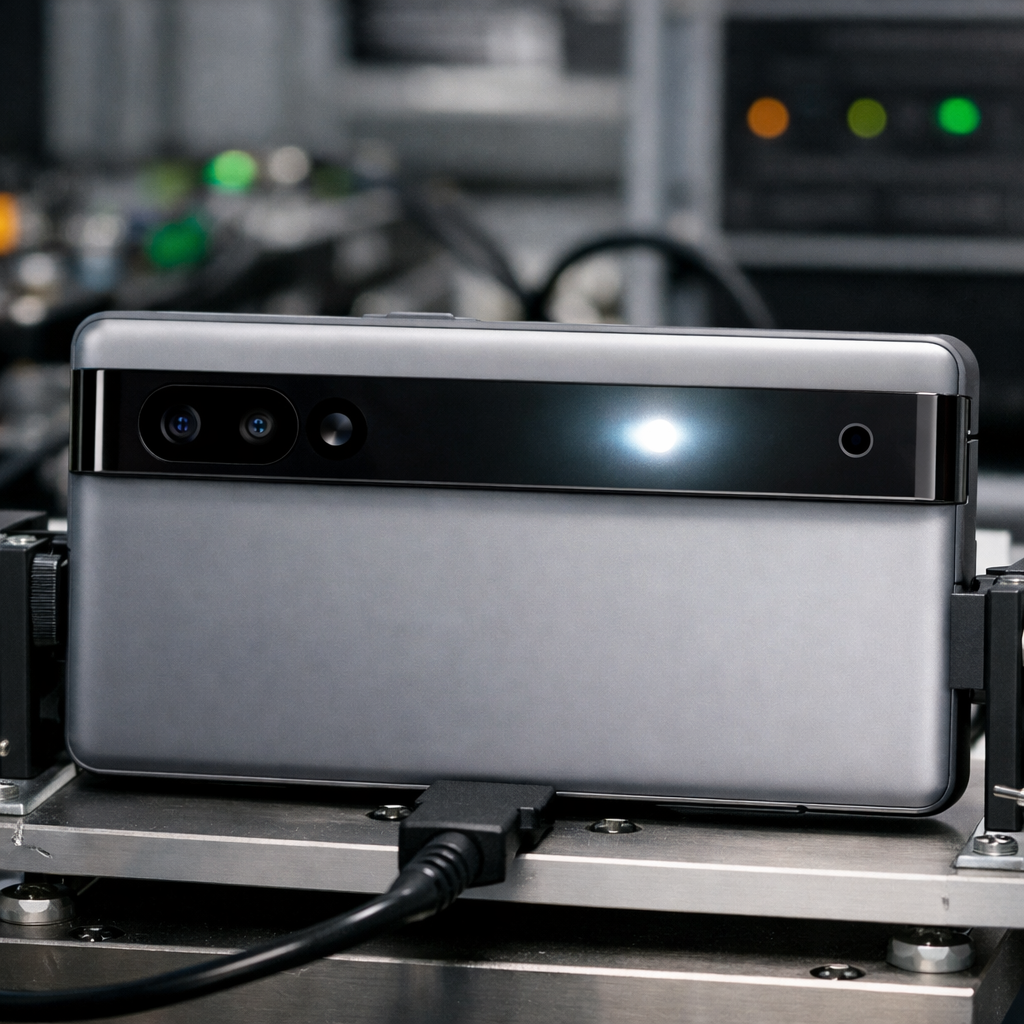
New images from a purported prototype of Google’s upcoming Pixel 11 Pro XL show that at one stage the design included both a temperature sensor and the upcoming HiLight rear LED — features which were thought to be mutually exclusive after the temperature sensor was dropped in the final model. These new photos suggest Google may have rethought that decision—or at least explored options including both sensors together.
What the Prototype Shows
The leaked images shared via Telegram depict a device marked as a engineering prototype. The back of the device sports the HiLight module — a diffused LED feature intended for enhanced photographic effects — alongside what appears to be the same infrared temperature sensor used in the past three Pixel Pro models. Notably, the camera bar spans the full width with glass covering the sensors, a design departure consistent with rumors about the Pixel 11’s final form.
Why the Temperature Sensor Was Cut
Until now, the Pixel Pro series consistently included a temperature sensor, but Google reportedly removed it from the production version of the Pixel 11 Pro. The reason hadn’t been officially confirmed, though it was noticeable to those tracking the hardware spec changes. Alongside that, HiLight drew criticism at launch over what users saw as limited functionality or underwhelming behavior from the new LED — criticism that might have been less severe if both technologies were combined.
Early reports had suggested developers saw limited usefulness with HiLight due to firmware constraints; its visual effect and versatility were both questioned by users. The prototype’s inclusion of both elements hints that Google may have once considered a more capable implementation, perhaps to mollify early feedback on HiLight.
Wider Implications for Pixel 11’s Design Choices
These revelations fit into a larger pattern: Google testing multiple iterations in hardware design before settling on the final release. It’s a familiar strategy in the smartphone world, but the presence of both a complex new lighting system and an old-school sensor shows Google was willing to combine new features with legacy functions — at least in internal testing.
While the temperature sensor has been a polarizing feature (its practical use often seen as niche), the HiLight LED represents one of Google’s more aggressive visual and creative changes to the Pixel line in recent years. Its reception could influence how much investment Google puts into LED-based photo enhancements in future devices.
Ultimately, even though the final Pixel 11 Pro did not ship with the temperature sensor, the prototype images underscore that its omission was a choice among several under consideration — not simply an oversight or technical limitation.
In short, these prototype images give rare insight into Google’s decision-making process — showing how trade-offs in design, usability, and feature set shape what ends up in consumers’ hands. Going forward, what matters is whether HiLight evolves from a stylistic gimmick into a substantial creative tool, or whether Google reintroduces temperature sensing in future hardware. That will tell us a lot about the direction of smartphone innovation around sensors and lighting.