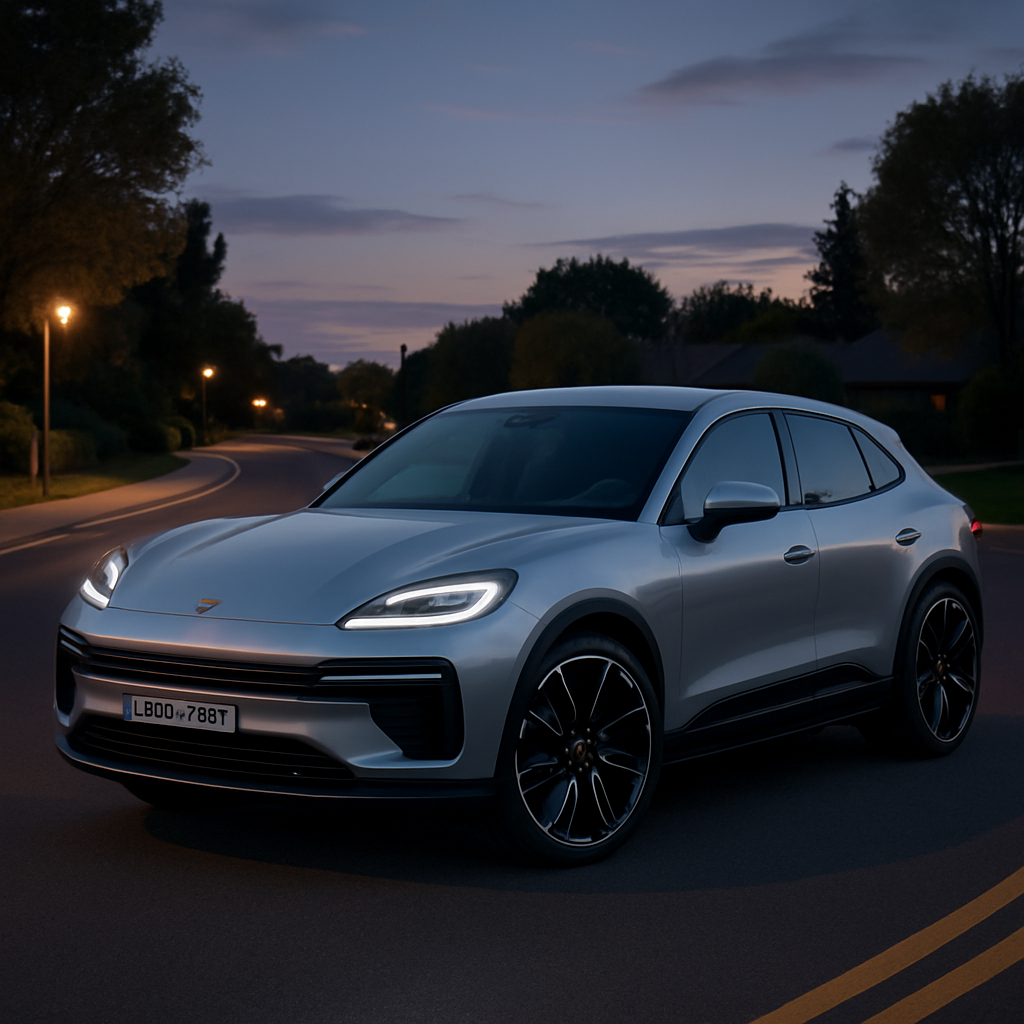
Porsche has unveiled the 2027 Macan Turbo EV, a crossover SUV that challenges what many believe a sports car should be. With its electric drivetrain and conservative styling, it raises questions about performance identity in an era shifting away from internal combustion.
The Mix of Power and Padding
This Macan Turbo carries 630 horsepower and uses a 100 kWh battery. Starting price is about $112,700, though a fully loaded version—like the one tested—fetches nearly $150,000 with all the options and destination fees. More than just straight-line speed, it integrates air suspension and four-wheel steering. In “Sport Plus” mode, the ride drops low and dig deep into the accelerator at highway speeds—say 70 mph—you feel immediate forward thrust.
While its body reads like a two-row crossover SUV, the driving position feels sporty—you’re in it rather than on top of it. Porsche retains analog touches such as the Sport Chrono clock sitting on the dashboard, keeping some of the brand’s character amid all the screens. And yes, despite being electric, it carries the “Turbo” badge—though there’s no actual turbocharger under the hood.
Performance Meets Daily Use (Mostly)
Expect roughly 285 miles of highway range under ideal conditions. Fast-charging is good too: on a 350 kW charger, you can go from 19% to 80% in about 20 minutes. Big wheels and sticky tires do eat into efficiency, but long-distance travel—say between cities—is still feasible. The voice assistant, driver assist systems, and cabin conveniences all largely deliver, though lane-keeping can wander.
Option extravagances are everywhere, some useful, others less so: things like a passenger display, illuminated “Turbo” badges, or branded seatbacks add polish but little value—except heavier cost tags. If you enjoy luxury details, you’ll find plenty; if you want performance without frills, many extras probably aren’t needed.
Identity Tensions and Where It Stumbles
The transition from gas to electric in high-end performance brings tension. This Macan blends in with other SUVs visually— lacking the aggressive flash or body contours many expect from a sport SUV. That may feel underwhelming to purists who associate extroverted design with emotional impact.
Some tech issues persist. For example, the navigation system’s charging guidance misfired when battery was low: instead of directing the vehicle to the nearest high-speed charger, it guided the driver to a weaker 50 kW station first, then to a faster one—even though going straight to the 350 kW charger made more sense and was doable. Charging power peaked near 245 kW (under a 270 kW limit), but system logic can get in the way.
Still, carve canyons or drive to the office, this Macan delivers. It may not grab attention in a parking lot, but it delivers thrills behind the wheel. It’s a vehicle for those wanting both speed and comfort without paying gas station bills.
As the automotive world pushes toward electrification, the Macan Turbo EV sits at the crossroads: it delivers the power and composure, but it questions what defines a sports car isn’t just about torque curves or drivetrain layout. What matters is feeling it: every twist in the road, every corner you chase. This model proves that EVs can do it, but they’ll do it quietly—at least until you punch the pedal.