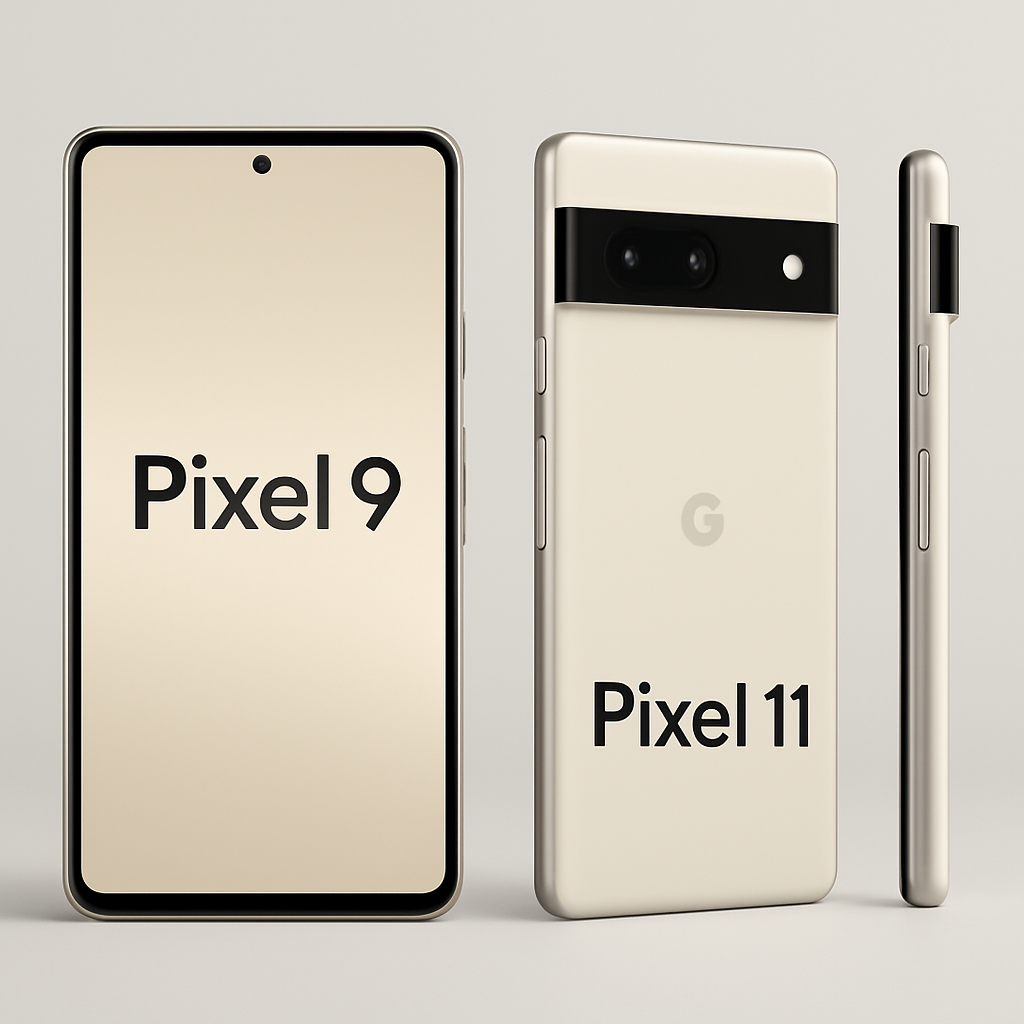
Owners of the Pixel 9 wondering whether to upgrade to the new Pixel 11 series now have plenty to weigh. While the external design remains mostly unchanged, several incremental hardware and software improvements could sway some users. But for others, staying put might still make the most sense.
Design & Display: Subtle Yet Noticeable Changes
The overall look and feel of the Pixel 11 line mirrors that of the Pixel 9 generation. Frame size, thickness, and build dimensions are nearly identical. What has changed: peak brightness is higher on all Pixel 11 models—roughly 10% brighter for non-Pro versions and about 20% for the Pro/Pro XL devices. An altered camera bar shape means older cases won’t fit, and the Pro models in particular pick up almost 10 grams worth of weight, likely due to larger batteries, updated internal layouts, and enhanced thermal design.
Software & Performance: AI Adds Flavor, Not a Revolution
The Pixel 11 introduces newer AI-driven software features under the “Gemini Intelligence” banner—things like App Automation, more responsive assistants, and newly added tools like “Rambler.” These are not expected to come to the Pixel 9, unless Google changes its mind. Under the hood, the Pixel 11’s upgraded Tensor G6 chip and faster storage help with speed and responsiveness, and the base model now starts at 256 GB. However, RAM has been dialed down on some Pro models compared to their Pixel 9 counterparts, which might affect multitasking and AI-task performance unless you opt for the higher RAM variant.
Camera & Imaging: Refinements Over Overhauls
The photo improvements on Pixel 11 are evolutionary. The base Pixel 9 lacks a telephoto lens, so upgrading gives you that extra zoom range. On Pro models, zoom goes up to 120×, and video capture tools receive tweaks. New visual tools called “Camera Looks” allow greater sensor-level customization—something Pixel 9 won’t get. The main camera sensor is slightly larger on Pixel 11, but the output differences under default settings aren’t transformative. What stands out most are refinement in image processing rather than any quantum leap in capability.
The Verdict: When to Upgrade—and When to Hold Off
If your Pixel 9 is still working well, there’s little compelling reason to move to a Pixel 11 immediately. The biggest motivations are clear: if your phone is failing, or you’re using a non-Pro Pixel 9 and want a telephoto lens. For those already on a Pixel 9 Pro or Pro XL, the advantages are slimmer—faster storage, marginally better camera output, and brighter display—but often not enough to justify the extra spend.
What this suggests is that the upgrade cycle continues to stretch. The difference between one generation and the next is more often defined by polish, AI features, and usability tweaks rather than dramatic shifts in hardware. So users May be better served by waiting another year, especially given how well previous Pixel models tend to age thanks to Google’s robust support lifespan. A repair, battery replacement, or simply riding out the current phone’s life could yield more value overall than chasing the latest incremental upgrade.