Philips has introduced new, lower-cost options for syncing Hue lights with TV content while expanding compatibility via a Nanoleaf integration.
More affordable TV syncing gear
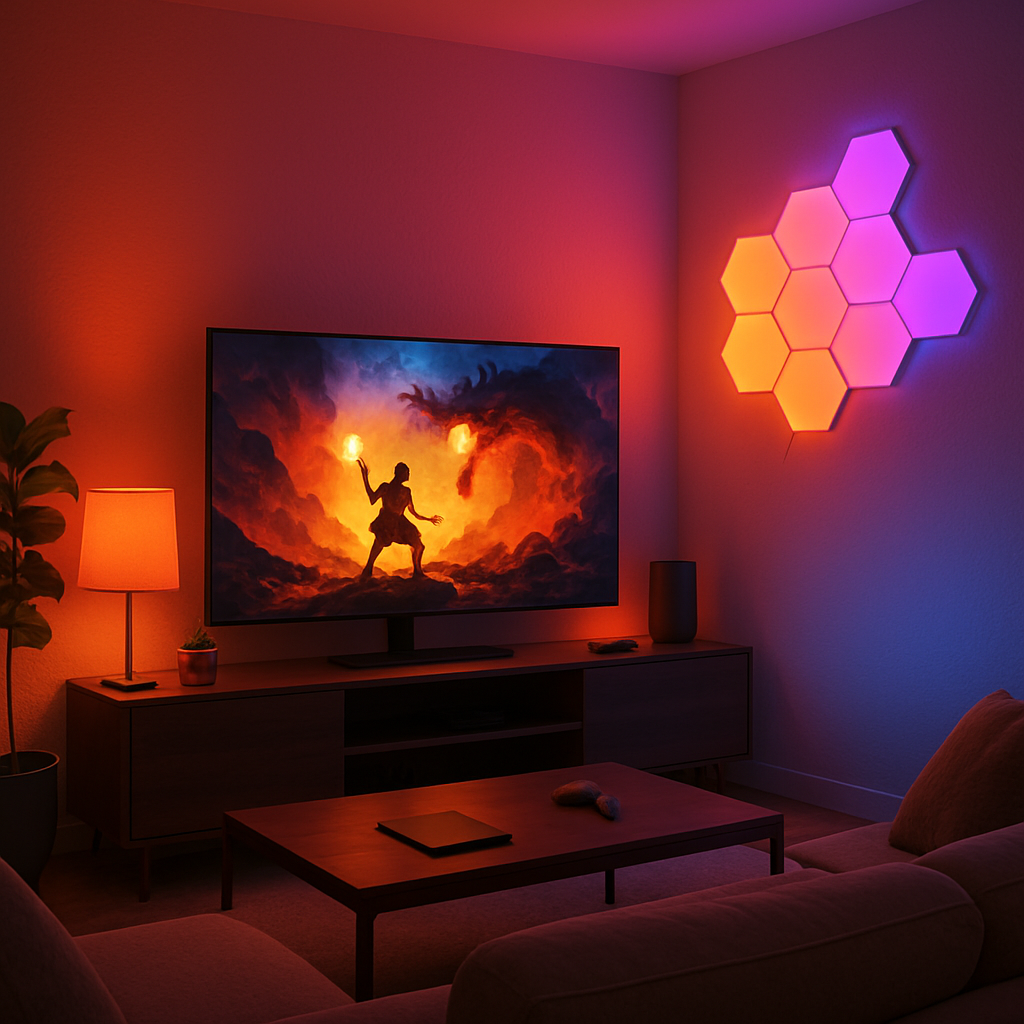
The flagship Hue Sync Box 8K, which captures HDMI video output to match Philips Hue lights with on-screen colors, costs around $385. Now, the company has unveiled new gear at much lower price points. The Sync Box 4K ages back its HDMI inputs to a single port and supports resolutions up to 4K at 60 Hz, priced at about $150. Alternatively, a new camera-based solution—Play Screen Sync—lets users sync lights using a camera sensor for approximately $120. While the camera method trades some accuracy for simplicity, the HDMI model offers truer color fidelity.
Nanoleaf adds Hue-like functionality
In addition to the Sync Box lineup, Philips has introduced a Wall Light Module developed with Nanoleaf, costing about $40. It enables almost any Nanoleaf panel or product to behave like a Philips Hue device, allowing it to integrate within the Hue ecosystem. While Nanoleaf already supports Apple’s HomeKit, this compatibility unlocks access to features like animated scenes and music-based lighting effects available in Hue’s broader control tools.
Introducing more affordable hardware lowers the barrier for immersive TV syncing, previously available mainly through the higher-price Sync Box 8K. The Play Screen Sync serves casual users who want dynamic lighting without the HDMI setup, whereas the 4K HDMI Sync Box targets those seeking higher fidelity. Meanwhile, the Nanoleaf module streamlines compatibility across lighting brands, making it easier to blend devices in one smart-lighting setup.
Altogether, Philips’ latest moves reduce entry costs for immersive lighting and built-in ecosystem flexibility. What to watch: whether the color matching holds up in real spaces, how responsive the camera-based sync proves, and how effectively the Nanoleaf integration performs with complex animated lighting scenes—this could shake up smart lighting for TV and media lovers everywhere.