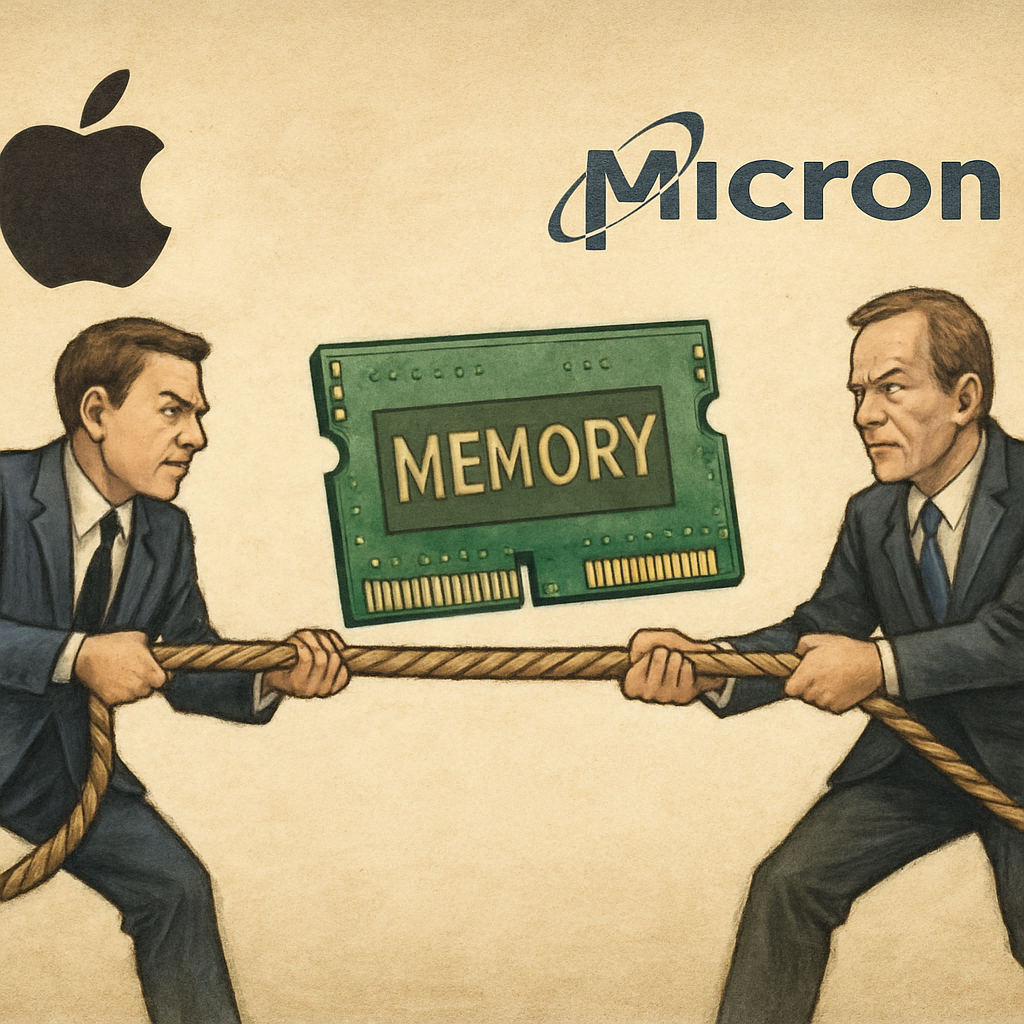
Apple’s recent initiative to procure RAM chips from ChangXin Memory Technologies (CXMT), a Chinese firm blacklisted by the U.S. government, has encountered opposition from Micron Technology. Micron’s CEO, Sanjay Mehrotra, along with other company representatives, met with Commerce Secretary Howard Lutnick to express concerns that permitting such transactions could destabilize the U.S. technology sector.
In June, Apple sought approval from the Trump administration to purchase memory components from CXMT. This request aims to mitigate the impact of the ongoing global memory chip shortage, which has led to increased component costs and, consequently, higher prices for consumers. CXMT is listed on the Chinese Military Company Blacklist, a designation indicating alleged ties to the People’s Liberation Army and potential national security risks.
While U.S. companies are not outright prohibited from engaging with entities on this blacklist, such associations can have significant repercussions. For instance, the Department of Defense is restricted from entering agreements with blacklisted companies or third parties utilizing their components. This means that if Apple proceeds with sourcing from CXMT, it could jeopardize its contracts with the Defense Department and other entities that adhere to the blacklist.
Micron argues that allowing Apple to source from CXMT would harm the U.S. tech manufacturing industry, drawing parallels to how Chinese competition previously impacted U.S. steel and manufacturing sectors. The company suggests that a more sustainable solution lies in accelerating domestic production capabilities. Micron has committed to investing $250 billion in U.S. manufacturing to enhance capacity, though such efforts will take time to materialize.
Apple, on the other hand, contends that Micron’s substantial profit margins indicate potential price gouging and that the company is not reinvesting quickly enough to address the supply shortage. Apple also points out that any increased capacity from Micron is likely to be allocated to AI customers, offering little relief to the broader supply chain.
This situation presents a complex decision for the Trump administration. Siding with Apple could provide a short-term solution to the memory shortage but may raise national security concerns. Supporting Micron’s approach aligns with long-term goals of bolstering domestic manufacturing but does not offer immediate relief to current supply chain challenges.
The outcome of this debate will have significant implications for the U.S. technology industry, influencing supply chain strategies, national security policies, and the balance between immediate needs and long-term objectives.