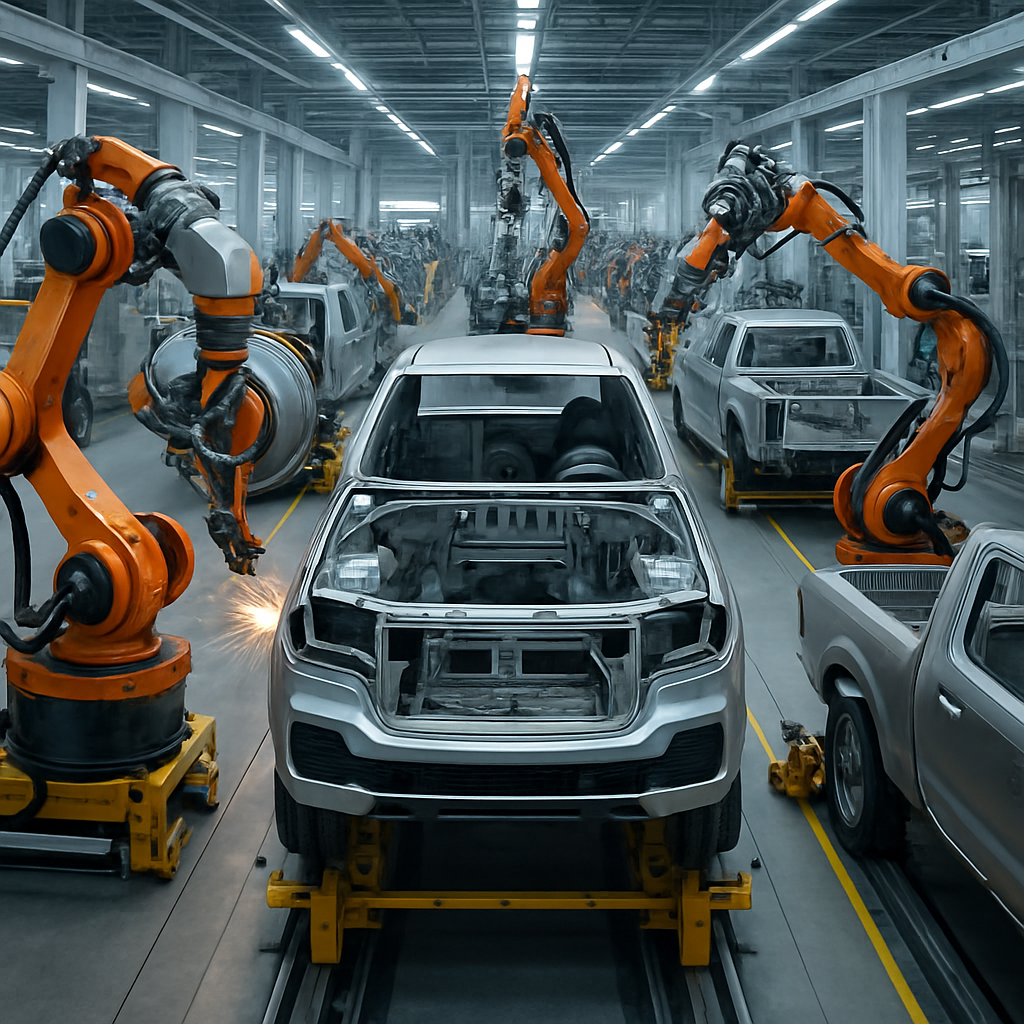
Ford is approaching the final stages of a significant transformation at its Louisville Assembly Plant in Kentucky, a $2 billion initiative aimed at producing the Fathom, an all-electric midsize truck priced under $30,000. This overhaul marks a departure from the traditional assembly line system that has been a cornerstone of automotive manufacturing for over a century.
The Fathom is set to be the first vehicle built on Ford’s new universal platform. The company plans to commence prototype builds in the first quarter of 2027, with customer deliveries expected later that year. To ensure a smooth transition, Ford is already testing production-level tooling ahead of the prototype phase.
In a bold move to enhance manufacturing efficiency, Ford has replaced its conventional moving assembly line with a three-branched assembly tree. This innovative system allows for the separate assembly of the vehicle’s front and rear sections on two branches, while the third branch focuses on integrating the structural battery with interior components such as seats, consoles, and carpeting. The three sections are then combined at the end of the line to form the complete vehicle. This approach is anticipated to reduce assembly time by 15% compared to previous methods.
To support this new production system, Ford has significantly upgraded the plant’s infrastructure, nearly tripling Wi-Fi coverage density to 1,080 access points. This enhancement ensures the high-bandwidth, low-latency connectivity required for comprehensive software quality checks during the manufacturing process.
Recognizing the importance of a skilled workforce in implementing this new system, Ford has invested in extensive training programs. Employees have spent months at the New Models Program Development Center in Allen Park, Michigan, familiarizing themselves with the new assembly techniques and technologies.
Ford’s commitment to this transformation underscores its dedication to remaining competitive in the rapidly evolving electric vehicle market. By investing in innovative manufacturing processes and infrastructure, the company aims to produce affordable EVs efficiently, positioning itself as a strong contender against both established and emerging players in the industry.