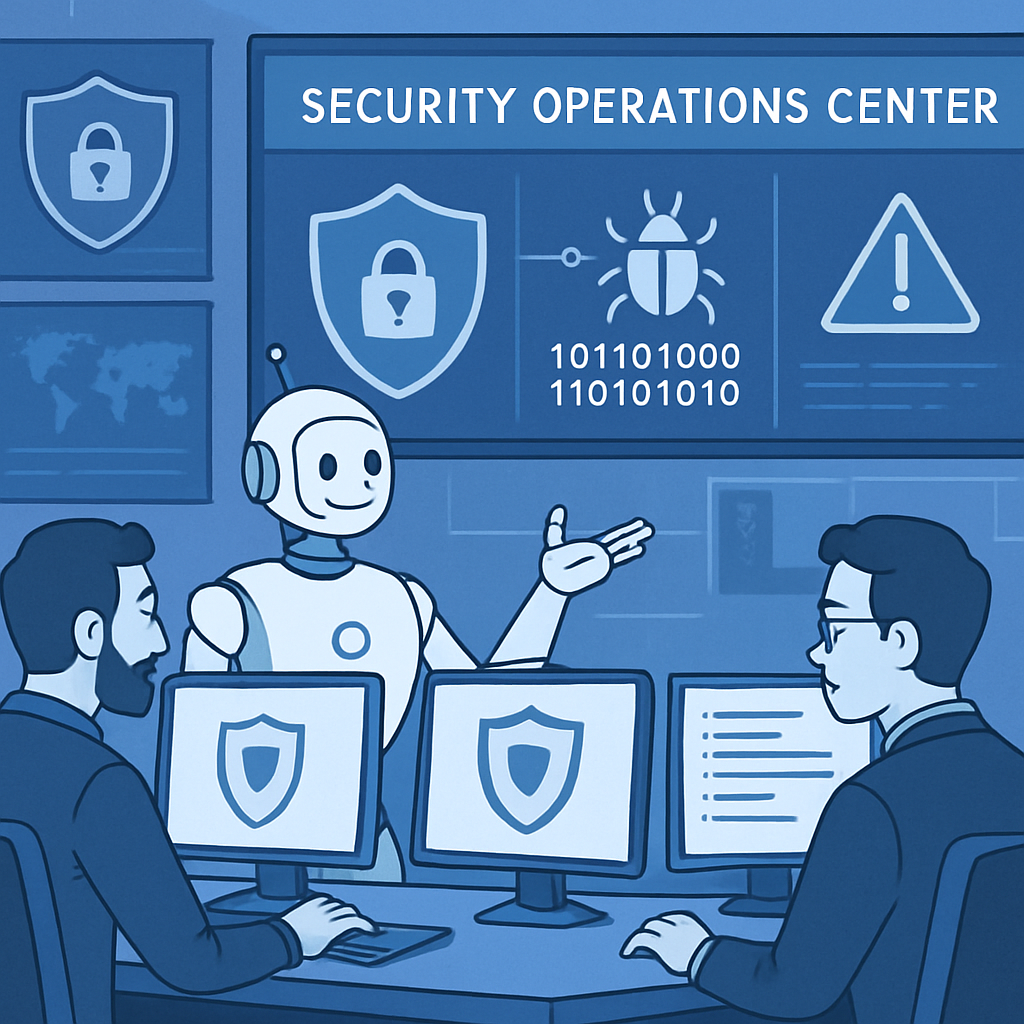
Artificial Intelligence (AI) is increasingly becoming integral to Security Operations Centers (SOCs). Recent data indicates that the proportion of senior security leaders allocating at least 25% of their cybersecurity budgets to AI solutions is projected to escalate from 9% to 48% within the next two years. This surge in investment is driven by the necessity to manage escalating threat volumes and the evolving tactics of threat actors.
AI’s primary function in SOCs is to augment human analysts by automating routine tasks and enabling deeper investigation of critical alerts. Studies have demonstrated that AI can significantly reduce the number of alerts requiring human intervention, allowing analysts to focus on high-priority threats. Specifically, approximately 82% of SOCs utilize AI for threat detection and triage, while 37% employ AI to automate ticketing and response processes.
However, integrating AI into security operations introduces new challenges, particularly concerning resource management. AI models operate using tokens, which represent units of computational work consumed during processing. Complex queries and extensive investigations can lead to substantial token consumption, translating into tangible costs. In the context of security, where investigations are often intricate and numerous, token usage can become a significant budgetary consideration.
To address this, some SOCs are proactively analyzing token consumption alongside their operational processes to gain a realistic understanding of AI-related expenditures over time. Each investigation is unique, making it difficult to standardize costs. Nonetheless, as AI becomes more embedded in SOC workflows, the financial implications of token usage are expected to grow, potentially becoming a notable line item in budgets.
Moreover, there is a concern that threat actors might exploit this dependency by launching attacks designed to maximize token consumption, thereby straining the resources of AI-driven security systems. This tactic, akin to ‘tokenmaxxing’ observed in software development, could deplete budgets and degrade the quality of security responses.
To mitigate these risks, it’s crucial for SOCs to thoroughly assess how AI integrates into their processes. This involves understanding the specific roles AI plays, identifying tasks where AI can provide the most value, and evaluating whether alternative machine learning techniques might be more cost-effective. Additionally, comparing the costs associated with AI token usage to the savings in human labor can help determine the overall efficiency and financial viability of AI implementation.
In conclusion, while AI offers substantial benefits in enhancing SOC efficiency and effectiveness, careful planning and resource management are essential to ensure that its integration is both cost-effective and resilient against potential exploitation by adversaries.