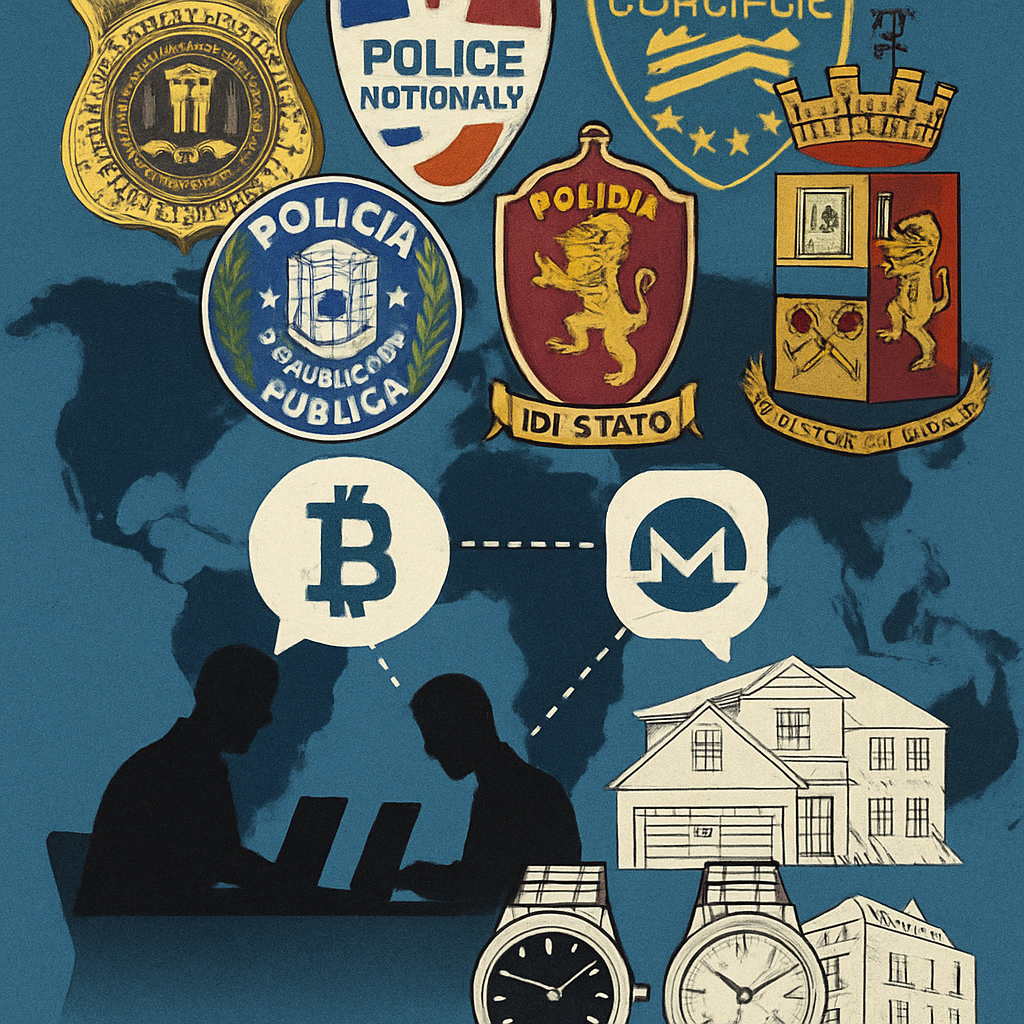
INTERPOL has wrapped up its latest international effort, Operation Jackal IV, with 58 arrests and 263 individuals identified across the globe. The eight-month campaign, which ran from November 2025 through June 2026, targeted organized crime groups in West Africa behind large-scale cyber-enabled fraud. The operation involved 22 countries spanning six continents.
Networks, Tactics, and Hidden Infrastructures
Central to the probe was a crime-as-a-service network linked to West African syndicates, including groups such as Black Axe. Authorities say this criminal infrastructure supplied domain services and money laundering support. Nearly 200 people were identified in this component of the case, with 17 arrests made so far.
Further raids exposed romance and investment scams run from a Johannesburg base. These operations were structured like legitimate companies, with recruits performing specific roles such as “conversion” or “retention” agents who built trust with victims and kept them engaged.
In Europe, investigators dismantled a sophisticated investment scam out of Romania. The scheme lured victims with promises of hefty gains in stocks and cryptocurrency, only to funnel their funds into wallets under the scammers’ control. Losses from this operation were estimated at €143 million.
Money Laundering and Asset Seizures
Alongside arrests, authorities seized €330,000 in mixed cash and cryptocurrencies, six real-estate properties, and several luxury watches. One case highlighted how a pan-European laundering network used shell companies, remittance services, and frequent cash withdrawals to hide the origin of laundered funds. In that case, a single account laundered €845,000 through 560 transactions employing multiple financial instruments.
Participants included nations like Austria, Argentina, Australia, Canada, Côte d’Ivoire, France, Germany, Indonesia, Ireland, Italy, Japan, Malaysia, the Netherlands, Nigeria, Portugal, South Africa, Spain, Sweden, Switzerland, the United Arab Emirates, the United Kingdom, and the United States. Their collective efforts show the growing recognition that transnational fraud requires cross-border coordination.
This iteration isn’t the first. Earlier waves saw even larger numbers of suspects identified and bank accounts frozen or seized:
- Operation Jackal I (late September 2022): 75 arrests, 49 property searches, €1.2 million in intercepted bank funds.
- Operation Jackal II (May 2023): 103 arrests, over 1,100 suspects identified, hundreds of blocked or frozen bank accounts, and €2.15 million seized.
- Operation Jackal III (April–July 2024): about 300 arrests, 400 suspects identified, and 720+ bank accounts blocked.
The latest effort underscores the importance that law enforcement assigns to following illicit financial flows. By penetrating the systems that enable fraud, laundering, and investment scams, the operation aims to cut off profits and disrupt criminal hierarchies.
What this means is that victims can expect more robust protections as international cooperation tightens. For cybercrime prevention to keep pace with evolving threats, continued intelligence sharing, harmonized legal frameworks, and financial transparency will be critical. Watch for follow-ups on who’s prosecuted, what sentences are handed down, and whether policy reforms are enacted to challenge these networks at their financial roots.