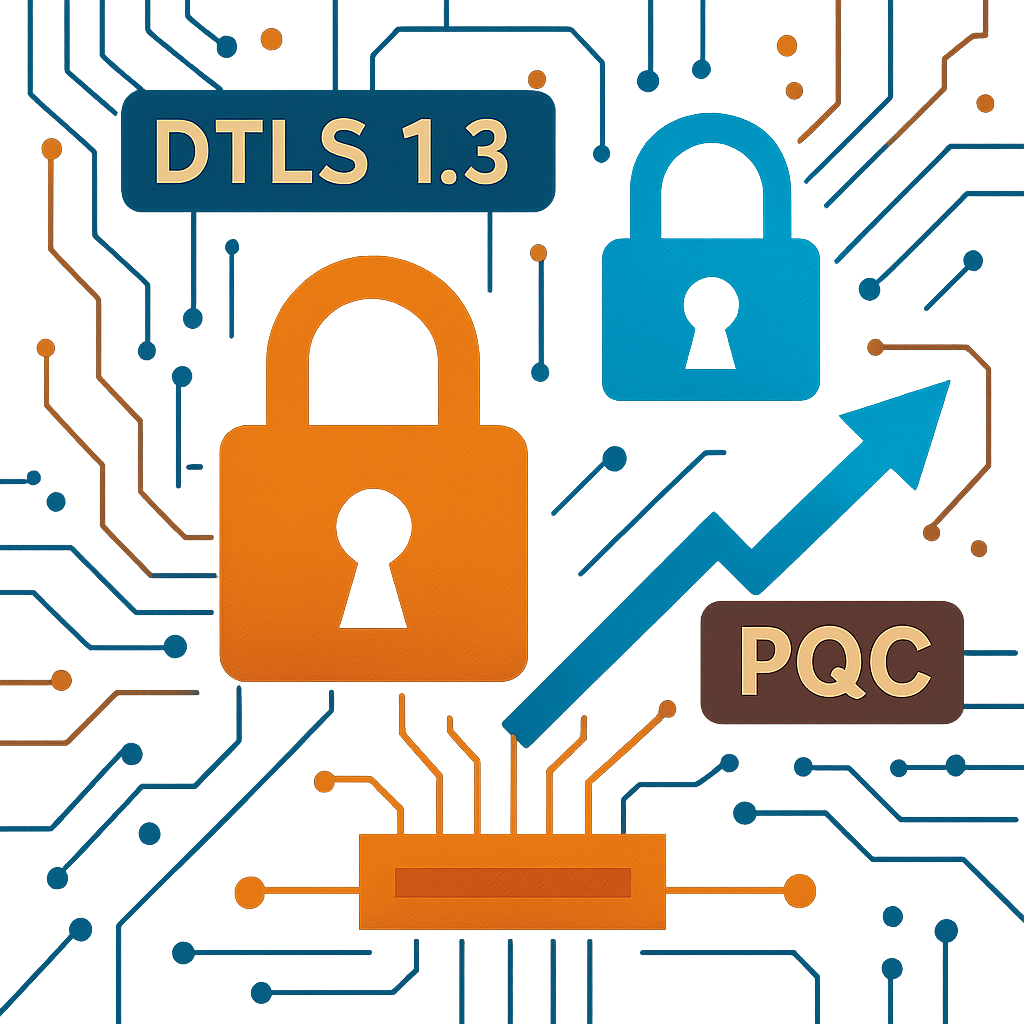
The OpenSSL Project has unveiled the alpha version of its upcoming 4.1.0 release, dubbed Alpha1. Aimed squarely at developers and testers, this early build introduces new functionality including support for DTLS 1.3, enhancements in post-quantum cryptography (PQC), and other performance and compatibility tweaks. It’s not yet ready for production use.
DTLS 1.3: Stronger UDP Security
One of the headline features in OpenSSL 4.1.0 Alpha1 is DTLS 1.3 support, which brings modern cryptographic protections to applications that communicate over UDP—such as video conferencing, real-time gaming, and IoT devices. The implementation follows RFC 9147 and is designed to handle UDP’s quirks like packet loss and out-of-order delivery. Additionally, DTLS is now integrated into the SSL listener API to make it easier for apps already using TLS to adopt DTLS without rewriting their networking logic.
Post-Quantum Cryptography & Performance Upgrades
This alpha also delivers optimizations for two PQC algorithms: ML-DSA (a digital signature scheme) and ML-KEM (a key encapsulation mechanism). These are intended to offer stronger resistance against future quantum-powered attacks. Performance enhancements include architecture-specific speedups—for instance, x86_64 machines now benefit from AVX-512 acceleration for SHAKE-x4 operations, boosting both signature generation and verification. AES-CBC decryption also sees gains via AVX-512 and VAES usage.
Compatibility Changes and Build Adjustments
OpenSSL 4.1.0 Alpha1 drops support for certain older Windows targets, including Windows-on-Itanium and Windows CE, while adding build targets for Microsoft Visual C++ 2013. It also introduces initial support for the Elbrus2000 (e2k) processor architecture. GREASE (RFC 8701) is now included—a protocol hygiene measure that helps reveal compatibility issues by using reserved values in TLS exchanges. Some configuration options have been simplified: the former “no-ecdsa” and “no-ecdh” flags are now replaced by a single “no-ec” option. The tsget utility has been updated to depend on Net::Curl::Easy rather than the deprecated WWW::Curl::Easy.
Because this is an alpha release, organizations are cautioned against deploying it in production. It’s intended to help test DTLS 1.3 interoperability and to gauge the impact of PQC optimizations and architectural changes in real-world environments.
OpenSSL is one of the most widely used cryptographic libraries, forming the backbone of TLS/SSL implementations across the internet. DTLS enables TLS’s protections over connectionless protocols, a necessity for many latency-sensitive or lossy use cases. Meanwhile, progress in post-quantum cryptography is crucial as quantum computing draws closer to breaking extant standards.
Why this matters: This release represents a critical step toward securing internet protocols for both current and future threats. The inclusion of DTLS 1.3 means better encryption for UDP-based apps; improved PQC support signals readiness for quantum-era risks. What to watch now: how stable the DTLS implementation turns out, whether PQC speedups hold up in real workloads, and how quickly this evolves toward beta and stable releases that enterprises can adopt without second thoughts.