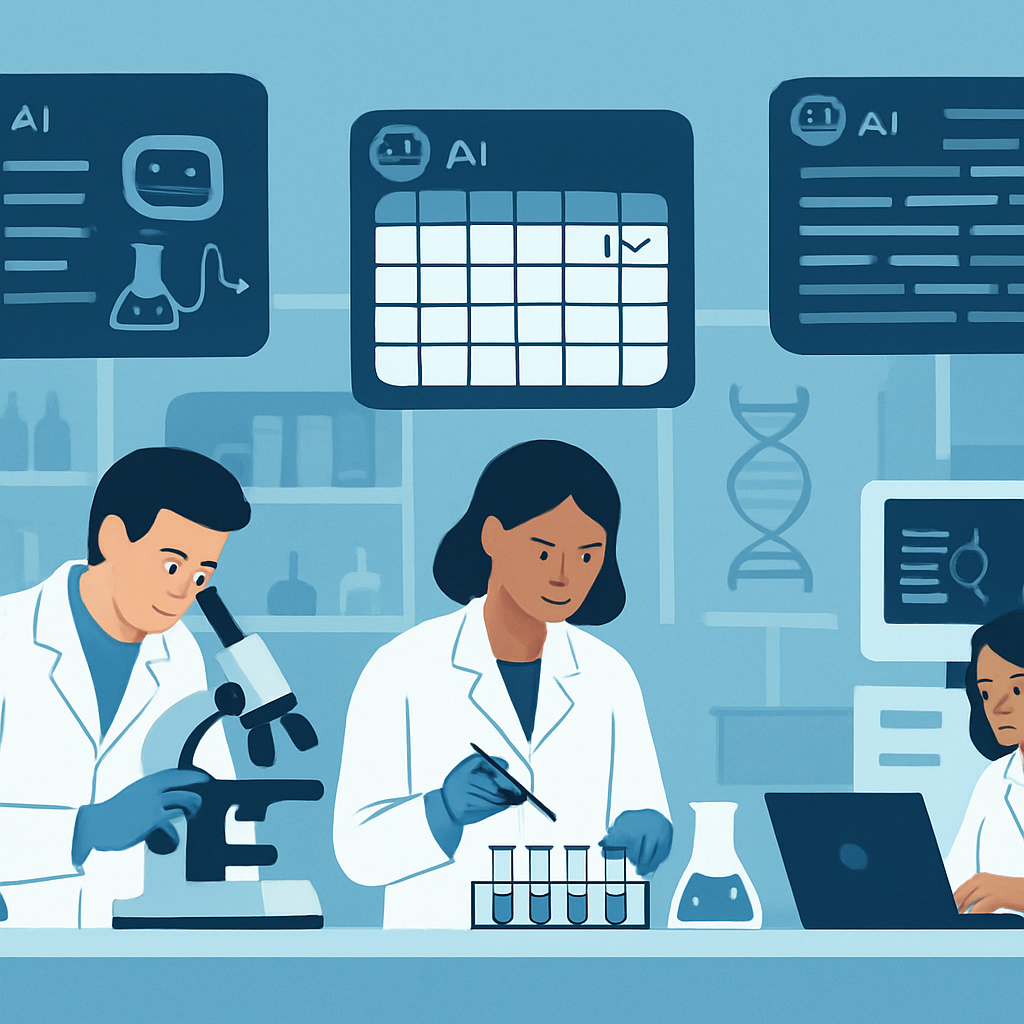
OpenAI has acquired Orchestra Bio, an AI-driven biotech software startup, to deepen its capabilities in life sciences. Founded about four years ago, Orchestra Bio builds AI agents that help biotech firms with intricate drug discovery workflows—handling everything from financial tracking to managing clinical trial scheduling. The financial terms of the deal have not been made public. Before the acquisition, Orchestra had raised roughly $20 million from investors including Andreessen Horowitz, Atria, and 8VC.
This move is part of OpenAI’s plan to integrate Orchestra Bio’s technology and team into its existing life sciences platform, particularly Rosalind and its Rosalind Workbench tool. The Rosalind system is designed to assist researchers in planning experiments, analyzing results, and carrying out tasks related to drug discovery. OpenAI already counts major pharma players like Moderna and Novo Nordisk as Rosalind customers.
Why Orchestra Bio
Orchestra Bio specializes in automating operational burdens that slow down biotech research. Its AI agents streamline logistical elements—budget tracking, resource allocation, scheduling clinical activities—that are often a major drag on progression from lab to clinic. By folding those tools into its Rosalind stack, OpenAI aims to offer a more end-to-end biotech research utility.
The acquisition also signals the intensifying competition among major AI labs like OpenAI and Anthropic to develop domain-specific systems tailored to large, regulated industries such as pharmaceuticals. Startups in biotech often have valuable tools and teams, but face pressure as labs expand into adjacent problem spaces. In this case, there’s less direct displacement and more absorption of Orchestra’s expertise.
What It Means for Rosalind and Drug Discovery
Rosalind is OpenAI’s model for life sciences research, supported by a companion tool, Rosalind Workbench, to help scientists plan and assess their work. The integration of Orchestra Bio promises to sharpen those tools’ ability to handle the operational side of research: ensuring that experimental plans stay on schedule, finances are accurate, and collaborations coordinated.
With existing relationships in place—Moderna and Novo Nordisk already lean on Rosalind—OpenAI gains a capacity boost that could help make its life sciences suite more competitive with traditional bioinformatics players and software tools used by pharma for operational excellence.
OpenAI’s move also illustrates a larger industry trend: AI firms not just offering models but building specialized vertical stacks for high-stakes sectors like biotech. These sectors demand both scientific rigor and regulatory insight—so embedding infrastructure for trial oversight and budgeting becomes a differentiator. Orchestra’s integration will test OpenAI’s ability to scale both technical depth and operational compliance.
What to watch: how smoothly Orchestra’s tools are woven into Rosalind Workbench, whether this leads to new product offerings focused explicitly on biotech operations, and how other AI labs respond. For researchers and pharma execs, the promise is tools that not only crunch data and model biology, but also manage the nitty-gritty of getting work done efficiently and transparently.