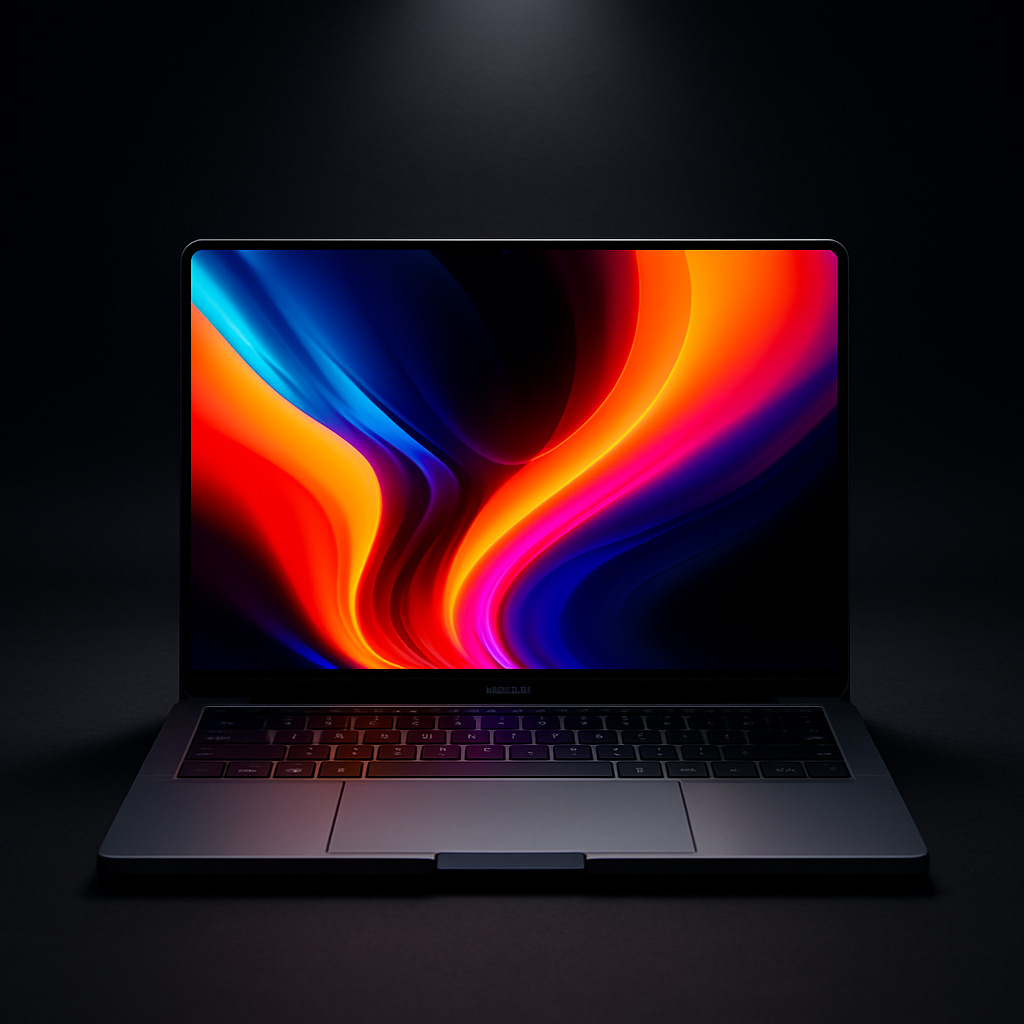
Apple’s planned OLED MacBook Pro models won’t see the new M7 chip lineup until late 2027, insiders say. In the meantime, Apple is sticking with its current M5 Pro and M5 Max silicon for high-end MacBook Pros including the upcoming touchscreen OLED models, postponing any chip upgrades for these until next year.
The tech giant is reported to have nearly wrapped up work on its M6 processor tier. In practice, this means the current Mac mini already ships with an M6, and Apple intends to bring M6-equipped versions of the iMac and entry-level 14-inch MacBook Pro to market. However, Apple has decided to drop plans for M6 Pro, M6 Max, and M6 Ultra chips entirely, choosing instead to jump directly to M7-powered Pro and Max chips for its higher-end machines.
According to well-placed sources, the M7 family won’t launch all at once. The M7 Pro and M7 Max chips are expected in the top-tier OLED MacBook Pros at the end of 2027. A lower-end MacBook Pro model featuring a standard M7 chip is slated for release in 2027 as well, while the M7 Ultra chip is forecasted to arrive in the first half of 2028. Rumors suggest Apple is not planning a Mac Studio refresh in 2027, likely holding off until the Ultra version arrives.
Why Apple Is Skipping Stations
The decision to bypass the projected M6 Pro/Max/Ultra variants appears tied to Apple’s push toward AI. The M7 chips are said to contain technologies specifically aimed at AI workloads, making them more future-facing. By focusing on the M7 generation now, Apple may be directing resources away from intermediate upgrades in favor of more advanced, scalable solutions that better support machine learning, neural tasks, and other intensive compute operations.
While Apple is pressing forward toward an OLED display transition in its high-end notebook line, the performance inside those machines won’t see generational change until its silicon evolves. Users expecting both new screen tech and upgraded chip power will have to wait until late 2027 or beyond.
What to Watch
- Whether Apple will commit to a simultaneous OLED display and chip lineup overhaul, or stagger the transitions.
- The specific AI accelerators and architecture features in the upcoming M7 generation.
- If the delay influences Mac Studio’s product timeline, particularly with the alleged 2028 Ultra chip.
- User expectations for performance and display improvements—there’s tension between hardware hype and timeline feasibility.
Apple’s move to skip ahead in its chip roadmap reflects a strategic prioritization of AI performance and display innovation. By combining the OLED MacBook Pro upgrade with the more advanced M7 silicon, the company is aiming for pronounced improvements rather than incremental shifts. For those eyeing AI-driven workloads or high-end displays, the wait may be long—but when the roadmap finally materializes, it could mark a more dramatic leap than usual.