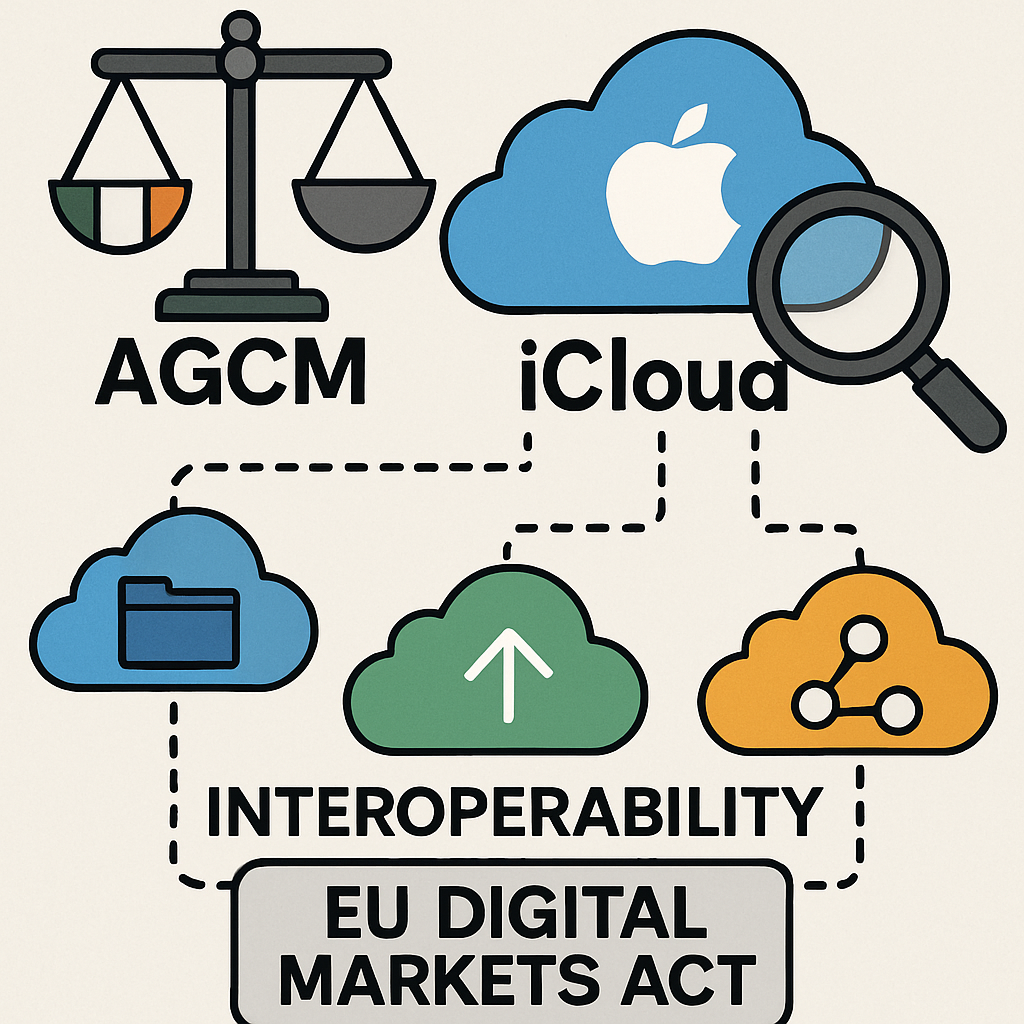
Italy’s competition authority has initiated an investigation into Apple’s adherence to the European Union’s Digital Markets Act (DMA), focusing on the interoperability of its iOS and iPadOS platforms with third-party cloud services. The DMA mandates that companies designated as gatekeepers, like Apple, ensure that external cloud service providers can integrate seamlessly and without charge with their operating systems, granting them equal access to hardware and software features available to Apple’s own iCloud service.
The Italian Competition Authority has indicated that alternative cloud storage providers may not be receiving the same level of access as iCloud. Specifically, these third-party services appear to lack the ability to utilize certain iOS and iPadOS features that facilitate comprehensive device data backups, a functionality readily available to iCloud users. This disparity raises concerns about potential violations of the DMA’s interoperability requirements.
This probe marks the first instance of the Italian regulator exercising its authority under the DMA, which empowers national bodies to conduct preliminary investigations into compliance issues. The findings from this investigation will be forwarded to the European Commission, which holds the primary responsibility for enforcing the DMA across member states. Companies found in breach of the DMA could face substantial penalties, including fines up to 10% of their global annual revenue.
Apple has previously expressed reservations about the DMA, arguing that its provisions impose significant and intrusive obligations on designated gatekeepers. The company contends that these requirements could compromise the security, privacy, and proprietary rights of its platforms. In October 2025, Apple challenged the DMA in the EU’s General Court, asserting that the legislation imposes burdens incompatible with EU law protections.
The outcome of this investigation could have far-reaching implications for Apple’s operations within the European Union. A determination that Apple has violated the DMA may necessitate substantial changes to its iOS and iPadOS platforms to ensure compliance with interoperability standards. This situation underscores the ongoing tension between regulatory bodies seeking to promote fair competition and tech giants aiming to maintain control over their ecosystems. Observers will be keenly watching how this case unfolds, as it may set a precedent for future enforcement of the DMA and similar regulations.