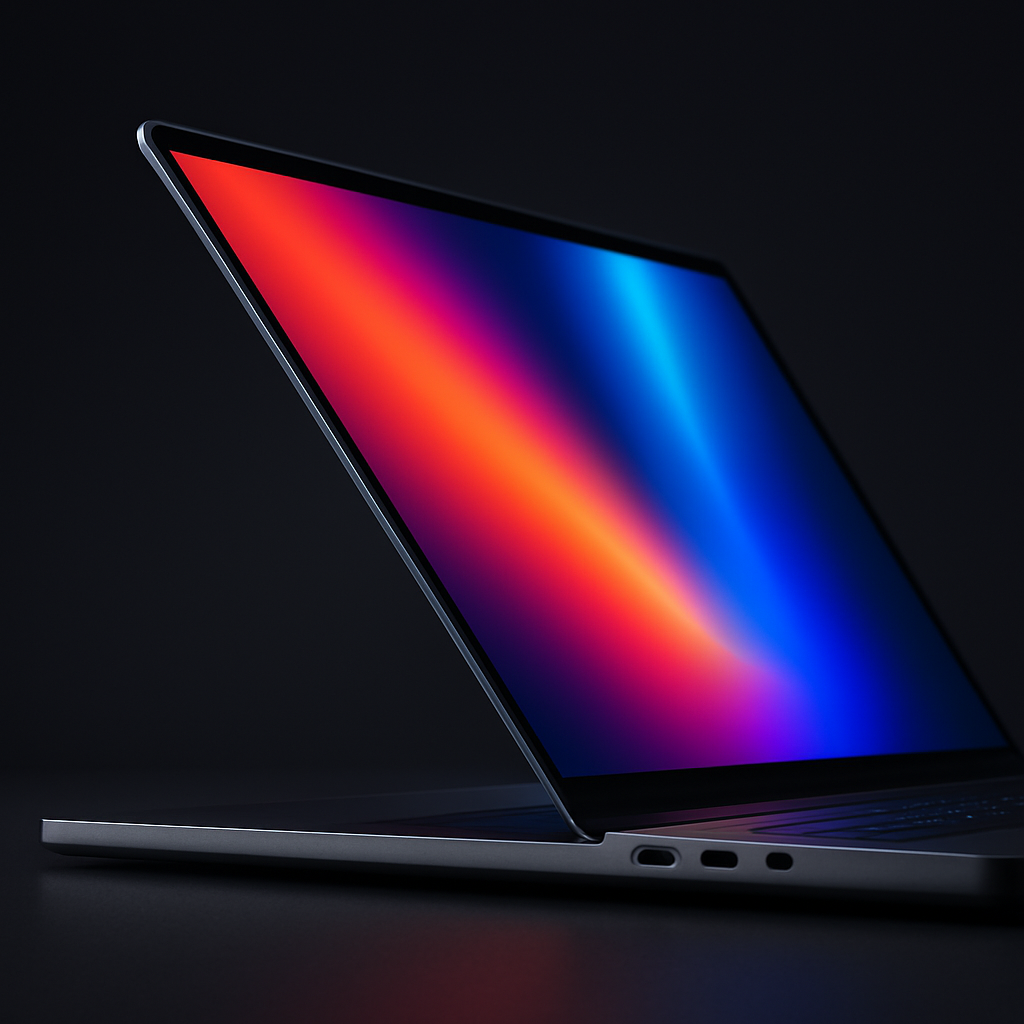
Apple’s next-gen OLED MacBook Pro, expected to debut later this month, won’t bring dramatic changes in thickness despite earlier reports suggesting a thinner profile. Insider reports from Bloomberg’s Mark Gurman clarify that while the new models will be noticeably lighter, the chassis won’t be significantly slimmer. The weight loss is real, but don’t expect a svelte redesign.
What’s Changing—and What’s Not
Earlier estimates, tracing back to October and November 2025, claimed the upcoming OLED 14- and 16-inch MacBook Pro models would feature “thinner and lighter” or simply “thinner” frames. That language hinted at a considerable reduction in thickness when combined with Apple’s move to touchscreen OLED displays. However, Gurman has recently walked back those expectations. He now believes the new models will still be lighter than current versions, but the “thinner” element won’t be nearly as noticeable. Essentially, users may gain in portability, but not on paper with a dramatically slimmer form factor.
OLED, Touchscreens, and the Expectations Game
The OLED display upgrade itself marks one of the most significant shifts for the MacBook Pro in recent years—a transition from LED-based IPS or mini-LED panels. OLED is prized for its deeper blacks, improved contrast, and generally more vivid visual experience. Rumors also indicate that touch capability will accompany the OLED shift. With those display changes typically comes a fanfare about thinner designs—especially when competitors have used OLED and touchscreens to push bezel and body dimensions. But the engineering challenges of cooling, hinge durability, and maintaining port layout in MacBook Pros complicate slimming the lid to the wide extent some had forecast.
What Went Wrong with Earlier Predictions?
Those earlier reports assumed Apple could reduce thickness without compromising durability or thermal performance. Thinner designs struggle with heat dissipation, structural rigidity, and maintaining port layout and keyboard mechanisms. Gurman’s recalibration suggests that Apple prioritized lightness and functionality over shaving off every last millimeter. The current belief is that while the new MacBook Pros will feel lighter to carry, they won’t look drastically slimmer when you lay them side-by-side with today’s models.
These revelations come just weeks before Apple’s fall announcements, a timetable that matches prior leaks around late-2025 and developments throughout 2026. Whether Apple reveals a thinner chassis in future models remains to be seen, but for the immediate OLED launch, it seems the emphasis will be on display tech and weight reduction rather than radical changes in thickness.
Why this matters: For users who carry MacBook Pros every day—creators, developers, students—a lighter machine can make a big difference in comfort. But many discoveries, especially in advertising, hinge on dramatic visuals. If the machine doesn’t appear markedly thinner, some of the claimed “sleeker redesign” narrative may fall flat in reviewers’ and buyers’ eyes. Going forward, keep an eye on how Apple communicates thickness vs weight—because those two are not the same, even when marketing tries to imply otherwise.