Federal prosecutors have filed charges against the owner of MonsterCloud, alleging that he misled clients about how their data was decrypted and overcharged them — while secretly paying ransomware attackers behind the scenes. The U.S. Department of Justice (DoJ) accuses the defendant, who holds dual U.S. and Israeli citizenship and goes by multiple aliases, of claiming to use proprietary tools to recover data without paying ransom demands, but then quietly making payments to attackers and billing clients far more than the actual costs.
According to court records, the allegations include two counts of wire fraud and one count of conspiracy to commit wire fraud. If convicted, the defendant could face up to 20 years in prison for each count. The DoJ asserts that the defendant falsely told victims they would not need to pay criminals to restore their data, and instead claimed that his firm had “advanced decryption techniques” capable of restoring encrypted files without capitulating to ransom demands.
Allegations vs. Practice: The Decryption Claims Under Scrutiny
The defendant ran MonsterCloud, a cybersecurity services firm, and on its website presented itself as having cutting-edge methods for data recovery without paying off ransomware attackers. MonsterCloud’s site also includes sections titled “Should I Pay The Ransom?” where it discourages paying ransom, warning that doing so rewards criminal behavior. Another FAQ explicitly addresses paying ransoms on behalf of clients: it states that while paying isn’t advocated, the company sometimes resolves incidents by dealing with ransomware perpetrators directly — with all of that supposedly spelled out in service agreements.
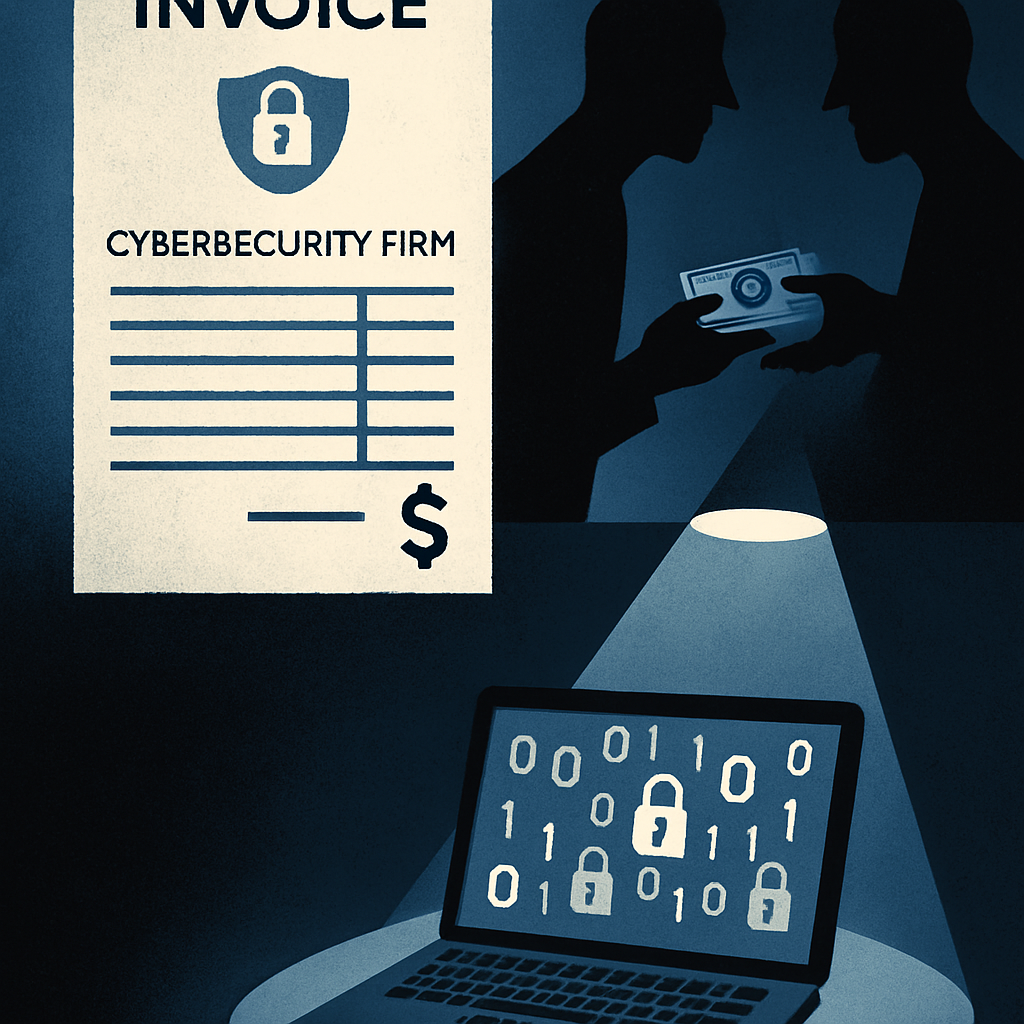
However, investigators allege that these statements were misleading. Rather than relying on non-payment tools, the defendant purportedly made direct payments to threat actors in order to obtain decryption tools. In one case from August 2023, he allegedly paid $8,200 to an attacker while charging the client about $150,000. In another matter from October 2021, the charge to a client reached about $380,000—after a ransom of roughly $236,000 was paid behind the scenes. Altogether, the DoJ claims over $8 million was paid in ransoms even as clients were billed more than $19 million.
Legal Exposure and Impact
The charges bring this case into the realm of wire fraud and conspiracy, serious federal offenses. Alongside the DoJ, the FBI also released statements describing the scheme as one where a victim’s crisis was turned into a profit center. Prosecutors allege that not only were clients misled, but the reality was that MonsterCloud never used advanced tools to remediate threats, instead paying criminals secretly and profiting massively off inflated fees.
If convicted on all counts, the defendant faces decades of prison time. The case serves as a warning that cybersecurity trust can be abused, especially when firms promise advanced capabilities that don’t exist. Victims may think they are protected by technical expertise and proprietary tools, when in fact they are ordering traditional ransom payments—often at extreme markups.
This story matters because it underscores the murky ethical boundaries in cybersecurity service models. Firms that present themselves as ransomware specialists are increasingly expected to walk the line between negotiation, policy, transparency, and law. As this case moves forward, what to watch for is how courts address disclosures — were customers adequately informed? — and how industry standards may tighten around ransom payment clauses, billing practices, and what “decryption tools” really mean in contracts and marketing.