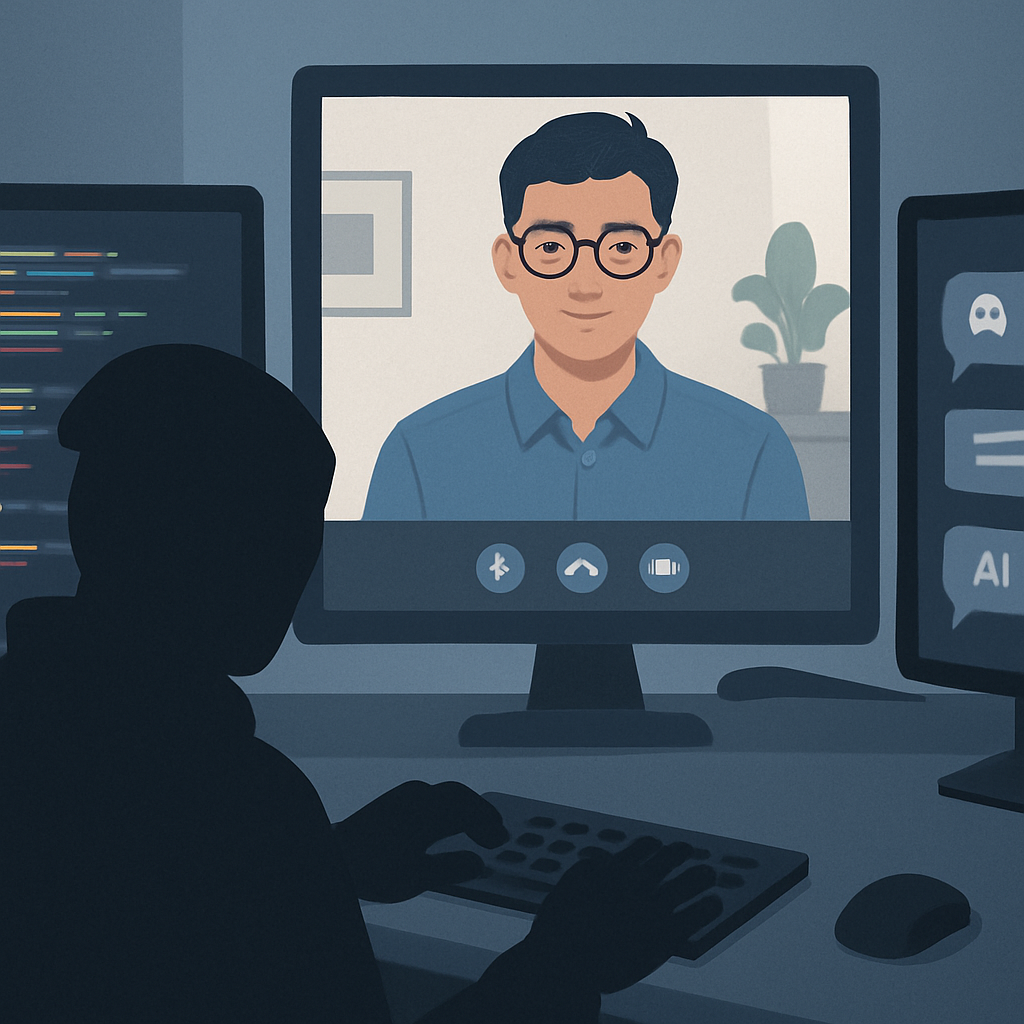
North Korean agents are orchestrating elaborate job interview frauds by combining AI, remote access software, and front-facing proxies to deceive hiring companies about candidate identities. The scheme surfaced after a Discord job ad invited US, European, and Latin American participants to act as visible candidates during interviews, while the actual candidate worked unseen in the background. The visible participant would engage on camera and represent the hidden worker. The real worker would steer technical tasks through tools like AnyDesk, TeamViewer, or Chrome Remote Desktop and help via real-time coaching, often using AI tools like ChatGPT to patch skill gaps.
Investigators have linked the suspicious persona “Tec Guru” to a North Korean IT operator based on behavioral cues, linguistic traits, and operational patterns, not only raising flags about identity fraud, but also highlighting possible pathways for sanctions evasion, data theft, and unauthorized system access. The proxy, hired locally, would present during interviews in return for a split of the compensation—about 35% for the proxy and 65% for the hidden expert. Employers unwittingly granting system access to such hires may open themselves to insider risks.
Operational sophistication is notable: the recruiting process involved job boards like Discord and Telegram, recommendations to use US-style Voice over IP numbers, VPN services like Astrill, and forged credentials in some instances. For coding tests, the scheme relied on remote desktop tools to shift work from the visible face to the hidden expert without detection. Meanwhile, AI-assisted workarounds were prescribed to maintain the impression of competence.
Threats Beyond Fake Interviews
Hiring a fraudulent worker poses serious downstream risks. Once inside, such a worker might steal proprietary code, siphon sensitive intellectual property, or demand ransom with threats to leak data. Financial misdirection is also central: payments could be routed through the proxy’s bank before reaching the true worker—potentially exposing organizations to sanctions violations if they unknowingly compensate sanctioned individuals.
Security analysts are urging companies to strengthen identity verification and payment accountability. They recommend confirming a candidate’s claimed physical location through independent checks, validating IDs and payment platforms match declared identities, and treating sudden account changes as red flags. During interviews, teams should conduct live video verification and design technical exercises that detect when assistance is coming from a hidden party.
Defensive Measures for Employers
Beyond interview hygiene, organizations should apply least-privilege access policies for new hires, closely monitor early account behavior, and watch for unexpected remote desktop usage or prolonged sessions. Because attackers often rely on remote control tools to operate behind proxy faces, spotting unusual tools or multiple actors in interviews is crucial. Treating recruitment as part of the security perimeter—verifying who, where, and what the individual in view actually represents—can significantly reduce exposure.
Indications tied to this scheme include a Discord account named “tecguru113”, Telegram handle “@tecguru0618”, and specific recruitment messaging via mouse review Discord channels. Payment sharing terms and use of VPNs were all part of the documented modus operandi.
These developments show how recruitment channels are being weaponized. By combining AI, proxy fronts, and remote assistance, fraudsters blur the lines between identity theft, social engineering, and direct fraudulent access. The risk isn’t theoretical—it’s a real threat vector many employers are unprepared for.
What this means: This isn’t just another interview scam—it underscores how AI and remote collaboration tools can be repurposed to circumvent sanctions, infiltrate systems, and steal data. Companies need to rethink their hiring workflows as part of their cybersecurity defense. Future protections will likely need behavioral verification, multi-factor identity proofs, and technical interview designs built to uncover hidden help. As AI vigilance grows, so will efforts to deceive—it’s one front in the evolving landscape of cyber threat.