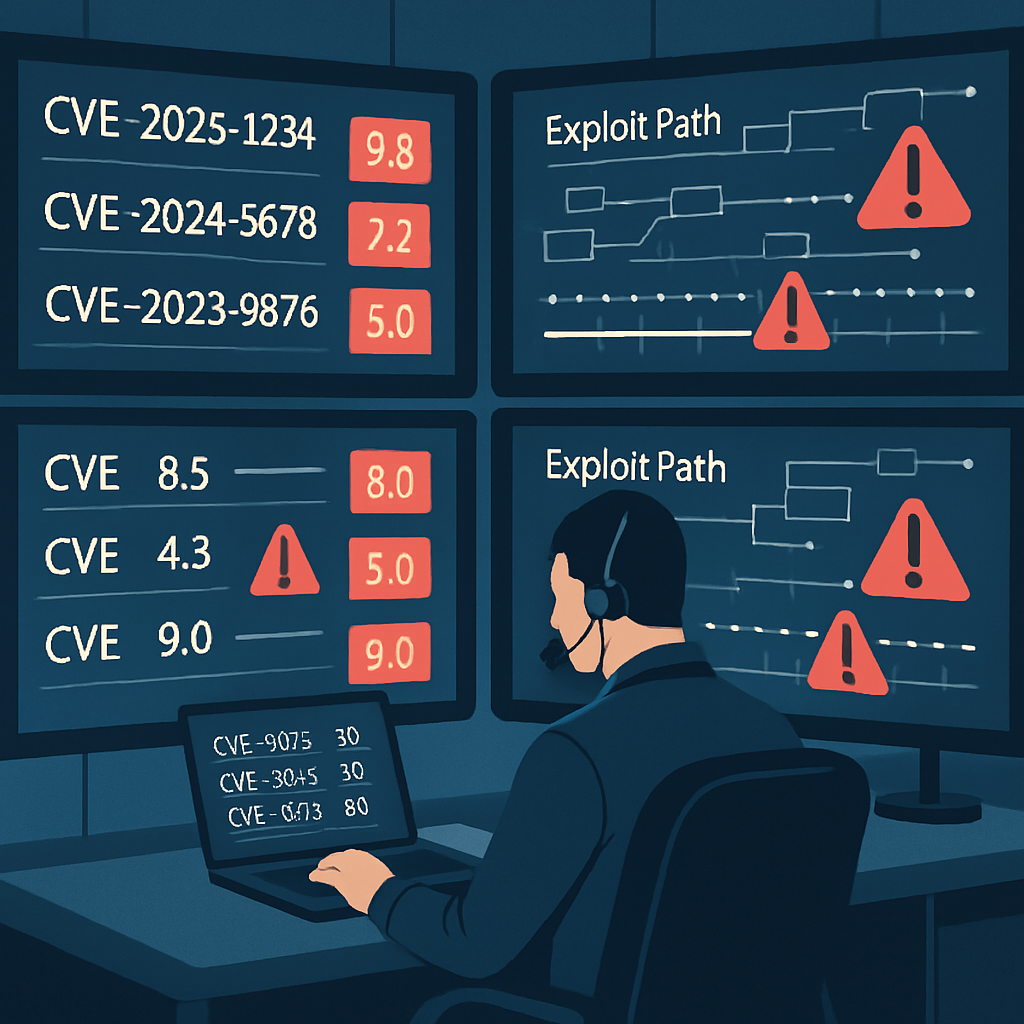
When a new vulnerability gets assigned a CVE, most teams immediately gauge risk by its severity score. But a high number alone doesn’t tell you if attackers can truly use it against your setup. Triggered by how Mythos-class AI is speeding up exploit timelines, many organizations are realizing the risk isn’t just technical—it’s measured in hours or days. The lag isn’t with patches, it’s with validation.
Why Severity Isn’t Enough
Severity ratings offer a sense of how bad something could be. They don’t tell you whether it’s relevant to your network, systems, or security controls. What really matters is whether the vulnerable asset is exposed, whether the exploit path is feasible, if current defenses stop it, and ultimately whether it’s exploitable in *your* environment. Without checking all those boxes, you’re left making assumptions.
In a new webinar, Picus Solution Architect Lead Ishak Celikkanat will show how to run through that full validation loop—from vulnerability identification to proof of exploitable risk—before threat actors do. The goal isn’t to simply note what’s possible; it’s to prove with evidence what you need to act on.
Alternatives to Live Exploitation Testing
Live exploit testing sounds ideal, but it often carries heavy risk—especially in production environments. The webinar will dive into mapping CVE behavior to real attack techniques and then validating those behaviors via existing defenses. That delivers strong proof points even when direct testing isn’t viable.
This shift—from relying on scanner severity scores toward rigorous, defensible proof—addresses a common tension. Attackers can move quickly; if your validation takes weeks or months, you’re leaving a dangerous gap. The ability to say “Yes, this is exploitable in our environment” or “No, current controls block this exploit path” changes how you prioritize remediation.
Registering gives teams access to the live walkthrough of the end-to-end proof-of-exploit process. And even if you miss it live, the recording will be available so you can follow along later. The lesson: validation speed is now as crucial as detection, especially under rapid attacker-driven AI advances.
This isn’t just webinar hype—it reflects an inflection point in vulnerability management. The industry is pressing faster validation cycles so that exposure gaps get closed while the window of opportunity for attackers is still open. For organizations who typically prioritize quarterly reviews, this will require tighter feedback loops and closer integration between scanning, threat modeling, and control testing.