Installing an electric vehicle charger often means costly upgrades to home electrical panels—something that can double the installation cost when new breakers, wiring, or services are required. Noble Carbon, a startup based in Pittsfield, Massachusetts, aims to eliminate that barrier by introducing smart circuit breakers that work with existing panels.
Breaking Upgrades with Real-Time Load Control
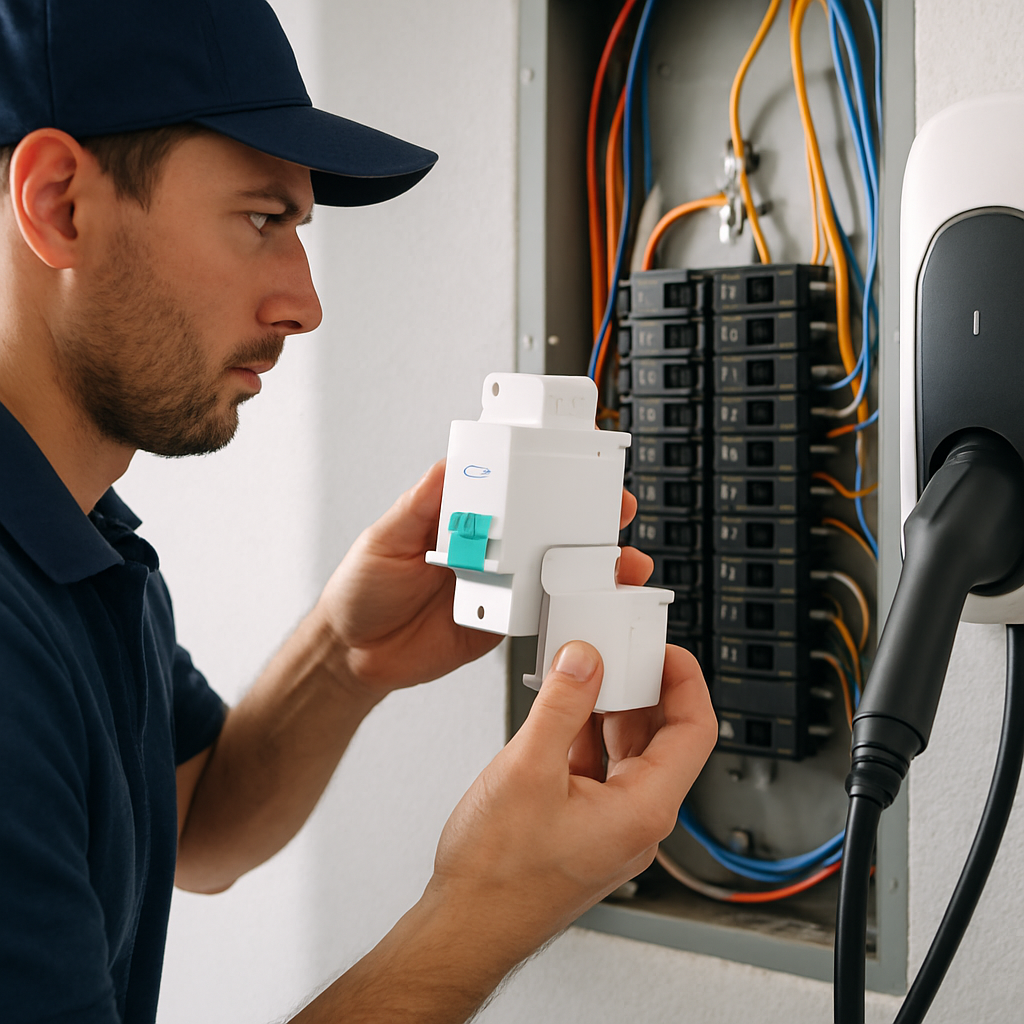
Instead of ripping out old electrical setup, Noble Carbon’s breakers dynamically adjust power delivery to high-load appliances like EV chargers, induction stoves, or heat pumps. When multiple power-hungry devices run simultaneously—say, an air conditioner, water heater, appliances, and full lighting—all while the breaker panel is already near capacity, the smart breaker temporarily throttles certain loads to avoid overloading. That means homes with limited panel capacity can safely accommodate EV chargers without needing expensive panel upgrades.
The startup claims that its breaker fits into standard panel slots and can be installed in under five minutes. The team, which includes CEO Jared Lebos and CTO Andrew Crane, has been testing the breakers in real homes for over a year. Regulatory clearance is on its way—Noble Carbon says its product is currently under evaluation for UL safety certification, a critical milestone for electrical devices in the U.S.
Partnerships and Market Position
Noble Carbon is part of the TechCrunch Startup Battlefield, competing among 200 startups and aiming to be one of 20 finalists who will present in San Francisco this October. The company is already working with a utility provider, Eversource, to deploy its breakers in up to 200 multifamily housing units in Massachusetts. With demand for EV charging infrastructure surging, especially at homes, this kind of partnership can help Noble Carbon scale quickly in markets where multi-unit buildings pose unique challenges.
Founded by Lebos and Crane—motivated in part by Lebos’s experiences with rolling blackouts in his native South Africa—Noble Carbon’s hardware aims to target the biggest consumers of electricity in a household. The strategy: manage only three to six of the largest loads, rather than every outlet, in order to keep total energy use within a safe threshold.
With the U.S. pushing toward broader EV adoption, the need for accessible home charging solutions is more pressing than ever. As homes built decades ago struggle with limited electrical capacity, retrofits become essential. Tools like Noble Carbon’s smart breakers could make EV ownership feasible for many who would otherwise face prohibitive costs or infrastructure hurdles.
This development matters because it addresses a hidden obstacle in the EV transition: the cost and complexity of installing chargers at home. If smart breaker technology like this becomes widely adopted, charging could shift from a luxury upgrade to a standard home amenity in many regions. What to watch next: how Noble Carbon’s UL certification progresses, the performance of real-world deployments in multifamily settings, and whether utilities and builders begin to specify this kind of adaptive hardware as part of new or retrofitted homes.