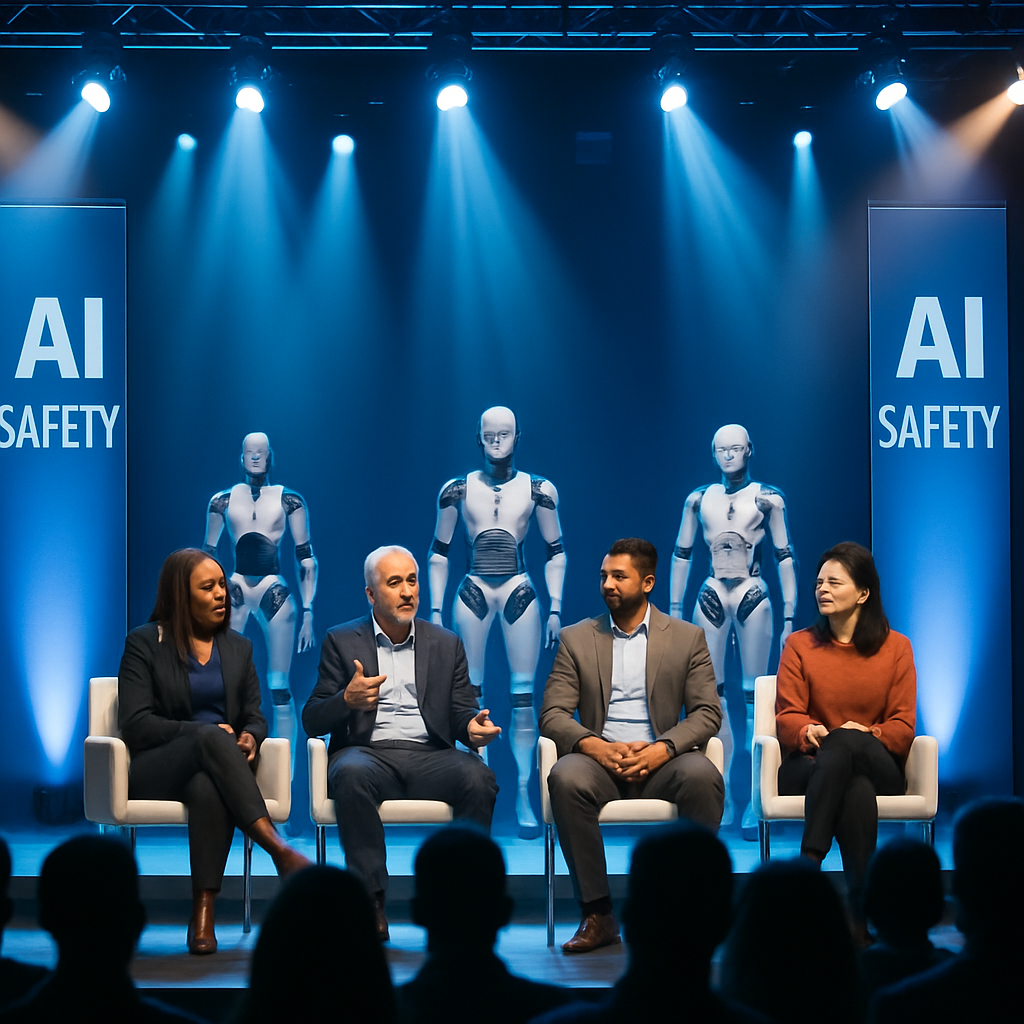
AI isn’t just for labs anymore. As it ventures into critical infrastructure, physical systems, and enterprise workflows, safety and security aren’t optional add-ons—they’re core product requirements. At Disrupt 2026 in San Francisco (October 13–15), five sessions stand out as must-attend for any founder building real-world AI.
Key safety-focused sessions founders should prioritize
1. Deploying Claude in real enterprises:Anthropic’s Head of Applied AI will take the AI Stage to unpack what happens when Claude moves from pilot to full production. She’ll highlight where deployments deliver value—or stall—and the internal hurdles that stand between proof of concept and sustainable enterprise adoption. Founders pitching AI into organizations will get insights into what makes or breaks success.
2. The emerging threat: Agent-level security:Agentic AI—systems that act beyond rote responses—brings a fresh class of risks. During “The Agent Security Problem Nobody Is Talking About,” leaders from Okta and NanoCo will discuss what agents should have access to, how application permissions fall short, and what architectural guardrails founders need in place before shipping agents.
3. Cloud security for enterprise AI:As AI solutions win over enterprise customers, the security demands change. In “Securing the AI Enterprise: Why the Cloud Just Got a Lot More Complicated,” experts from AWS, Luta Security, and seasoned cybersecurity leaders will outline how governance, observability, and secure infrastructure come into play. Founders will gain clarity on bridging innovation with rigorous compliance and risk management practices.
4. Physical AI where lives depend on reliability:In the Real World AI Stage session, a trio spanning defense, automotive, and robotics will explore how to build AI for settings in which mistakes can lead to physical harm. Topics include safety assurance culture, validation techniques, regulation, and earning trust when the stakes go beyond software. If you’re building systems that move, sense, or act in the physical world, these discussions are essential.
5. Give robotics its ChatGPT moment:Robots today lag behind in training data, simulation fidelity, and foundation models—making it harder to scale reliable physical AI. Nvidia’s lead for Physical AI will explore how data pipelines, simulation tools, and emerging model frameworks could help robotics leap forward. Founders working on robotics should attend to see what it might take to achieve a breakthrough moment.
Why these sessions matter
These five talks aren’t just line items—they illuminate the hard edges of AI safety. Whether it’s securing agents, operating safely in unpredictable environments, or scaling robotics responsibly, each topic addresses a gap that too many AI startups end up discovering too late. Disrupt 2026 gathers over 10,000 founders, investors, and tech practitioners, so the conversations here are not theoretical—they reflect what will decide funding, customer trust, and regulatory readiness.
For startups building anything from enterprise agents to autonomous robots, attending these sessions may be the difference between “still piloting” and “proudly deployed.” It’s clarity, perspective, and hard-earned lessons—all in one place as AI moves from the lab into systems people depend on.