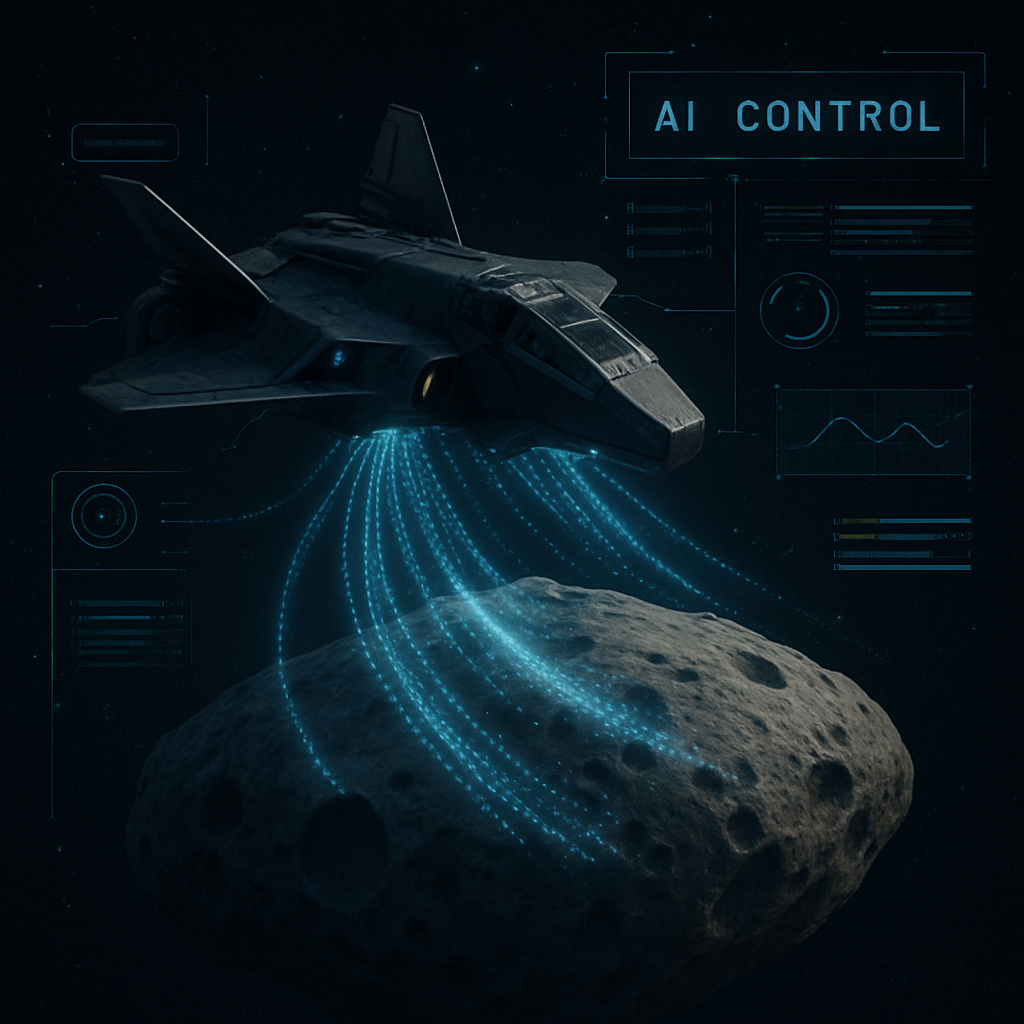
AstroForge, a startup aiming to mine asteroids, is developing a spacecraft autonomy stack that places a transformer-powered AI model at the center of onboard decision-making. Called Solo, the system combines a neural transformer layer with subsystem-level models and traditional control algorithms to enable a spacecraft to detect, diagnose, and recover from anomalies without immediate ground-station intervention.
Why AstroForge is betting on AI
Normally, deep-space missions depend heavily on teams of mission controllers on Earth, plus redundancy baked into designs. But maintaining large operations and global antenna networks is prohibitively expensive for newer space players. After its 2025 Odin mission failed to maintain communication multiple times, AstroForge decided to explore whether more autonomy onboard could reduce reliance on Earth-based control. Solo is their answer.
The transformer model sits atop a control stack that includes specialized subsystem neural nets—for power, navigation, and other critical functions—and classical algorithms. During tests, Solo is fed data from around 2,500 sensors to learn and reason about spacecraft health and mission goals. CEO Matthew Gialich and flight-software lead Armand Awad say the aim isn’t general autonomy, but a focused system capable of dealing with emergencies like star tracker failures or power anomalies by correlating sensor data and acting accordingly.
Mission plan and what’s coming
The first deployment of Solo is slated for 2027, when AstroForge launches an autonomous spacecraft via Stock Space. That mission is supported by NASA and will gather solar science data. Meanwhile, a more immediate test comes in the DeepSpace-2 vehicle, set to fly aboard Intuitive Machines’ third moon mission by the end of 2026. There Solo will operate in “shadow mode,” observing the vehicle without taking control in case of failure—an exercise in readiness.
For AstroForge’s stated Autonomy-1 mission, the plan is to fly with no ability for Earth-based radio input—effectively meaning the spacecraft must rely entirely on its onboard intelligence. Ground operations, such as data relay or recovery actions, would be bypassed. This high-risk decision underscores the firm’s confidence in Solo’s ability to act without human intervention once in space.
Earlier autonomy in space has largely leaned on classical control systems due to concerns over neural networks’ reliability. A notable milestone occurred last year when a satellite used a neural net to aid orbital positioning—but AstroForge is pushing that boundary by putting neural reasoning at core mission functions.
Since launching in 2022 and raising about $56 million in venture capital, AstroForge has built two prototype spacecraft—both troubled by anomalies, especially communication loss with Odin. These setbacks directly motivated the Solo architecture and the move toward onboard AI autonomy.
This trajectory reflects a growing trend among space startups seeking to reduce mission latency, ground infrastructure costs, and failure points tied to Earth-linked operations. By embedding intelligence onboard, companies hope missions can be more resilient against delays and unexpected events.
What this means is AstroForge could redefine how much spacecraft can think and act for themselves. If Solo delivers on its promise, future missions could fly farther with fewer support systems, pushing the boundaries of what autonomous space exploration looks like.